

Europe's Satellite Internet Alternative Aims To Compete With Starlink

Ever since SpaceX deployed the first internet satellites in low-Earth orbit in 2019, a number of other companies and organizations have been looking at how they might be able to beam broadband from space, rather than let the Elon Musk-led company dominate the satellite internet market. In Europe, a potential rival comes in the form of IRIS², an EU-backed satellite network. While it's designed primarily for secure government and defense communications, as well as maintaining communications in emergencies, it will also be used to extend connectivity to areas that are poorly served by broadband internet, just as Starlink does. The project is aiming to launch the first IRIS² satellites in 2029, with services rolling out gradually after that.
Unlike Starlink, which has managed to build a large customer base by selling broadband directly to consumers, IRIS² is mainly intended to provide European governments with secure communications under their own control. In August 2026, the European Commission concluded negotiations with SpaceRISE, the consortium developing the IRIS² system, expanding the planned constellation to 348 satellites. According to the Commission, the expanded network is expected to increase secure government communications capacity by 60% within the EU, and 54% globally.
With Starlink reportedly having more than 11,000 satellites in orbit and more than 12 million internet subscribers globally, it's clear that it'll be a long time before IRIS² has any chance of competing with SpaceX's residential internet service on a meaningful level — although, competing in the commercial market doesn't appear to be the goal for IRIS². However, there's one particular network that is very much preparing to take on Starlink.
This company has Starlink in its sights
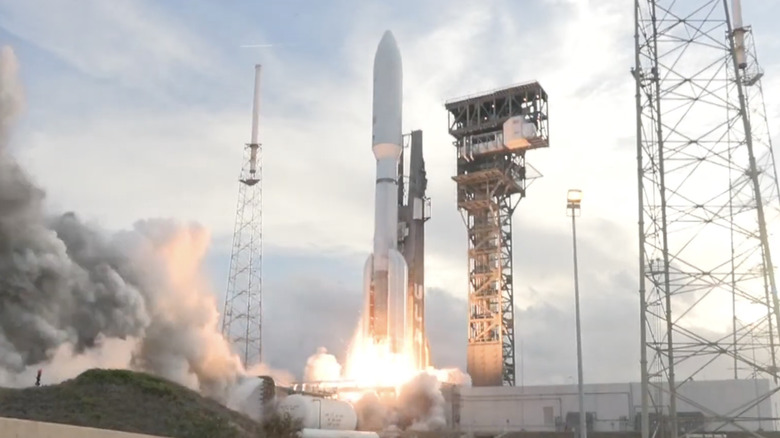
Amazon Leo started life as Project Kuiper in 2018, before its name change in 2025. Like Starlink, it's vying to become a massive satellite network capable of serving households, businesses, and other customers globally with fast, reliable internet connectivity from space. Leo could even tie Amazon Prime to its upcoming service. But first, it has a lot of catching up to do. As of October 2026, Amazon's rival Starlink service has only deployed 396 satellites in low-Earth orbit, a mere fraction of the 11,000-plus Starlink satellites currently circling our planet. SpaceX is also looking to expand further into mobile, having struck a deal to access additional wireless spectrum that could help its satellite-to-phone service deliver more reliable coverage in the U.S.
Leo is, however, an ambitious project, with plans to create a constellation of around 3,200 satellites to give it global coverage by July 2029. Before then, using the satellites already deployed, Leo is targeting a commercial broadband launch in late 2026, with coverage expanding steadily as more satellites are sent to orbit.
Whether Leo can effectively challenge Starlink will depend in part on how its prices compare with the established service, though Amazon has yet to announce important information such as residential subscription fees or terminal costs. The company has, however, unveiled several user terminals, with advertised download speeds of up to 100 Mbps, 400 Mbps, and 1 Gbps. The specifications offer an indication of the service's potential, but Amazon will still have to demonstrate solid performance by Leo in practice.