

Amazon Considers Challenging Starlink With A New Streaming Bundle Deal For Subscribers
We may receive a commission on purchases made from links.
Amazon has been gearing up to enter the satellite broadband internet realm before 2026 ends, and it's possible it will be tied to an Amazon Prime subscription. The company has indicated it may use its ecosystem of services to entice users to its LEO (low Earth orbit) satellite internet, including potentially Amazon Prime Video. While the company is determining the specifics of these potential deals, there are of course some perks to using satellite internet, including its ability to connect pretty much anywhere on the planet.
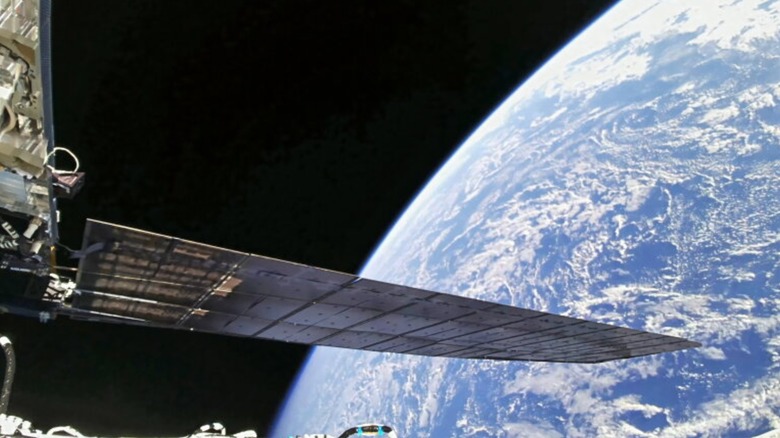
Amazon told Ars Technica in an interview that it has already placed 396 satellites already in orbit, and produced over 1,000 of them. It ultimately plans to have a network of 3,200 for its "first generation" product, the company said. Amazon's satellites are meant to compete with SpaceX's Starlink, promising to offer internet services to users that will allow for 4K streaming and "seamless" video calls, even in areas where cable internet can be hard to reach. Amazon representatives told Ars that bundled deals could include the company's Ring doorbells, FireTVs, or even potentially the company's eero Wi-Fi equipment.
Amazon has been hard at work developing its satellite program, even going so far as to consider partnering with European rocket firm Arianespace. However, Amazon has a long road ahead of them. The company's planned launch of some 3,200 satellites pales in comparison to Starlink's more than 10,000 satellites launched and currently in orbit. Additionally, Amazon also has to deal with its own satellite production and launch issues.
When can I get Amazon Leo?

Formerly known as Project Kuiper, beta services for Amazon Leo are expected to roll out by late 2026 or early 2027 for Canada, Germany, France, the U.S., and the UK. Anyone within these five regions are able to sign up through Amazon's free waitlist. For comparison, Starlink is currently available in over 100 countries and also has over 4 million subscribers.
Aside from its small constellation of satellites launched so far, Amazon has also faced regulatory issues that have caused delays. The company has also had to contend with the high cost of sending materials to space, with one report suggesting Amazon is paying anywhere between $2,600 and $7,000 per kilogram for rocket flights.
Ultimately, Amazon may not be directly competing with Starlink, at least initially. Over time, however, industry watchers wonder whether Amazon may be aiming for greater overall internet coverage around the world, as its LEO satellites can orbit farther from Earth compared to Starlink (590 to 630 km compared to Starlink's 340 to 550 km). In terms of Amazon offering Prime deals, it will be interesting to see if this helps bring in customers when Leo finally launches.