

3 Perks Of Using Satellite Internet

Satellite internet used to be the option you settled for when cable, fiber, and even halfway-decent DSL weren't available at your house. Thankfully, more homes than ever have access to internet now, and since services like Starlink really started to take off, they've only opened up new availability for users looking to get strong and fast internet to their home — no matter where they are.
There are still some tradeoffs, of course. Like any tech, you might run into some issues, even with a provider like Starlink. But, depending on where you are and what services are available in your area, satellite internet can be a really solid alternative to traditional home internet.
As for speed, Starlink itself offers a plan that supports up to 400+ Mbps and higher for residential installations, and other companies like Amazon's Leo satellite service are expected to begin rolling out soon and will offer up to 100 Mbps speeds. But speed is far from the only perk you can expect with satellite internet. Broad availability, solid pricing, and even the ability to simply take it wherever you go — depending on your plan and provider – all make satellite internet a great option for many.
You can get it almost anywhere
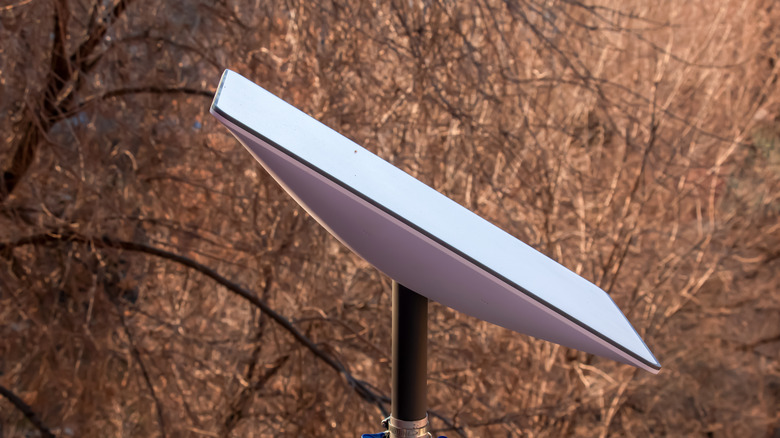
One of the biggest, most obvious perks of satellite internet is the fact that in most cases you don't need to worry about setting up an appointment with a cable company to come out and install everything. While some companies, like Starlink, do offer residential plans that are more akin to traditional ISP offerings, the company also offers a roaming service that lets you get it set up anywhere you are. All you need to do is pop out the dish, line it up with a satellite, and boom, you're ready to browse the web.
Of course, there are some limitations to the "anywhere" perk, as buildings, mountains, trees, and other obstructions can certainly cause signal interference. But, usually if you can line up the dish with a satellite, you can get service almost anywhere. Additionally, if you do decide to go with one of the residential services like we mentioned before, then your service will be tied to your address. However, you can often add on the ability to "roam" with your internet, too, depending on your provider.
It's fast enough to replace your wired connection
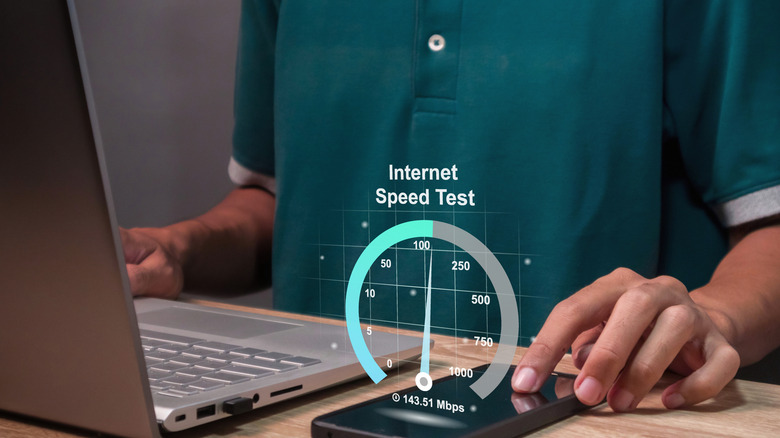
While satellite internet used to mean slower speeds compared to traditional ISP offerings, newer systems like Starlink offer more than usable data speeds. This means you don't have to settle for slow internet just because it's the only thing you can get in your area.
A big part of the speed problem with older satellite internet systems was due to how far away the satellites were from your home. However, with Starlink and other companies using low-Earth orbit satellites instead, the data doesn't have nearly as far to travel. This is great for speed, because it means that your internet system is sending data back and forth at much faster speeds than satellite used to.
Starlink's current U.S. lineup starts with a 100 Mbps plan. There's also a 200 Mbps tier, while Residential Max is advertised at up to 400+ Mbps. Amazon's Leo already advertises speeds of up to 100 Mbps and it isn't even out yet. Of course, real-world performance will vary, and none of the current services quite match up to fiber's gigabit speeds. However, if you don't need gigabit, satellite is still a solid alternative.
Keeps kicking even if wired connections go down

Storms, construction work, and even damaged utility poles can leave your wired connection useless even when every piece of equipment inside your house is working properly. However, with satellite internet, you get to bypass all the wires because your satellite dish is connected directly to the satellite feeding your network's data. In fact, satellite communications have become one of the best backup options for disaster areas, where it can take weeks or even months to bring wired connections online. And now with so many options available — including satellite connectivity on smartphones — people in disaster areas can stay connected with family and friends even when the wired connections stop working.
Of course, satellite isn't an automatic disaster-proof option. Your dish still needs power, and severe weather can affect the actual connection to the satellite if there is a lot of cloud cover in the area. However, being able to rely on satellite internet even when traditional networks are struggling is one of the biggest perks of these services. Unfortunately, like any tech out there, satellite internet isn't perfect, and there are still some disadvantages to using satellite internet that you should be aware of, too, such as the higher upfront and monthly cost. However, the perks are definitely worth keeping in mind if you're shopping around for new internet right now.