

9 Disadvantages Of Satellite Internet
There was a time when satellite internet connections were the absolute last resort. It was the type of technology used on rural farms where no wired or wireless terrestrial internet services reach, or at remote scientific or industrial facilities. It was expensive and not particularly fast, and reliability could be a real issue.
Today, thanks to services like Starlink, satellite internet has become dramatically better on all fronts, making it a real competitor to fiber internet or mobile internet services like 5G. However, even cutting-edge modern satellite internet has its particular pitfalls. And the older type of satellite internet still exists as an option, one you might have to consider, depending on your situation.
The main difference between traditional satellite internet and modern services like Starlink comes down to orbital height and the sheer number of Starlink satellites in orbit. Starlink orbits much lower than older systems and fills the sky with a constellation of satellites combined with numerous ground stations. Older satellite technology has a higher orbit and much thinner coverage since it's not designed to be an alternative to ground-based broadband. Either way, there are disadvantages of satellite internet that you need to be aware of, so let's jump in and cover the basics. When discussing the drawbacks below, we'll clearly indicate which apply only to the older type of connectivity, and which apply to more modern versions.
Higher monthly costs

Satellite internet used to be truly expensive, but these days, almost any variety of the service has a monthly cost in line with what you'd pay for fiber internet. That price is usually somewhere between $50 and $150 a month, depending on the exact details of your plan.
Fiber options do go lower than this, but the overall price range overlaps with satellite services. This makes the satellite cost seem comparable, at least until we look at other factors, such as speed. Gigabit fiber usually costs less than $100 a month in the United States, though some more expensive services might exist. For that money, a satellite service might only offer you 150 megabits per second (Mbps) of bandwidth. That's hardly something to complain about, but it's far more expensive per megabit than fiber.
But the issues go deeper. Generally on a fiber connection, the actual real-world speed you get should be pretty close to the claim. For example, on my gigabit fiber connection, I generally get 800-900 Mbps measured directly from the wall. If we look at the high-speed internet Starlink promised, the upper end is nearly 300 Mbps. However, in the real world, the average user gets something closer to 100 Mbps with the current technology. So, while the absolute monthly cost of satellite internet isn't that much more than that for home fiber, when you adjust it for equal service levels, then it's a much worse deal. If you compare Starlink to 5G internet, the story is almost the same, with 5G generally delivering much faster speeds for the price.
Expensive equipment
Fiber internet is fairly mature, and generally, if it isn't already installed in your home, the once-off cost of getting a fiber point into your home from the nearest trunk isn't prohibitive. It might even be free if you sign a fixed-term contract.
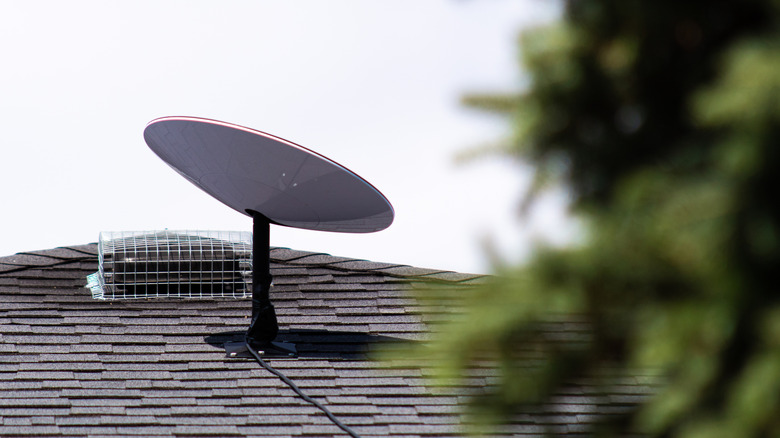
Satellite internet doesn't have local infrastructure to connect to, and unless you're moving into a place that's already set up for it, you may be looking at a fairly pricey installation cost. Depending on the service you'll be using, you may need to buy or rent a dish, router, and mounting hardware, and you may even need a professional installer. The total upfront costs for satellite internet can be anywhere from a few hundred dollars to nearly $2,000 – and that's just if you stick with stock equipment. Most people should probably replace their Starlink router with something better-specified, so there are some potential hidden costs.
Of course this does not apply with options like the Starlink Mini satellite internet, which is cheap and easy to buy and set up. However, that system is not designed to supply high-speed internet to an entire home. It's meant as a personal roaming internet for camping or for other temporary internet setups. If you want a new, professionally installed satellite internet facility where you work or live, you need to be prepared to pay for it.
Weather can still interrupt your connection

You probably already know that, when it comes to your home network, a wired Ethernet connection is generally much faster and more reliable than Wi-Fi. While wireless communication technology keeps getting faster and more stable, it's unlikely to ever match what a simple cable of copper or optical fibers can do.
This is doubly true for satellite internet. Starlink improved on the technology by shortening the distance that wireless signals have to travel. Particularly, this move reduced the amount of atmospheric obstacles that signals have to pass through. Electromagnetic signals work great in a vacuum, but (thankfully!) we don't live in a vacuum. Even on a perfectly clear day, the satellite has to send its data through hundreds of miles of air molecules.
When you have bad weather, that barrier suddenly becomes much harder to cross. Rain, snow, heavy fog, and thunderstorms can all attenuate or block radio waves. Starlink in particular is reasonable at dealing with this issue. When users are asked if Starlink is reliable, the general consensus is yes, but those same users acknowledge that outages are a part of the experience and that a clear sky is essential for best results. To be fair, both some types of 5G and satellite internet are vulnerable to the so-called rain fade, but wired internet connections generally are not, which makes fiber the number one choice if maximum uptime is your goal.
It's not available everywhere

You'd think that with satellites in space, it would be easy to cover every single inch of the planet with internet connectivity. However, the geometry of satellite communications means that some parts of the world aren't covered because of regulatory issues or because it's not (yet) worth the cost of expanding the constellation to cover that ground.
Even when an area is covered by satellite, not every spot within it will get a usable signal. Mountains, tall buildings, dense forests, or just subscriber capacity limits might prevent you from accessing satellite internet even if you are within the coverage area.
Satellite internet might also be unavailable for reasons that have nothing to do with technical limitations at all. Local laws and regulations might prevent a satellite operator from offering its services in some countries. For example, Starlink is not licensed to operate in South Africa because the company cannot reach an acceptable agreement with the government. Starlink customers in the United States can use the roaming function of their subscriptions to travel across borders. However, there's a time limit on how long you're allowed to do this before returning to the U.S. In the case of the Starlink Roam Unlimited plan, you can use the service for up to 30 days before you need to return to your home country, or the service will be suspended.
Latency is still higher than wired internet

Latency in internet parlance is how long it takes for your computer or device to receive a response from a remote system when you take an action or make a request. For example, interacting with a web page typically involves a latency of 40-100 milliseconds (ms) — click a button or enter some form data, and that's about how long you can expect to wait before you'll see some reaction from the page. Even if your internet bandwidth is fast, having high latency can make it feel slow. In practical terms, high latency means that a streaming video takes a long time to start playing, or that there's a delay during video calls that can make real-time conversations difficult. Online video games, in particular, need as little latency as possible to be playable.
One of the big advancements low-orbit satellite services like Starlink have made is reducing latency to the point where real-time applications become feasible. Under ideal conditions, Starlink should have around 25 ms of latency, while traditional satellite internet services in higher orbits have hundreds of milliseconds of latency. The latter is only good for email, file downloads, and web browsing if you have a high tolerance for lag.
Compare that to fiber internet, which often has streaming latency numbers in the single digits. That's indistinguishable from instantaneous to a human being. That said, the best-case latency for low-orbit satellites is fine for just about everyone, but it's the worst-case numbers that are the real issue, and this dovetails with problems like bad weather or suboptimal locations.
Data limits and traffic management still exist

Fiber internet has made us used to the idea that unlimited high-speed data usage is the norm. Even mobile internet providers have generous data caps or might even offer true unlimited data in some cases. While modern satellite internet might be advertised as being uncapped or unlimited, there's still usually a fair use policy that outlines how much data you can use per billing cycle before your speed is throttled.
A satellite constellation is complex and expensive to operate, and as the network takes on more users, it becomes harder to ensure that everyone gets a fair share of the bandwidth. While things might be great when people first sign up, that can change at the drop of a hat. In 2025, for example, Starlink introduced a severe speed cap for users on priority plans. Once you've used up your priority data, your speed is reduced to one Mbps. This effectively turns it into a capped plan, since one Mbps is practically unusable for most modern internet applications.
As the technology improves and the cost of bandwidth becomes cheaper, the usage restrictions should be relaxed to some degree. However, there's no guarantee that satellite internet will ever reach the cost-per-Megabit level that fiber optic internet enjoys. In some parts of the world, 10 gigabits per second (Gbps) fiber internet is already becoming available in homes, and increasing that number using fiber technology is a much smaller challenge than increasing the bandwidth of a satellite network.
Upload speeds are often disappointing

Have you ever even thought about the upload speed of your internet connection? Most people focus on how quickly they can download data, but the way we use the internet today also makes the speed with which you can send data rather important. We have cloud drives, video calls, livestreaming, and many other internet apps that rely on a fast up-pipe to the net.
Typically, lower-end fiber connections offer an upload speed that's half of the download speed. So if you have a 500 Mbps connection, your upload speed will be 250 Mbps. That's known as asymmetrical fiber, but if you're willing to pay a little extra, you can get symmetrical fiber, where the speed is the same in both directions.
The problem is that uploading data is a special challenge for satellite internet because you're using a tiny dish to beam your data into space. Most Starlink plans offer upload speeds of 10-35 Mbps. However, traditional geosynchronous orbit services like HughesNet and Viasat can only offer a fraction of that already anemic upload speed. Both of those services offered upload speeds below five Mbps as of 2025. If you're someone who works remotely, which is much more common these days, slow upload speeds can make collaboration and sharing a real problem. Since fiber and mobile internet upload speeds are so fast, we rarely think about it, but on satellite, those speeds are a few generations behind the cutting edge.
Repairs and support can take longer

If you're using fiber internet, you're literally attached to the infrastructure. If you're using mobile internet, you have to be within a few miles of a cell tower, and you're usually in a dense urban or suburban area. That means help is never too far away if you have issues with your equipment.
If you're using satellite internet, the nearest technician could be half a world away, because the reach of the technology is so wide. Not only that, but services like Starlink have such a fast-growing and dispersed customer base that offering fast and effective technical support is a challenge. In customer surveys, one of the key complaints about Starlink in particular is slow turnaround times for support tickets.
When you run into service interruptions or poor performance, you're more likely to get bounced between automated systems than real employees, and if an on-site repair has to happen with your satellite equipment, you might be looking at a significant wait time until a local installer or technician can get up on your roof.
Better technologies may become available
Right now, satellite internet technology is the best solution if you can't get fiber, and if fixed wireless 5G isn't available, too expensive, or too restrictive. Thanks to the arrival of satellite internet that's somewhat comparable to wired home broadband, you don't have to limit where you live or work to dense urban areas. You can live next to the beach and earn your living writing articles about satellite internet, as one completely random example.
But technology never stands still, and both fiber and mobile internet are improving at a rapid pace. As we alluded to earlier, the performance cap on fiber and mobile wireless technology may turn out to be much higher than for satellite technology. It's possible, then, that satellite internet could remain a fallback internet solution basically forever. Starlink and Amazon Leo might have the ambition of becoming truly global ISPs, where people prefer to use them over other forms of connectivity.
However, what might actually happen is that countries with underdeveloped infrastructure will embrace satellite internet, just as countries like India have embraced mobile internet and leapfrogged wired phone systems. But in places where fiber is well-developed, it's likely that not all of those regions will end up being satellite-based, limiting the investment in satellite technology and potentially curbing its ultimate potential.