

How Many SpaceX Launches Have Been Completed?
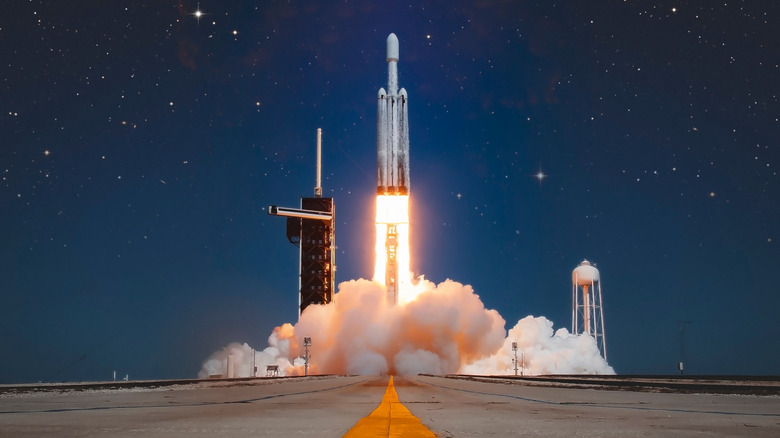
SpaceX announced on September 13, 2026, that its Falcon family of rockets had surpassed 700 missions, setting yet another incredible milestone in spaceflight. The Falcon family started out with SpaceX's first rocket, the Falcon 1. This rocket launched only five times between 2006 and 2009. The overwhelming majority of the 700 launches were completed by SpaceX's ultimate workhorse — the Falcon 9. The Falcon 9 has, at the time of writing, launched 688 completed missions, and in 2026 averages two to three launches per week. A large portion of these launches was attributed to Starlink launches, and in early 2026, the company announced that it now had more than 10,000 Starlink satellites in orbit. The long list of successful launches could not have happened without SpaceX's proven rocket reusability, with the Falcon 9 booster being capable of flying again after only a two-week turnaround time. The three-core Falcon Heavy rocket, which takes care of launches that either have to lift very heavy loads or send payloads over great distances away from Earth, has completed 13 missions, notably without a single mission failure.
Since SpaceX started testing its gigantic Starship rocket, it has added significantly to the launch count even though it remains in its test phase. The Starship has to date been launched 14 times, and while not all 14 have been successful, failures are always an option with SpaceX's iterative design and test approach, where it treats its rocket launches like software updates. SpaceX's 14th Starship flight was launched on September 28, 2026. The rocket's 14th flight was the very first orbital flight of the Starship vehicle, a major milestone in its test campaign. Starship's latest launch brings the total number of SpaceX launches at the time of writing to 720.
How many failures has SpaceX had?
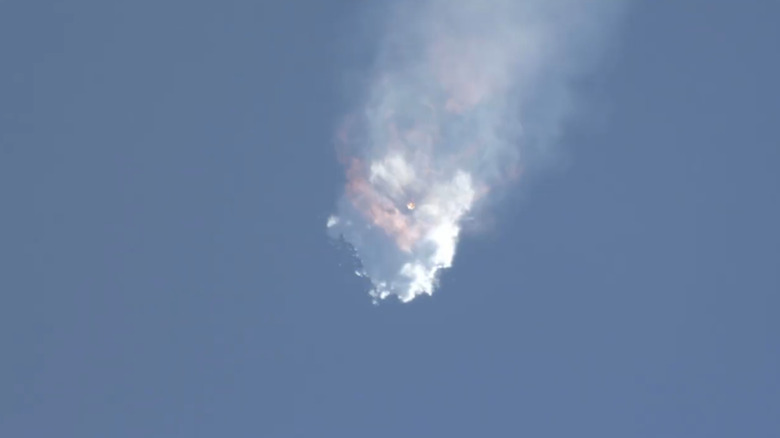
Even though SpaceX has completely revolutionized spaceflight with its family of reusable rockets, the company has had its fair share of failures. SpaceX has suffered six notable failures since the start of its launch attempts in 2006. During the company's early years, it failed to lift its Falcon 1 rocket to a stable orbit three times before succeeding on its fourth attempt. The first failure was down to a fuel leak that caused a fire. An early engine shutdown on its second attempt prevented the rocket from reaching orbit, and an engine timing issue on its third attempt caused the first and second stages to collide in flight.
While the Falcon 1's failures were relatively innocuous, the company also had three serious failures from its Falcon 9 family. The first occurred in June 2015, when a SpaceX Falcon 9 carrying critical cargo to the International Space Station (ISS) disintegrated in flight as a result of a design flaw in one of the rocket's helium tanks. The mission, named CRS-7, was destined to carry critical supplies to the ISS, which, in an incredible twist of fate, already had two cargo resupply missions fail successively before SpaceX's CRS-7 failure.
The second major Falcon 9 failure occurred in September 2016, when the rocket exploded on the pad during a static fire test. The failure happened after a helium tank immersed inside a liquid oxygen tank exploded, destroying the AMOS-6 satellite. The most likely cause of the explosion was linked to breaking fibers in the composite pressure vessel that likely ignited due to friction, causing the entire second stage to explode. A third major Falcon 9 failure occurred in July 2024, when an upper-stage malfunction left 20 Starlink satellites in an orbit too low to survive.
The highlights from more than 700 launches
SpaceX's 700-plus launches have come with a host of world firsts and important strategic launches for the United States. As each of the company's rockets has gone through its various stages of development, they have broken records and made landmark launches. The Falcon 9 booster's first successful landing was one such landmark event, and was completed during the December 21, 2015, ORBCOMM-2 mission. This first booster landing changed spaceflight forever.
SpaceX's first Falcon Heavy test flight in February 2018 was probably the company's most iconic launch. The SpaceX team needed a dummy payload for its first Falcon Heavy test flight, and accordingly used a Tesla Roadster as the payload, firing it on a trajectory intended to take the vehicle and its Starman dummy past Mars. The two Falcon Heavy side-boosters made flawless simultaneous landings at SpaceX landing zones back at the launch site.
The company's first crewed mission, Demo-2, was an important step in restoring America's ability to launch its own astronauts to the ISS. NASA had been buying rides on Russian Soyuz spacecraft after the space shuttle was retired. The Demo-2 mission saw astronauts Doug Hurley and Bob Behnken launched to the ISS successfully, kicking off NASA's Commercial Crew Program in style. SpaceX has, at the time of writing, launched 13 crewed NASA missions and a host of commercial launches.
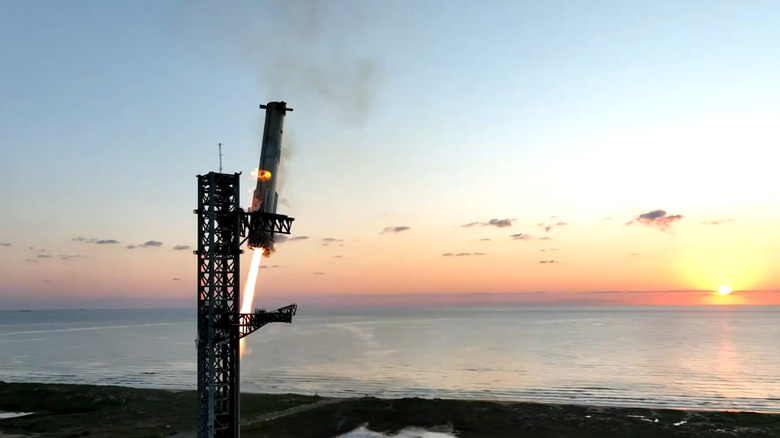
SpaceX's Starship performed another world first when its booster came back to the launch tower during the fifth Starship test flight and was successfully caught by the launch tower arms. This was where SpaceX reached its current pinnacle. The Starship booster itself broke records for its size, and the successful tower catch was yet another engineering feat by SpaceX that set a new bar for rocketry.