

Your Car May Outlive Its Software Support – And That's A Real Problem
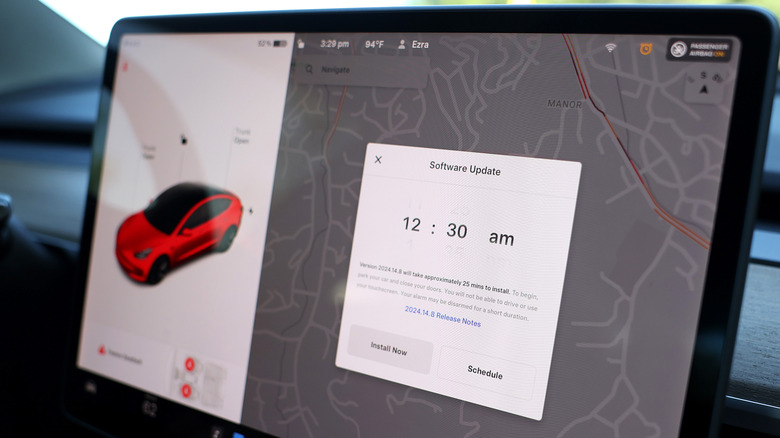
When heading out for a road trip, there's always a chance something could go wrong with your vehicle on the road. Maybe the oil level gets too low, or maybe a battery dies. If you have a car built in the past few years, you may have yet another issue pop up: a software update. Just like your phone occasionally needs an update to improve security or fix bugs, today's cars greatly rely on software to function. One of the biggest problems with the use of software in cars is the potential for the car to outlive its software support, making repairs much more complicated.
If you've ever kept a device for many years, you may have an idea of how this works. As newer models of the device come out, focus turns to keeping the latest devices updated. Eventually, the new tech becomes so different that the company stops supporting the software of older models because they cannot provide the support forever. For example, just look at a list of Apple devices that are reaching the end of software support; Apple typically stops supporting software for iPhones after about five to seven years.
The problem here is that cars can last for decades, not just a few years. When you're spending tens of thousands of dollars to buy a new car that will lose significant functionality after the company decides to stop providing software updates for the model, the lack of support becomes even worse. Add in the difficulty for independent mechanics, and the issue becomes even more concerning.
The problem with your car outliving its software
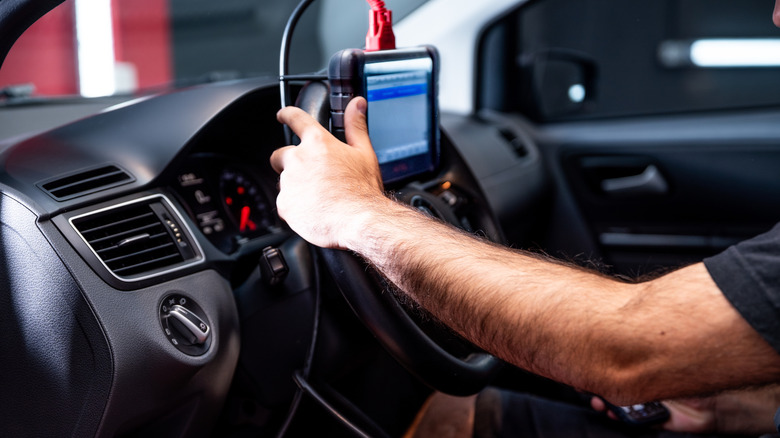
It's tough to tell just how big of a problem a lack of car software support would be until you understand exactly what software does in today's cars. In software-defined vehicles, software plays an important role in more than just the infotainment center. It can also be vital to controlling the engine, transmission, safety systems, driver assistance systems, and telematics. Losing the ability to connect your phone to your car at some point in the future would be frustrating, but losing things like the power to airbags, the automatic transmission, or the ignition timing — all of which can be connected to software in cars — would make the car unsafe to drive. Even unexpectedly losing optional safety features like adaptive cruise control or blind spot detectors could be dangerous.
Unfortunately, there is currently no way to determine just how long manufacturers will support each vehicle. Looking at a company like Tesla, it seems as though its oldest software-defined vehicles, from around 2012, are still supported in some ways. Those models still receive updates, but certain features that require different hardware cannot be implemented through over-the-air updates. The closest guarantee to a software support timeline is for software updates related to safety recalls, as manufacturers must provide free fixes for safety recalls for 15 years. Other than safety recalls, there are no laws or requirements for manufacturers to continue to support your car's software throughout its lifespan, so it's important to know what kind of car you have and what can be done.
Is your car a software-defined vehicle?

On the other hand, while software-defined vehicles are supported, owners benefit from enhanced driving features and potentially easier repairs for things that can be fixed remotely or at the dealership via software updates rather than mechanical fixes.
If you are in the process of buying a new vehicle that you plan to keep for years to come, it's important to get as much information as possible from your car dealership or manufacturer. While not everything may be available for you and any estimate given on the length of coverage for software updates may change, you may still get some helpful information. The same applies if you are buying a used or slightly older vehicle; you'll absolutely want to know if, for example, discontinued EVs could get software support.
If you already have a car and suspect it may be a software-defined vehicle, there are some ways to confirm so that you can have a better understanding of your car's future maintenance. Not all software-defined vehicles are EVs, but many EVs are software-defined. Just look at how Hyundai's EV software might be locking owners out of repairs. If you've ever gotten over-the-air updates on your car or been told that your car's software has been updated by a mechanic at the dealership, it's very likely a software-defined car. Less definitive signs may include "smart" features related to smartphone integration and advanced driving assistance systems, such as the ability to start the car from your phone or adaptive cruise control.