

Some Audiophiles Avoid The Blue Yeti Microphone, So Here Are 4 Affordable Alternatives
We may receive a commission on purchases made from links.
There's a reason the Blue Yeti is considered antiquated by modern standards. Audiophiles steer clear of it, as it's an all-encompassing microphone that tends to pick up just about everything in the room. Without some heavy-duty touch-up in post or when going live, there are simply better options out there now. This is particularly pertinent now that Blue Yeti has been effectively subsumed by Logitech and isn't exactly the same brand as when it was coming up.
Logitech has actually just recently followed up on the Blue Yeti with the "Blue Yeti 2," an AI-backed (sigh) microphone with tracking audio and a denoiser. As the original 2009 Blue Yeti and a few of its follow-ups were known for letting it all in thanks to a sensitive condenser microphone, this is a welcome change. However, some of the recommended alternatives will already do a better job with software like Nvidia Broadcast, OBS, or even those baked into remote work focused communication apps like Discord, Slack, and Teams.
Obviously, we want to keep the price down, which is why the Blue Yeti microphones took off in the first place. Low-cost entry into partially mid-tier hardware is now more affordable for the hardware that's being supplied. It's still doable — fairly easily — but the other side of the Blue Yeti that we need to meet is accessibility. Connecting over USB eliminated the need for an audio interface and instead relied on the software of either the operating system or other optional programs, like VoiceMeeter Banana and Potato.
Shure MV6 Gen 2
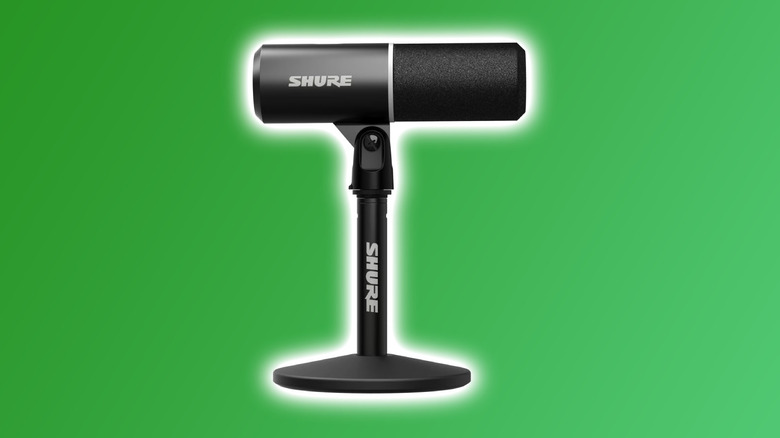
Recently released, the Shure MV6 Gen 2 fixes quite a few issues from the first generation. If the microphone on the Gen 1 was bumped live on stream, the touch-sensitive mute button would often cut the audio — plus, its cable was just too darn short out of the box. However, it was equipped with USB, allowing those unable to get hold of an interface access to the regularly praised Shure quality.
The newer iteration has already garnered solid reviews, with Windows Central praising its audio quality out of the box and awarding it four and a half stars. Gaming Trend gave it a 90/100, citing its pricing. Pricing on this microphone isn't ridiculous when you begin to dive into some truly high-end equipment. With an MSRP of $169, there are worse deals out there if simple, but high-quality audio is what you're after.
As with many of the microphones on this list, it does come with its own software. This gives you more control over the microphone and unlocks a few of its features, like the real-time denoiser and "popper stopper," and if you're particularly bad with your "P" sounds, it also pulls in your other microphones to apply some settings to them in an emulated mixer environment. Ultimately, the Shure MV6 Gen 2 offers a flexible USB microphone with some pro features buried in the software. One aspect that has garnered it praise is how simple it is to get that high-quality audio out of it without much tinkering.
Rode X XCM 50 and XDM 100
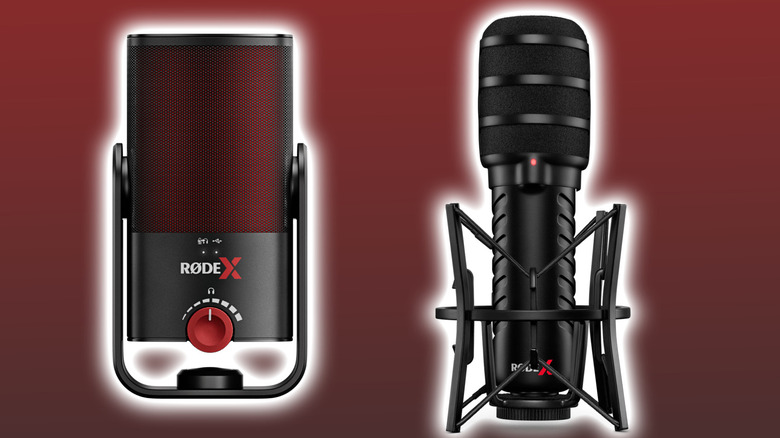
A small, fairly portable microphone, the Rode X XCM 50 offers decent audio quality over USB-C and hooks into Rode's own software, Unify. It was a little rough at launch, and it's still a hassle to deal with on a regular basis — but once you've set everything up, the XCM 50 is a truly great microphone to have on hand. Out of the box, the microphone sounds great, and it even comes with a physical knob to turn the volume up or down on the built-in monitoring headphone jack.
Priced at $109 on Amazon, the Rode X XCM 50 was part of the company's forward march into supporting content creators of all levels. It had already dipped into USB microphones, but this was an all-in push forward into the space. Rode also launched the XDM-100 at this point, which is a more traditionally shaped microphone that works best when connected to an arm. The same manual controls are on board, as well as a headphone jack to use it as a built-in monitoring tool or as an audio output.
The XDM model is a little more expensive, but has been seen for as low as $123 recently on Amazon. It usually retails for $259 and is an excellent-sounding and performing microphone across multiple disciplines, music and content creation.
AceZone A-Spire
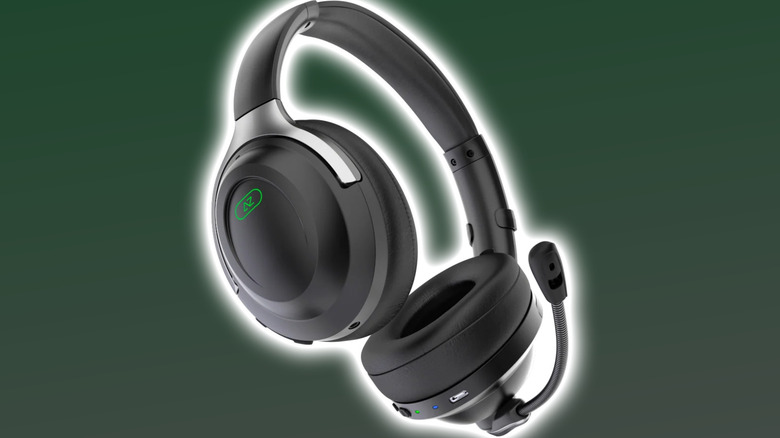
If you need excellent noise cancellation, then the AceZone line of headsets, particularly those lower-cost ones in the A-Spire range (2.4 GHz wireless or not), are for you. They are also excellent for gaming, using a different kind of sound stage that — boiling it down slightly — allows for a deeper hearing range than other headsets. Examples shown included "Counter-Strike," where the footsteps were able to be heard far earlier than normal. But that's the headphone part of this unit — what about the microphone? Well, while the headset comes with fantastic noise cancellation tech on board, so does the microphone.
In testing, using it on a crowded plane in 2023 after a visit to the AceZone offices, it was able to drown out the noise of the plane and the people around. At home, this means that what's going on around you is automatically filtered out, without having to rely on the software you're using. Of course, the microphone isn't going to be the end-all, be-all for high-end content creation, but for calls in a busy office or at home, the noise cancellation is absolutely a killer feature that can't be slept on.
It can connect over USB-C, Bluetooth, or with the A-Spire Wireless over 2.4 GHz. Priced at $199 on Amazon for the non-2.4 GHz version, or $299 on Amazon for the Wireless edition, these still hold the crown in their particular space.
Methodology

For this article, we took a look at some online forums to gain a sense of the current public opinion on the Blue Yeti, and that was used to supplement the author's own experiences. This research phase included reading and watching reviews. From there, it was about whittling down the list using first-hand experience — either ours or that of a trusted expert.
Aside from the Shure microphone, which garnered an entry on this list as a more recent release thanks to reviews, the author has had hands-on or other real-world experience with all of the above microphones and has utilized their prior knowledge on the subject to come to the conclusions. We had access to the AceZone and both Rode microphones for the article, but prior reviews and features surrounding the hardware were also used in determining their placement on the list.