

How To Build A Smart Home That Works Across Different Brands
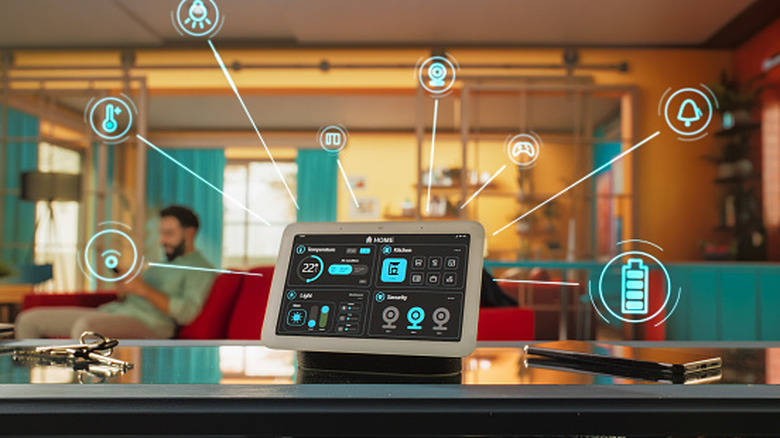
Pretty much every smart home brand and device maker has an exclusive mobile app you must use to control and interact with said devices. Smart video doorbells, smart locks, smart lights, smart appliances — you name it, they all have separate apps unless you manage to buy everything from a single provider. However, if you play your cards right, you can build a smart home with dozens of different devices and brands that you can still manage from one unified system. The key is to choose a central platform or hub that works with all kinds of gadgets, then make sure your new gadgets are compatible with your chosen ecosystem when you shop.
Apple Home or Amazon's Alexa are great examples. Even better are Matter-enabled, Home Assistant-friendly systems. Those ecosystems usually offer even broader options. For example, the Matter standard includes several compatible hubs, such as the 4th Gen or newer Amazon Echo speaker, Google Nest Hub 2nd Gen, or Aqara Hub M3. Think of the hub as the core control device that everything tethers to. There are many affordable hubs, but you don't necessarily need extra hardware. Some apps let you sync everything without a hub as long as you have Wi-Fi, like the Alexa app.
In simple terms, choose a core ecosystem and build your home around it. To avoid sounding repetitive, some popular smart home ecosystems include Amazon Alexa, Apple Home, Google Gemini (formerly Google Home and Nest), Samsung SmartThings, and Home Assistant.
Some important things to consider when building your smart home
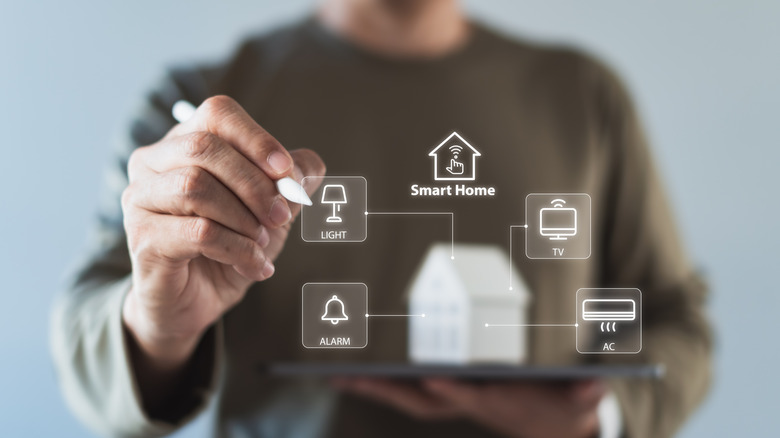
Once you dial in your preferred ecosystem, look for devices that are specifically compatible with it. The good news is that many modern smart home devices support multiple hubs or platforms. However, there's still enough variety that you'll want to pay attention when buying and installing new devices. If you go with Alexa, you'll want devices compatible with Alexa; for Home Assistant, you'll want Home Assistant support; for Matter, you'll want Matter support, and so on. Be sure to look for the appropriate labeling when choosing products.
Most smart home devices need to connect to Wi-Fi for remote access and to enable some features, and you'll want them all on the same local network so they can communicate. That means if you have a main network and a guest network on the same router, you must connect your devices to the same one.
Finally, even if devices are connected to a local network, your smart home may be unresponsive during an internet outage. For local access, choose a hub with offline support, which will often incorporate other wireless standards like Zigbee, Z-Wave, or Thread. For example, Apple Home supports local communication with compatible devices out of the box and switches to Thread or Bluetooth when the internet is down. Apple's HomeView smart speaker will support Thread and Matter at launch. But any devices you install also have to support it. The hub might continue working, but that doesn't guarantee the individual devices will. Your smart lock, lights, or thermostat must also support offline access via one of the wireless technologies.
Here's why choosing wisely is important
Building a smart home around a central ecosystem means all your devices communicate, and, of course, it makes management much easier. But smart home ecosystems can be discontinued. It's happened before. I used to have a Wink Hub, which went bust and brought down a ton of smart home devices with it. Other examples include the Revolv smart home hub and Lowe's Iris platform. That's why something like Home Assistant is one of the more enticing options, given it's open source. Matter, or Matter over Thread support, also signals universal communication and long-term support that would be difficult, if not impossible, to shut down. That's because Matter products sync locally.
Bear in mind, Matter and Home Assistant are two different things, but both let you run a smart home locally. Matter is a universal standard from the Connectivity Standards Alliance (CSA) to ensure smart home devices can communicate. Thread is Matter's mesh networking protocol, often called "Matter over Thread," and is best compared to Zigbee or Bluetooth. Meanwhile, Home Assistant is open-source software that acts like a hub, letting you connect and automate everything. One Belgian homeowner actually used Home Assistant to connect over 400 devices.
For the most part, Home Assistant products will keep working even if the core platform shuts down, as long as the devices aren't cloud-dependent. Matter and Matter over Thread products also support local access, so they'll almost always have a way to work even if the internet or cloud services are down. That's not to say these are the only smart home products with local access, but it highlights why choosing the right ecosystem is important for long-term reliability.