

This 'Cell Tower In The Sky' Was Just Sent On A World's First US-Japan Round Trip
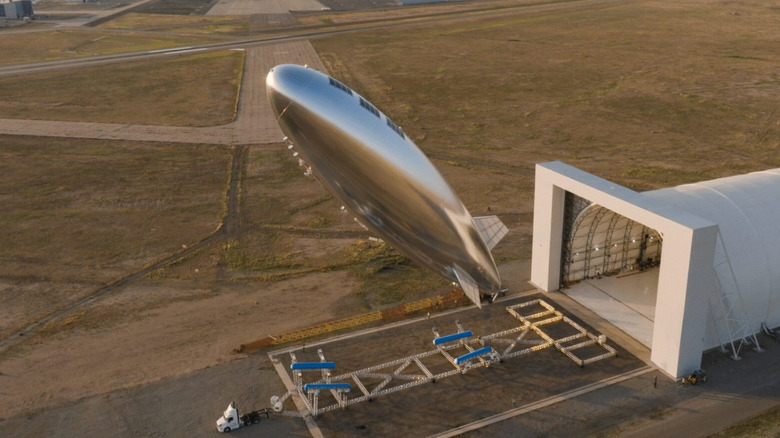
U.S. aerospace and material science company Sceye recently completed an important test mission that may revolutionize how we build and maintain far-reaching cellular networks. The mission, titled Service Test 1 (ST1), involved sending a so-called "cell tower in the sky" on an unprecedented round-trip flight from New Mexico to Japan. On Sceye's aircraft, the SceyeCELL tower traveled a total of nearly 19,000 miles over 30 days to complete its journey and return back home. During that time, SceyeCELL operated within Japanese-managed airspace for seven days and demonstrated mobile broadband connectivity to unmodified devices within the network of Sceye's Japanese partner company, SoftBank Corp.
Sceye specializes in building High Altitude Platform Systems (HAPS) that operate in the stratosphere. This stratospheric infrastructure promises to provide direct-to-device connectivity, drone communication, and edge computing in a way that's different from how satellite connectivity works on smartphones. According to Mikkel Vestergaard Frandsen, Founder and CEO of Sceye, "This mission proved not only that our technology, vehicle systems, payload, and operational infrastructure are ready for connectivity services, but also that the stratosphere is where the future non-terrestrial infrastructure lies. The stratosphere is what will enable the always-on future — including the promised land of 6G." The success of ST1 comes nearly a decade after AT&T tested a flying cell tower of their own, but Sceye is proving that the technology may be more viable now than ever before.
Is the future in the stratosphere, or in orbit?
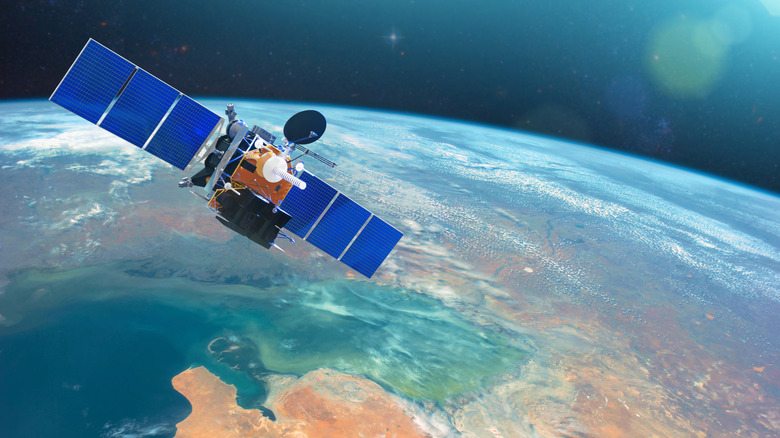
The infrastructure that Sceye aims to build in the stratosphere may compete directly with efforts to facilitate cellular connectivity from space. For example, the Starlink Direct-to-Cell phone network is a wireless service that connects smartphones to the internet via satellite. These kinds of satellites operate in low Earth orbit; an area of the thermosphere and exosphere layers that extends as far up as 1,243 miles above the planet. By comparison, Sceye's HAPS operate much closer to us — the stratosphere only extends to an altitude of around 30 miles.
Advances in satellite technology are exciting. Some perks of using satellite internet include high speed, reliability, and the potential to use it anywhere. But Sceye is equally confident in the potential of its HAPS technology. In a press release from Sceye, the company explains that one HAPS is designed to cover the equivalent area of approximately 500 terrestrial towers when deployed at full scale. While nothing is certain just yet, stratospheric infrastructure might be able to provide faster connectivity to more places than Low Earth Orbit satellites can — and at a fraction of the cost.