

Why Did Intel Stop Making Pentium And Celeron CPUs?
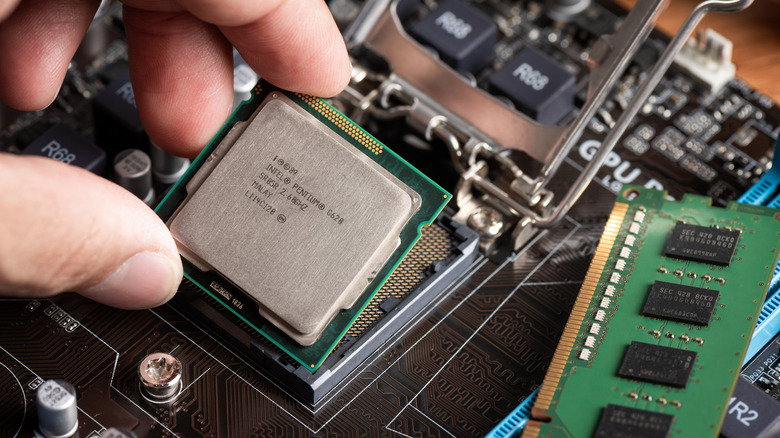
Intel officially killed off its Celeron and Pentium brands in 2022, but the company technically didn't stop making that level of processor. Celeron was Intel's budget processor, often found in low-spec laptops and desktops, between 1998 and 2023. In fact, the original Celeron was based on the Pentium II, to give you an idea of how low-end it was, as the Pentium III launched a year after. Ultimately, while the brands are dead, they are represented by a more unified "Intel Processor" branding now.
As of this writing, there have been a total of 15 chips released under the new generic "Intel Processor" branding. Though they don't seem to adhere to any discernible generation groupings or clearly defined performance tiers, they do power a range of lower-end devices like mainstream laptops and PC gaming handhelds. The scope of the chips has changed, integrating more powerful components when needed, and much of the budget-conscious fare has been shifted over to the surviving Atom branding. That brand has also had its direction changed, instead focusing on powering products like embedded PCs or internet-of-things devices, alongside the lowest end of machines.
Intel's move was money-driven, as the company's roster of chips available at the time had ballooned. Not only were there Celeron and Pentium chips, of which the final generation had a total of six CPUs split between them, but there was also the high-end line, Core, and the industry focused tier, Xeon. The idea of shrinking its product line down would allow Intel to refocus on what mattered at the time. It now has Intel Processors along with models under the Atom, Core, and Xeon brands, and it also has vPro and Evo for certain devices running specific setups.
Pentium and Celeron lasted quite some time
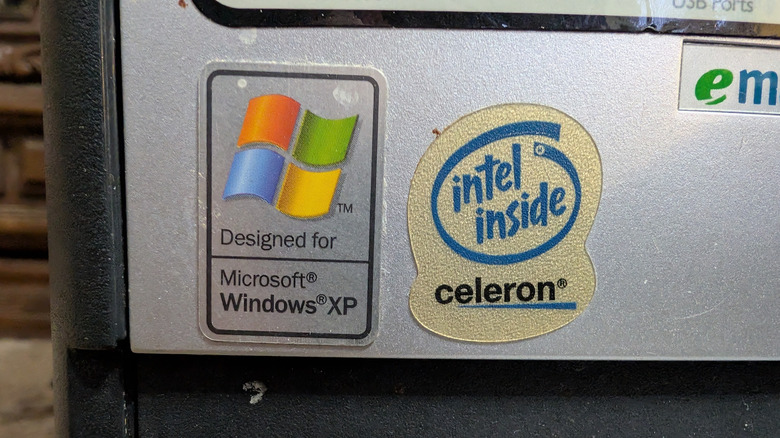
While Celeron was seen as the low-tier offering originally, Pentium eventually morphed into that role. Through its lifecycle as a brand, it was one of the most sought-after CPUs in the very late '90s, with the Pentium III and Pentium 4 reigning supreme. Intel's Pentium line remained highly popular through its time in the spotlight, with the Pentium III being made well into the 2000s, and the Pentium 4 finally being killed off in 2008. These were tremendous sellers for Intel, cementing the brand even further after taking over the processor market with the 386 and 486 chips through the '80s and '90s.
Celeron essentially acted like a replacement for the 486, which had been clinging on since its launch in 1989. However, it didn't go out without a bang. Prior to being mothballed as a brand, Celeron chips carved out a nice niche for themselves powering budget-minded Chromebooks. Starting with Samsung's Series 5 550 in May 2012 and the Acer C7 Chromebook in November of that same year, there was a stretch where dozens of ChromeOS machines from varying brands, including Asus, Dell, HP, and Lenovo, turned to Celeron chips to power the Chromebook experience.