

Does Nvidia's Liquid Cooling Make Data Centers Use Less Water?
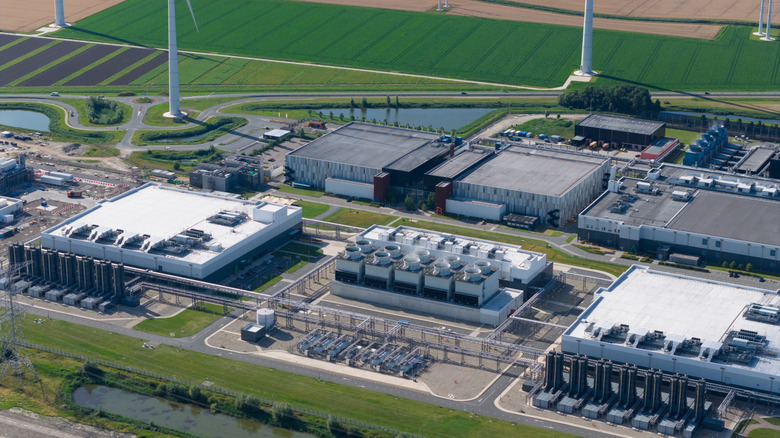
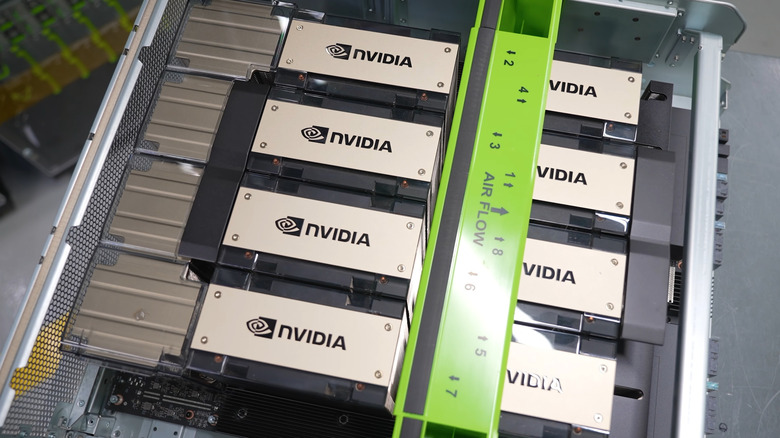
Earlier this year, Nvidia announced that it had made some new developments in relation to water usage around data centers. It claimed that its Blackwell data center hardware "boosts water efficiency by over 300x," with the hardware now liquid-cooled to lower temperatures, namely, to use less water. Nvidia also detailed in June 2026 that it is actually managing to cool its hardware with 45 degree Celsius (113 Fahrenheit) liquid, using the closed-loop systems that the latest hardware incorporates to shave off even more water usage by the data center racks.
The closed-loop design means that once the water goes in, it will rarely need to be refilled, with the water inside constantly recycled through the system. On paper, and in certain working data centers, this has seen the amount of water used by the cooling reduced. Future data centers using Nvidia's hardware will also have closed-loop designs at the start. However, that doesn't mean that Nvidia has solved the energy crisis that looms around all data centers, as outside of the loop itself, there's still the problem of massive water consumption from just generating power to the data center.
Power for everything in the data center still has to come from the main power generation sources in the area. Typically, this is drawing from the grid itself, but other data centers, such as Elon Musk's Colossus 2 in Mississippi, have opted for gas generators to get around limits.
U.S. power grids cannot keep up with the demand
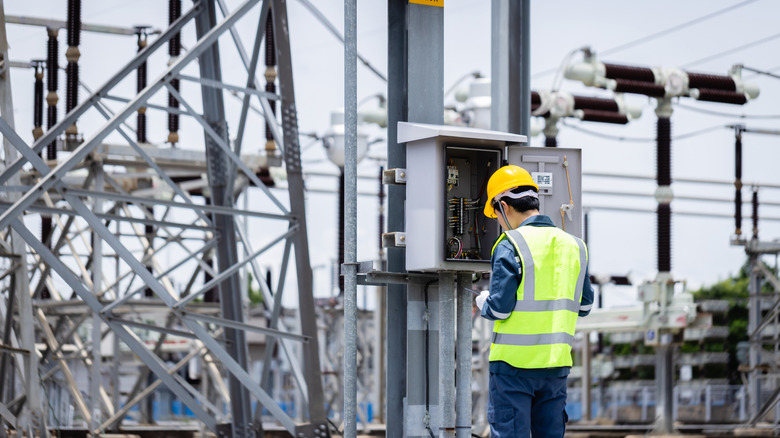
Infrastructure in the U.S. sees billions of gallons of water a day pumped to generate power via hydroelectricity, fossil fuel plants, and other electricity generation methods. The International Energy Agency reports that half of the data centers in the U.S. are powered by fossil fuel plants, further exacerbating ongoing climate change. The IEA also reports that the U.S. is one the largest growers in energy usage for data centers, with a 130% increase expected by 2030, or to around 240 terawatt hours. Globally, anticipated demand will rise from 485 TWh in 2025 to 950 in 2030.
No matter how Nvidia or other manufacturers figure out how to recycle water within the facility to shave off usage or energy, the actual data centers themselves are demanding ridiculous amounts of power. There, the grid quite literally can't handle the pressure of these AI data centers, with hydroelectricity only generating around 4000 MW of power.
Nvidia might have a solution for cooling, but not power generation
Especially in the U.S., which still heavily relies on fossil fuels, Nvidia cannot solve energy production, nor can Microsoft or any of the others egging on the hyperscaler industry. This has led to concerns around pollution and water consumption, particularly in areas with massive data centers like Boxtown and Elon Musk's Colossus 1 in Memphis, Tennessee. In 2024, Boxtown residents reported gas generators were being used, on top of Colossus pumping 1.2 million gallons of groundwater into the facility every day.
The build-out and infrastructure connected to data centers are massively responsible for the huge increase in water use. As more appear online, the more water is needed just to provide enough power to the data center, as well as for those living in the area. In Georgia, a rural location that data centers are moving to, the hardware houses have severely impacted the supply of water in some areas.
A University of Michigan paper states that water usage, including power generation off-site, for three of the biggest data centers planned for Michigan would increase by 14 billion gallons per year. Another study found data centers use 3.4 trillion gallons annually, or "12 times the annual water use of Los Angeles, Phoenix, and Washington, D.C., combined."