

One Of Steven Spielberg's First Sci-Fi Stories Is Impossible To Watch Today
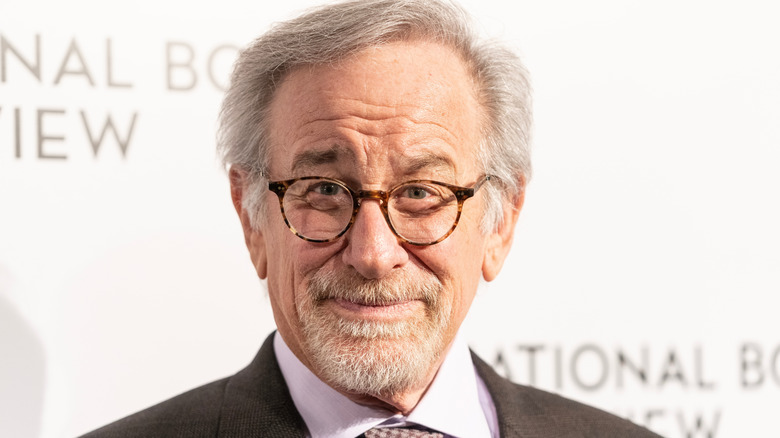
Steven Spielberg has directed some of the best sci-fi films of all time — "Jurassic Park," "Close Encounters of the Third Kind," etc. Before that, though, he was a young hotshot cutting his teeth in the television industry. Unfortunately, some of Spielberg's early contributions to the small screen are impossible to watch today — like an episode of "The Name of the Game" he helmed in 1971.
"The Name of the Game" is a crime drama that takes place in the world of investigative journalism. The feature-length episodes typically see the reporters go up against politicians, killers, and gangsters, but Spielberg took the show into sci-fi territory. His installment, "L.A. 2017," follows the magazine's publisher, Glenn Howard (Gene Barry), as he gets into a crash and wakes up in a dystopian future. You know — corporate greed, totalitarian rule, pollution, and other gruesome realities.
These days, "The Name of the Game" is a footnote in Spielberg's filmography, but the experience probably helped him prepare for career-defining movies like "Close Encounters of the Third Kind" and "Jaws" a few years later. However, Spielberg's appointment was met with some controversy behind the scenes.
Some folks didn't want Steven Spielberg to direct The Name of the Game
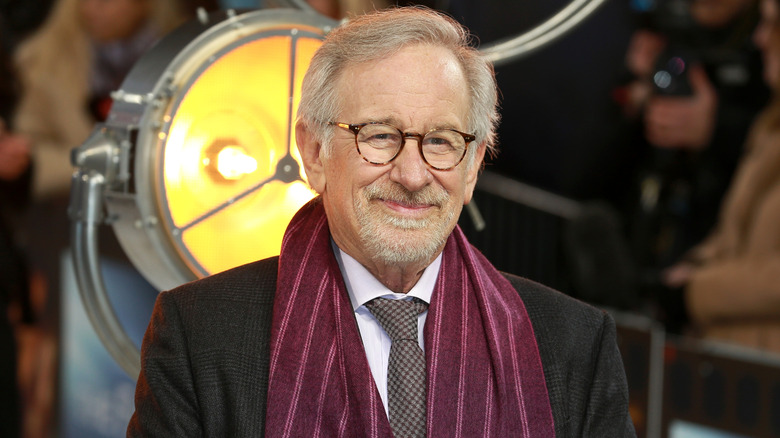
Steven Spielberg impressed Universal Television executive Sid Sheinberg after helming an episode of "Night Gallery," a Rod Serling anthology show that's similar to his classic "Twilight Zone" series. He knew Spielberg was the perfect choice to direct "L.A. 2017," but producer Dick Irving balked at the suggestion. "[He] acted like I had suggested Adolf Hitler," Sheinberg recalled in an interview with The Hollywood Reporter. "And I said, 'What the hell is this? Do you think I get a commission on Spielberg or something? I am responsible for Universal. I wouldn't suggest somebody I didn't think was a good idea.'"
"L.A. 2017" appealed to Spielberg because he saw it as a cautionary tale about unchecked capitalism in the United States. However, his creative desires resulted in clashes with the producers. As Spielberg told THR, "I was ambitious with it and got in trouble with the executive producers for going into overtime, incurring many meal penalties."
Still, Spielberg's ambition and desire to make every project as good as it can be are why he's regarded as one of the greats. It's just a shame that "L.A. 2017" is impossible to watch through the legal channels, as all of Spielberg's work deserves to be widely available.