

An Acclaimed Documentary About Theranos Founder Elizabeth Holmes Surges On Streaming
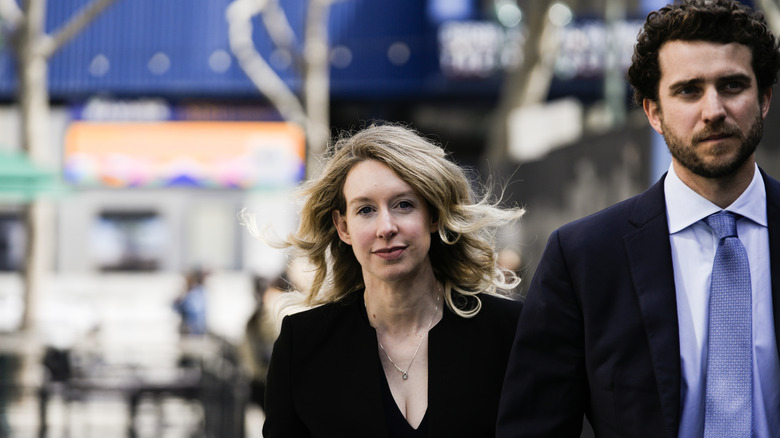
Elizabeth Holmes and Theranos have come up quite a lot over the past few weeks, especially with "You Can See Everything," the new A24 documentary from Nathan Fielder and Lance Oppenheim, arriving in theaters on October 16. Now, an older documentary about Holmes is pulling in viewers, too. Alex Gibney's "The Inventor: Out for Blood in Silicon Valley" is now No. 10 on HBO Max's top 10 chart in the U.S., more than seven years after it first aired.
"The Inventor" premiered on HBO in March 2019, well before Holmes went to trial. Gibney's documentary follows Holmes from the early days of Theranos through its collapse, and most of the story is told by people who worked at the company or covered it, including whistleblowers Tyler Shultz and Erika Cheung, and John Carreyrou, who wrote "Bad Blood" about Theranos.
The documentary has a 78% critic score on Rotten Tomatoes from 60 reviews, and Gibney also took home a Writers Guild award for documentary screenplay for it. It focuses heavily on the company, which was built on the claim that its tech could run a wide range of blood tests from just a few drops of blood. In fact, Theranos is now one of the bigger tech brands that lost its customers' trust, and a lot of "The Inventor" is about how Holmes convinced so many people to believe the company's marketing in the first place.
What 'The Inventor' shows that 'You Can See Everything' doesn't
"You Can See Everything," spends most of its time with Holmes at home, as Fielder moved in with Holmes, Billy Evans and their two kids in the weeks before she reported to prison in 2023. "The Inventor" leans on footage of Holmes from when she was still running Theranos, and she comes across as far more focused and intense. She even wore the same black turtleneck every day so she didn't have to think about her clothes.
Former Theranos employees in the documentary talk about how Holmes never blinked, and some of them say she lowered her voice on purpose to sound less feminine in the tech world. Gibney also spends time on the board Holmes put together, which included Henry Kissinger, George Shultz and James Mattis, as well as her relationship with Balwani, who lived with her in a condo in Palo Alto.
In "You Can See Everything," Holmes tells Fielder she has never told a lie, while several of the former staffers and reporters in "The Inventor" say she lied often. Shultz has also said the device Holmes shows off in Fielder's movie isn't the one that Theranos actually used on patients.
Where things stand for Holmes now
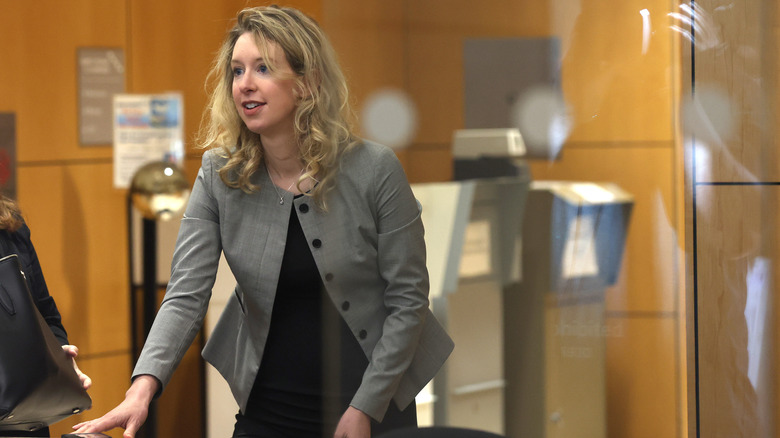
A lot has happened with Holmes and the Theranos case since "The Inventor" was released. In January 2022, a jury found Holmes guilty on four counts of defrauding investors, but she was acquitted on the charges tied to patients. She was sentenced to 11 years and 3 months, and then in March a judge reduced that sentence to 10 years and 3 months, cutting a full year off of her time in prison.
Her projected release date is February 22, 2030, and Holmes is set to move to a halfway house in Texas in August 2027, though she and former Theranos president Ramesh "Sunny" Balwani still owe $452 million in restitution. The Theranos story has also been picked up outside documentaries. If you enjoyed Anne Hathaway and Jared Leto's chaotic Apple TV miniseries about WeWork, then Hulu's "The Dropout" is very similar, with Amanda Seyfried playing Holmes in the series. It covers much of the same ground as Gibney's documentary, but with actors filling in for the real people involved in the case.