

Can The Samsung Galaxy S26 Replace A Dedicated Digital Camera?
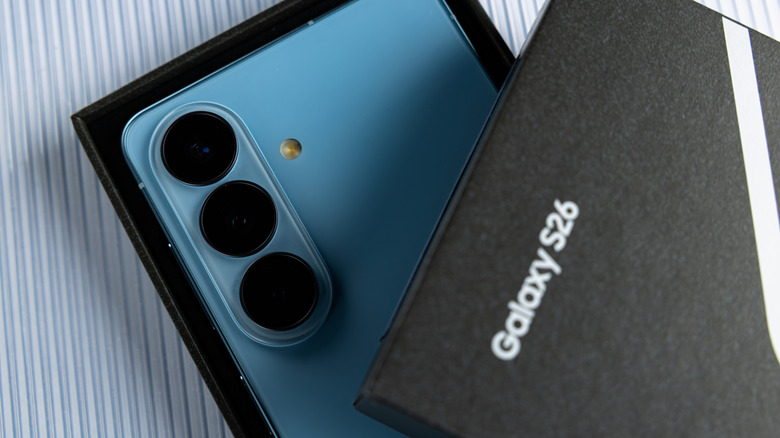
Dedicated digital cameras were the staple of photography at the start of the 21st century. Film photography had limited capacity — images arrived days or weeks later, and the risk of ruin from accidental light exposure made the process cumbersome. That's why digital photography, with the instant image feedback, autofocus, and bigger storage, felt like such an upgrade.
Fast-forward to today and mobile phones have absorbed 90% of the user base for dedicated digital cameras. The Samsung Galaxy S26 lineup in particular can go toe-to-toe with the best of them. The base Samsung Galaxy S26 is lighter and delivers color-accurate stills with its 50 MP main sensor. The premium Samsung Galaxy S26 Ultra flexes features like the 200 MP main camera, a 50 MP ultra-wide lens, and AI-powered image processing that helps enhance RAW photos. Both variants can capture 8K video at 30 frames per second, which is another area that pits them head to head with dedicated digital cameras.
To put things into perspective, the Sony Alpha 6700 kit bundle at $1,600 costs $200 more than the Galaxy S26 Ultra. Its larger 26 MP APS-C sensor gathers more physical light in dim settings and produces sharper optical images over software-processed ones that aren't as natural. However, even with these advantages, the all-around capabilities of a Galaxy S26 device and its pocket-friendly design might give it the edge for some. With even professional photographers turning to the Galaxy S26 Ultra as their main companion, it raises the question: Has Samsung's latest flagship roster finally outclassed dedicated digital cameras?
The Galaxy S26 packs plenty of photography potential
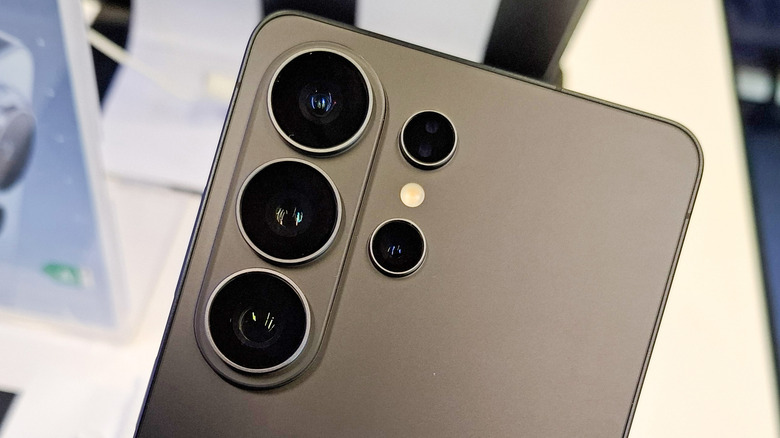
The more affordable $1,000 Samsung Galaxy S26 packs plenty in its triple-camera setup. The 12 MP ultrawide lens can trap the essence of beautiful landscapes, while the 50 MP main sensor is perfect for portraits. Its telephoto lens is equipped with a 3x optical zoom, so there's no digital magnification involved, and all this comes in at a featherweight 5.9 ounces. That is convenient, but the Galaxy S26 Ultra takes things up another notch. The premium model has higher resolution and a wider main sensor with an f/1.4 aperture that allows it to capture 47% more light than the base Galaxy S26. This difference is visible in darker conditions where the S26 Ultra outperforms its little brother. Low-light shots look less noisy, while the AI-powered image processing adjusts colors and sharpness. This cuts the need to tinker with the settings like with mirrorless cameras.
Videography is another standout area in Samsung's flagship phones. The company's Horizon Lock technology stabilizes any sort of jittery movement to where, even with the shakiest hands, the final film turns out fairly steady. Compared to a digital camera, the inconveniences of swapping lenses, transferring files, and constantly calibrating settings are effectively removed with the S26 phones. Add portability, instantaneous social media sharing, and on-device editing into the mix, and the answer is quite clear. Choosing the base S26 is a no-brainer for photographers wanting something lightweight as their secondary lens. However, for those wanting to go all-out on image clarity and quality, the S26 Ultra is likely a better option than a comparably priced dedicated digital camera.
Where the Galaxy S26 falls short of digital cameras
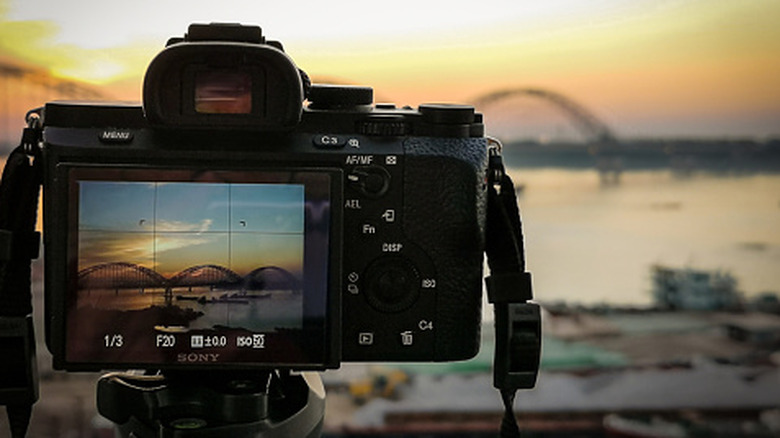
If you're okay with spending more than Galaxy S26 money on a digital camera, it's a different story. Expensive dedicated digital cameras are far superior to any mobile since no matter how terrific one is, a smartphone is not a camera-first device. That's why the Samsung Galaxy S26 lineup offers a suite of options — photography, editing, and communication — to compensate. Given this reality, premium dedicated digital cameras just have undeniable advantages.
Take the Sony Alpha 7R VI, for example. Compared to the S26 Ultra, the Alpha 7R VI has a substantially larger sensor — about 12 times as large. That allows more light capture and, in turn, a better, cleaner image with true tone. Lenses up to 600 mm are supported too, which gives an impressive level of optical flexibility. Moreover, the Sony Alpha 7R VI can shoot up to 30 full-resolution frames per second with precise autofocus. This makes the Alpha 7R VI superb at tracking and recording fast-moving objects like vehicles and wildlife. But as good as the Alpha 7R VI is, it costs $4,500 without the lens, which is three times as expensive as the Galaxy S26 Ultra.
Is Samsung's Galaxy S26 series good for photography? It absolutely is, and many will find that the overall experience is just as good as a $2,000 dedicated digital camera. Yet, the fact of the matter remains: It cannot outclass a premium dedicated digital camera because that's not what it's designed to do. A casual user or a new photographer wouldn't go wrong picking the S26 or S26 Ultra. Veterans working at the highest level, though, should probably still carry a dedicated digital camera.