

Should You Repair Or Replace Outdated Solar Kits?
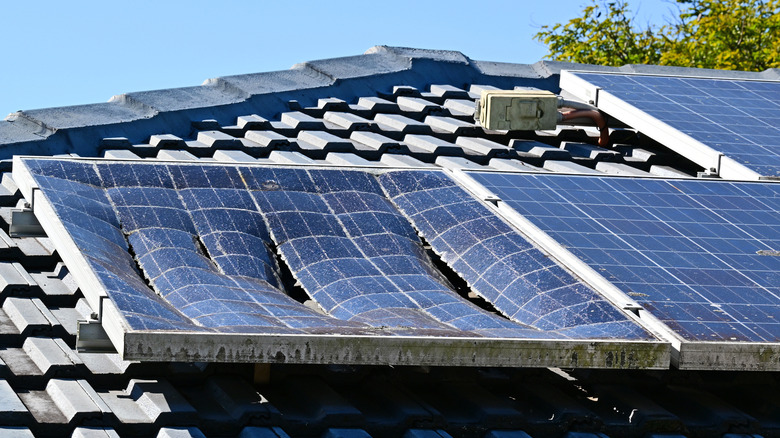
If you've had some solar panels for a while, you've probably already taken time to calculate how much solar saves on your electric bill. However, as your solar power system ages, it begins to lose some efficiency in generating power. The good news is that solar panels should last 25 to 30 years, even with slightly deteriorating power generation over time.
If you have older solar kits that are approaching the end of their expected lifespan or that just aren't working, you may wonder whether you should spend money repairing them. It may have taken years for the solar panels to pay for themselves through electric bill savings after the initial installation, so is it worth repairing older units now? Is it better to simply remove outdated kits than to spend money on repairs or replacement? Generally, if you have the money and if you like the idea of continuing to have solar power, reinstalling panels can generate value.
A solar-equipped home often has a higher value than one without panels by several thousand dollars, which may partially or fully cover the cost of repairing and reinstalling them. However, if the panels are close to the end of their lifespan, spending money on repairs would be a common mistake homeowners make with solar panels. A more expensive replacement might be necessary with an older kit, which makes it tougher to justify the cost. It will take far longer to recover the money through lower power bills and increased home value after a replacement.
Understanding your options for solar after replacing a roof
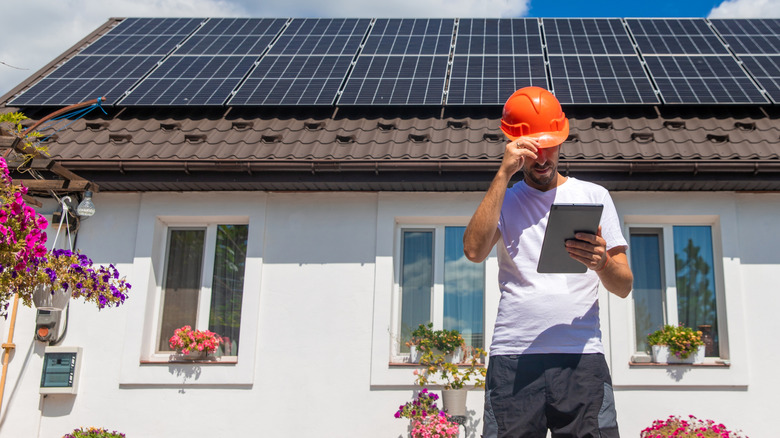
One of the most common situations where people find themselves wondering whether they should repair or replace solar panels is during a roof replacement. When solar panels are installed, the most common option involves adding mounting rails that go over the existing roofing materials and support the panels and wiring. If the shingles or other materials need to be replaced, specialists would have to disconnect and remove the solar panels and mounting rails before work can begin on the roofing materials underneath. The hardware used to support the mounting rails attaches to the deck and frame underneath the shingles, which is why the panels have to come down first during a total roof replacement.
After replacing the roof, you can then decide if you want to repair the existing solar panels before reinstalling them. You could also purchase and install a new solar kit if the one you own is near the end of its lifespan. A third option is to skip putting any solar power equipment back up.
If you decide to reinstall the existing solar kit or buy and put up a new one, you'll pay a cost to a different crew than the roofers. Some solar panel manufacturers will void the product's warranty if you don't use approved professionals to disconnect and reconnect the panels. Some states and municipalities have laws that require licensed professionals to work on solar panels to maintain building and electrical code requirements.
The cost of reinstalling old solar kits versus buying new

If you have to replace roofing materials underneath a solar panel installation, some of the costs are fixed. According to Angi, the average cost to replace a home's roofing materials is about $9,600. Hiring an authorized crew to remove panels from a roof ranges from $1,000 to $3,500. This means you'll potentially have to spend around $12,000 before deciding whether to reinstall the panels.
Repairing solar panels often runs a range of $100 to $4,700, though it could cost far more if you need a new battery system or solar inverter. Reinstalling the panels will cost about the same amount as taking them down, as companies typically charge in a range of $1,500 to $6,000 for both services combined. The average cost to purchase and install new solar panels is about $27,000, so you could save significant money by repairing and reinstalling if that's feasible. However, if the repair cost is 50% (or more) of the price of new panels, replacement is usually a better choice.
Something else to consider is that, if you plan to sell your home in the near future, a solar panel installation could increase its value. Research from Zillow shows an average home with solar panels on the roof sells for 4.1% more than one without them, or almost $9,300 for a home with a median value (about $366,000).