

The Dots In Your QLED TV Might Be The Solution To Drug Resistant Bacteria - Here's How

Whenever people talk about public health, drug-resistant superbugs are a frequent concern. How do you eliminate bacteria your best antibiotics can't kill? Google's AI came up with one solution to the superbug problem, but another one might lie in the technology that makes QLED TVs brighter and more color accurate than OLED sets.
Over the summer, a team of researchers from China published its findings on the efficacy of a new antibacterial composite — you can find the study in Acta Physico-Chimica Sinica. This material was made out of gold nanoparticles (particles of gold suspended in liquid with diameters measured in nanometers) and graphene oxide quantum dots (crystalline semiconductors, similar to the ones you find in QLED TVs). According to the study, when exposed to blue light from a 460 nanometer LED, the composite created reactive oxygen species (ROS), which are unstable molecules that contain oxygen and free radicals. ROS are particularly toxic to cells and bacteria. When placed on a wound and the light was shined on it, the material killed off harmful bacteria and significantly accelerated healing.
True blue light therapy
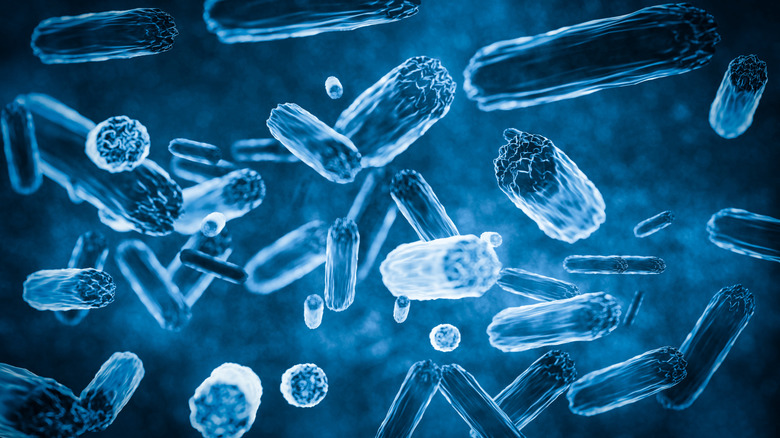
The researchers believe that their composite material could be the start of new drug-free treatments for a multitude of people with conditions and injuries that normally require antibiotics, including severe burns and trauma wounds. Most antibiotics work by interfering with the essential functions of bacteria (e.g., reproduction and protein production), whereas ROS attack bacterial cell walls, making them pop like balloons. Admittedly, some antibacterial drugs also target cell walls, but they inhibit the production of polymers crucial to their structure. ROS, meanwhile, eat away at cell walls thanks to their free radicals through a process known as oxidative stress.
While the composite material can help people who require so many antibiotics they could become breeding grounds for superbugs, the treatment isn't without its dangers. Much like how bacterial strains can adapt to antibiotics, they can also mutate defenses against oxidative stress. If these microorganisms can evolve to survive without oxygen or eat forever chemicals and their toxic waste, they can almost assuredly adapt to environments teeming with ROS.