

This Secret In Greenland's Soil Helped Scientists Win An Emmy - Here's How
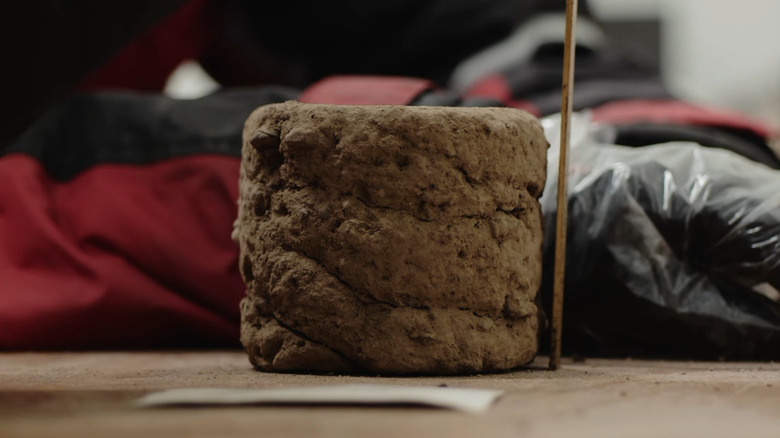
Until recently, you'd never have guessed what's beneath Greenland's Ice Sheet. But now it's been laid bare for all of us to see. The 2025 documentary titled "The Memory of Darkness, Light, and Ice" focuses on research conducted at the University at Buffalo (UB) on ancient soil from below the Greenland Ice Sheet. The film won the 2026 national Emmy for Outstanding Science and Technology Documentary and it raises awareness of a hidden secret that has significant implications for global sea level rise.
The sediment sample studied at UB was originally collected at a Cold War-era military camp in Greenland, where U.S. Army operatives had drilled deep with the goal of placing nuclear missiles beneath the ice. In the process, they unearthed a soil sample with plant remains from 400,000 years ago. The research featured in "The Memory of Darkness, Light, and Ice" has revealed that the ice sheet was much smaller 400,000 years ago, and that global temperatures were similar then to what they are now.
What does this mean for us today? It could mean that we are experiencing prime conditions for Greenland's ice to melt away to prehistoric levels. A study from 2024 revealed that the Greenland Ice Sheet lost more ice than previously believed, and the situation has certainly not improved since then. We have a very small opportunity to save Greenland's ice sheet, and if we fail, alongside other ice melting around the world, the seas could rise by as much as 230 feet someday.
How quickly are Greenland's ice sheets melting?
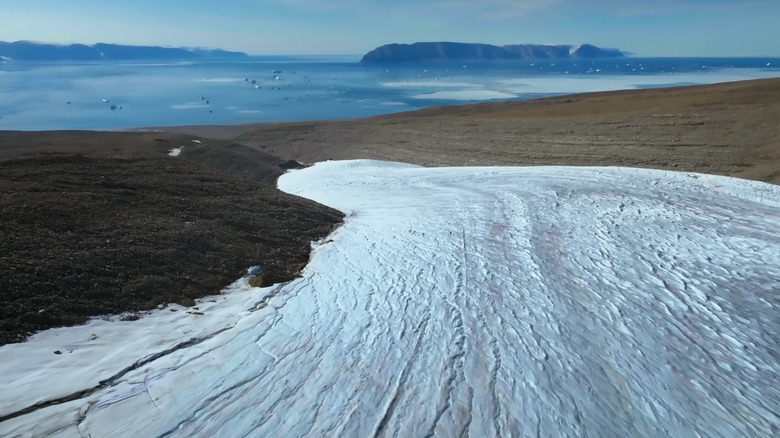
The whole world is experiencing the effects of global warming, but Greenland is feeling climate change differently. Interestingly, climate change is causing Greenland to rise out of the ocean even though the sea itself is rising. The significance of this is simple: the ice is melting noticeably fast.
An article authored by UB researchers (via Climate of the Past) stated that the Arctic will experience a mean annual surface temperature increase of three to 10.6 degrees Celsius by the year 2100, compared to that from 1950 to 2000. This is alarming because the sub-ice sediment studied at UB tells us that the coverage of the Greenland Ice Sheet was more than 100 kilometers behind where it is today due to "sustained but moderate warmth" 400,000 years ago.
It's difficult to say exactly how long it will take for all of Greenland's ice to melt at this rate. But in "The Memory of Darkness, Light, and Ice," the researchers at UB emphasized that atmospheric carbon dioxide levels are higher today than 400,000 years ago. This could mean that the ice will melt much faster in our current era than it did back then, even though the actual atmospheric temperature is similar. The result will be higher sea levels, and potential disaster for coastal cities around the world.