

Can You Use Glass Cleaner To Clean Your Solar Panels?
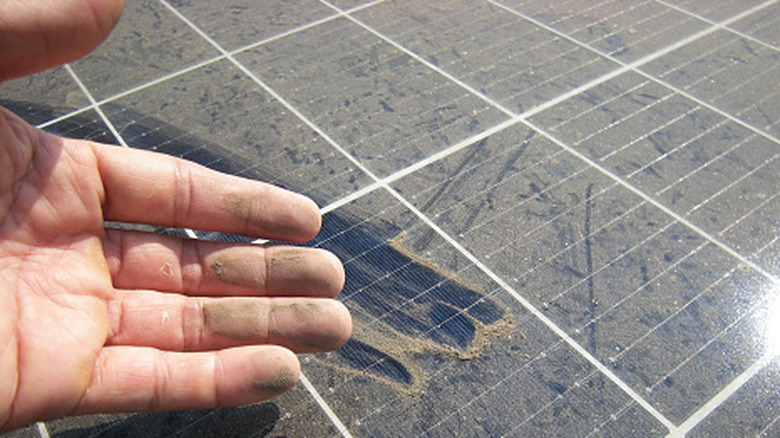
Whether you're looking to buy some top-notch solar panels or you've already got a setup installed, it's important to keep in mind that they spend their entire lifespan battling the elements. Over time, a thick layer of dust, pollen, bird droppings, and other gunk inevitably ends up coating the glass. That, in turn, can throttle the panels' energy output. And when it comes to cleaning the panels, grabbing your preferred glass cleaner seems like a no-brainer since it works just fine on your mirrors and windows. But the reality is, many window cleaners use chemicals that are too harsh for delicate solar hardware, so they aren't a good option.
Why is this the case? Think of your solar panels less like a regular old window and more like a high-end camera lens or the display of your phone or laptop. Blasting any of those with the chemicals in most glass cleaners would likely leave behind streaks or damage them. Rooftop solar panel setups are no different; typically they sport a thin antireflective coating on the top glass layer that's designed to trap sunlight. If that coating gets stripped away, your panels will start bouncing sunlight away instead of absorbing it. And once that protective film is gone, it's gone for good. Your panels might look clean, but now there's a permanent drop in the system's power-generating capabilities. That's why you need another way to keep them clean.
Finding a manufacturer-approved solution
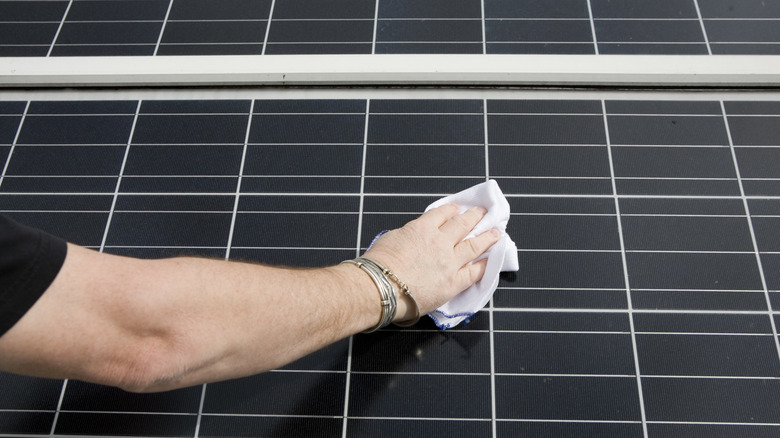
Even though the heavy-duty blue sprays are generally off the table here, it doesn't mean every single glass cleaner is strictly forbidden. The deciding factor for safe maintenance comes down to what your panels' manufacturer says and what's inside the cleaner itself. Solar arrays are designed to handle serious environmental wear and tear, so some mild, non-abrasive glass cleaners can work perfectly well (and safely) for tackling baked-on tree sap or bird droppings. Gentle formulas free of ammonia, alcohol, and heavy solvents like bleach are often just fine to break up grime without eating through that important topcoat of your panels.
Before spraying anything onto your expensive solar installation, the smartest thing you can do is look at your panels' official manufacturer manual. Solar brands usually list out their approved maintenance options and highlight exactly which cleaners work fine and which void warranties. Some brands explicitly greenlight options like diluted dish soap or specific mild glass cleaners, while others draw a harder line and say plain water only.
Leaving things up to chance and just using whatever you find in your bucket of cleaning supplies is not worth the risk. Ignoring official recommendations can have massively expensive consequences, like the manufacturer refusing to replace any degraded panels. Always double-check both the chemical label and any included documentation before you start cleaning so you know how to get your solar panels to last as long as possible.
The hidden dangers of your tools and water
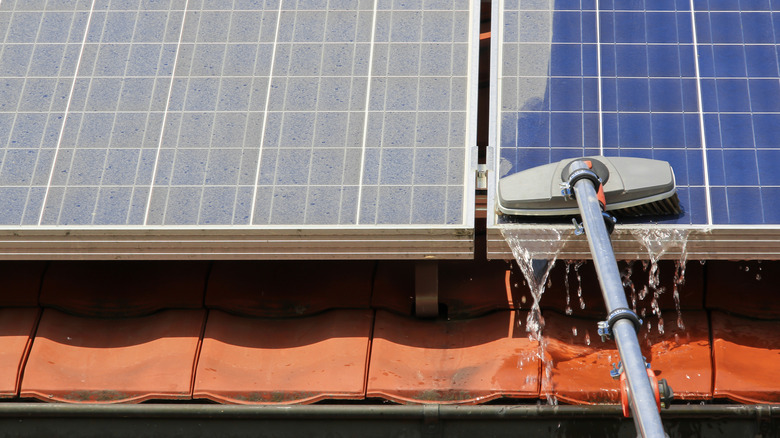
Even if the cleaning solution is safe and manufacturer-approved, your tools and even the quality of your water can still cause irreversible damage to solar panels. Scrubbing too hard or using tools that are too aggressive or harsh is a mistake, and coarse materials can act like sandpaper, causing permanent scratches. The wrong cleaning tool is yet another way to remove that important antireflective coating and reduce how well your solar setup works.
You might think that water is just water, but you'd be wrong. The water you use to clean your panels is something worth paying attention to here. Tap water can have tons of minerals in it, which can leave behind deposits (like calcium) on your panels. And yes, you guessed it: That residue can also block precious sunlight. Plus, it can be incredibly tough to remove without using the aggressive cleaners and tools that can also destroy the glass.
To get a perfectly clean panel without risking pricey hardware damage, stick to extra soft microfiber cloths or glass-friendly squeegees and pair them with purified water. Combining gentle tools with the right liquid helps your panels stay clean, which is one of many ways to make your home's solar power more efficient. Otherwise, you might also consider hiring a team of professionals to clean the panels for you.