

The Speed Of Electricity Is More Complicated Than You Think - Here's Why
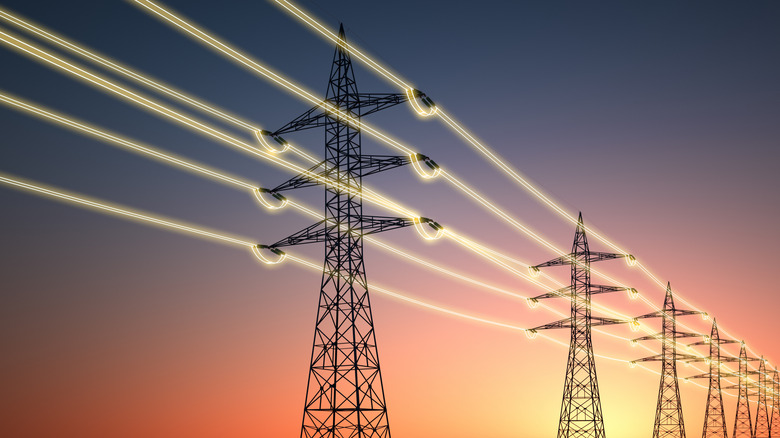
Electricity travels at the speed of light, right? Wrong. It's a common misconception that electricity travels down a wire at the speed of light. When analyzing electrical current in a conductor, there are actually three distinct speeds: individual electron velocity, electron drift velocity, and electromagnetic signal velocity.
Separating the movement of subatomic particles from the propagation of electromagnetic fields is key to understanding how an electric current works. It explains everything from household outlets to high-speed networking for devices powered with an ethernet port.
The confusion around energy transmission and circuit behavior is easily demystified by identifying which speed applies to a specific scenario. We need to differentiate between the chaotic motion of electrons and the collective electromagnetic wave that carries energy and information. It's easy to imagine electrons shooting out of a wire when flipping a light switch to turn on a light bulb, but there's far more to it than assuming that traveling electricity is near-instant.
Thermal collisions versus the snail-pace drift of electrons

There's a stark contrast between the chaotic movement of individual electrons and their shockingly slow net drift velocity along a circuit. Individual electron velocity measures the frantic speed at which a free electron flies around inside the atomic grid of a wire, traveling in straight lines until it collides with an atom and bounces in a random direction.
This random motion reaches millions of miles per hour, but because it's completely uncoordinated, it shows as heat in the wire rather than current. Applying an external electric field from a battery introduces a net directional force across the conductor. On top of the chaotic bouncing, the electric field creates a slow, ordered net movement called drift velocity, which moves electrons along at a snail's pace of only a few feet per hour.
Physical electron movement operates much like water inside a garden hose that is already full before opening the spigot. Just as water at the nozzle sprays out immediately because water molecules push against one another along the hose, electrons in a wire push adjacent electrons through electromagnetic repulsion. Electromagnetic force transfer explains why phone chargers work instantly, and it even powers experimental roads that charge electric vehicles while driving.
Signal velocity and electromagnetic field propagation
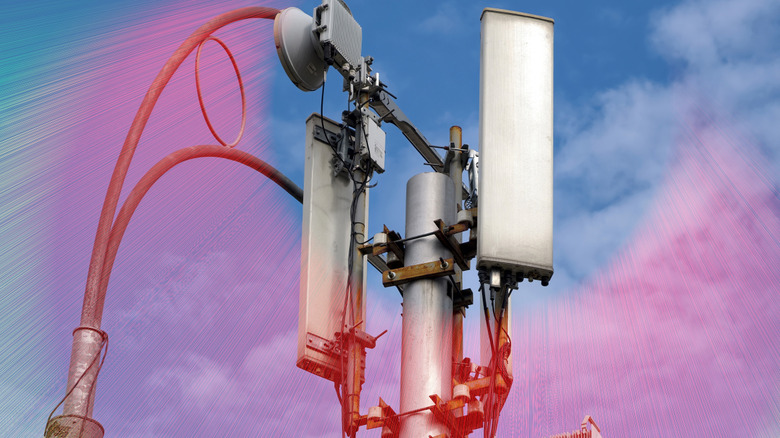
So how do electromagnetic fields couple with electrons to pass energy and data at near light speeds? When a circuit is switched on, an electromagnetic field propagates down the wire near the speed of light, influencing electrons everywhere in the circuit to move almost simultaneously long before any single electron can complete the circuit. While this signal velocity is very fast, it remains slightly slower than the speed of light in a vacuum. Imagine an ocean wave surging toward the shore: the wave's energy travels 100 feet in seconds, even though the actual water molecules 100 feet out barely drift forward. In a circuit, the electromagnetic signal acts as the fast-moving wave, while the individual electrons are like the water molecules slowly drifting along. This simple analogy illustrates how electrons and signal velocity interact.
Because the signal involves a physical coupling between electromagnetic field fluctuations and conductor electrons, the signal speed travels over 600 million miles per hour. Engineers also distinguish between the physical speed of electrical signals and their speed in digital networks. While electromagnetic signals fire at near-light speeds, overall network bit rates depend on how efficiently hardware and routers process data packets. Beyond wire transmission, analyzing electron interactions gives scientists deeper insight into energy storage limitations too, such as the battery barrel effect and overall battery life.