

Samsung's Galaxy Plus Series Is Hiding A Feature Way More Useful Than A Bigger Screen
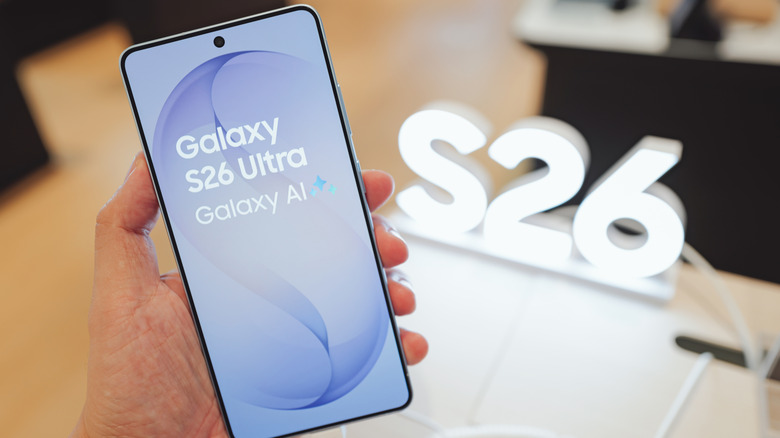
Products in the Samsung Galaxy Plus series set themselves apart from base-tier Galaxy models with their grander specs in areas like size, display, and charging speeds. The Galaxy S26 Plus, for example, is 7.3 mm thick and weighs 190 grams, compared to the standard S26's 7.2 mm thickness and 167 grams of weight. The former also has a display spanning 6.7 inches, while the latter reaches only 6.3 inches. The Plus can charge up to 69% battery in 30 minutes, whereas the standard Galaxy S26 can only reach 55%. Beyond a bigger display and longer-lasting battery, there's another important feature that separates the Plus series from the smaller phones.
Modern Samsung Galaxy Plus, Ultra, and Z Fold devices support ultra-wideband, or UWB, technology. UWB protocols communicate with and monitor the area around them by emitting very short radio pulses across a wide frequency band, thus allowing them to interact with nearby devices. This is the same difference AirTags and third-party Find My Bluetooth tracker have which lets iPhones pinpoint an AirTag's exact location. Their time of flight, or ToF, and angle of arrival, or AoA, functions are capable of measuring distance and direction with a three-dimensional perspective. For example, this allows users to use one device to control other smart home appliances.
UWB capabilities afford Samsung Galaxy Plus devices the power to track down devices like the company's own Galaxy SmartTag 3. That way, users may keep tabs on important devices or objects, like a wallet or keys. Notably, the Samsung Galaxy SmartTag 3 works with iPhones, though iPhone users miss out on UWB-powered features like Compass View.
Samsung Galaxy Plus devices might lose UWB technology
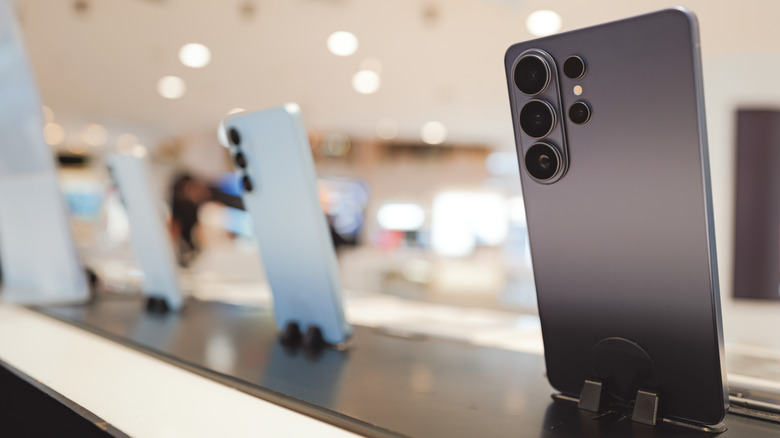
As useful as UWB technology might be for current Samsung Galaxy Plus owners to find their smart trackers (at least those that support UWB, unlike most of the smart trackers that are cheaper than the Google Pixel Tag), future customers or those looking for an upgrade might not be afforded the same luxury. Listings from China's Ministry of Industry and Information Technology, or MIIT, indicate the Galaxy S27 Plus will not support UWB connectivity. Samsung isn't doing away with the technology completely, however. The S27 Pro and S27 Ultra are still slated to feature UWB functionality. Thus, while Samsung users won't have to completely say goodbye to it, some might need to level up to the next product tier to still be able to use it.
While Samsung users and prospective customers await official confirmation that the Galaxy S27 Plus will lack UWB, some Redditors complained that the change gives them less motivation to upgrade their smartphones. "Samsung is coasting hard, releasing the same phone five years in a row," one user said. "And in the case of the S24, making it worse by increasing its size and using the Exynos that no one wants instead of the Snapdragon chip." Others argued the change is an arbitrary switch meant to manufacture differences between Galaxy S series devices, and it might reduce the product line's quality and value as a whole