

Scientists Just Found A Way To Reverse The Effects Of Global Warming On Coral Reefs
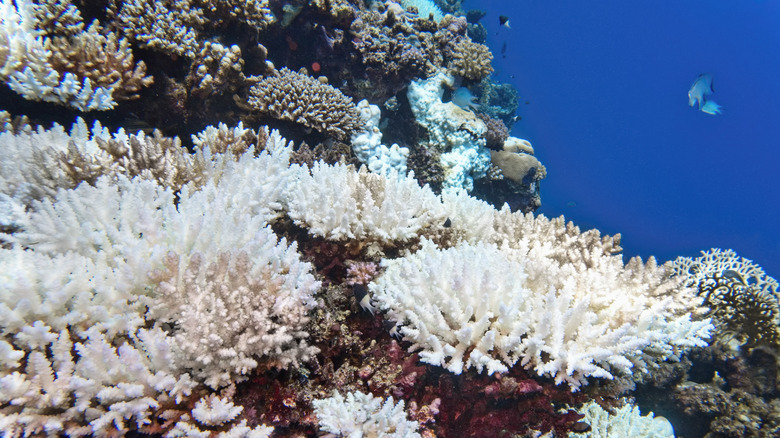
For a long time now, we've been hearing about how coral reefs are dying at alarming rates due to all the same kinds of human activity that have led to climate change. Coral bleaching occurs when the animal (yes, coral is considered an animal) becomes stressed from pollution or increased water temperature, causing the algae it relies on as its main food source to leave its cells. While bleached corals aren't dead, they become far more vulnerable without their symbiotic partner, and that impacts the entire ecosystem. Fortunately, scientists have been finding ways to help restore coral.
In a study published in Science Advances, a group of researchers from Stanford University showed that contact with a healthy specimen can reverse bleaching in just a matter of weeks. That's because the symbionts work quickly to recolonize damaged coral. Direct contact for as little as three days produced clear results, allowing it to completely recover in under eight weeks.
That this simple approach has been so successful is good news, but there is one critical limit to the strategy: It only works with corals from the same genet, or genetically unique colony. Researchers found that, when mixing genets, the corals would develop filaments at the contact point that indicate a threat response, and the healthy coral would eventually overgrow and fully overtake the bleached one without actually restoring it.
Even with that limitation, though, this evidence that coral bleaching can be reversed in a matter of weeks is promising. While it can recover naturally if water conditions improve, that requires time coral don't have considering that the Great Barrier Reef has reached catastrophic bleaching levels.
Why coral reefs are so important
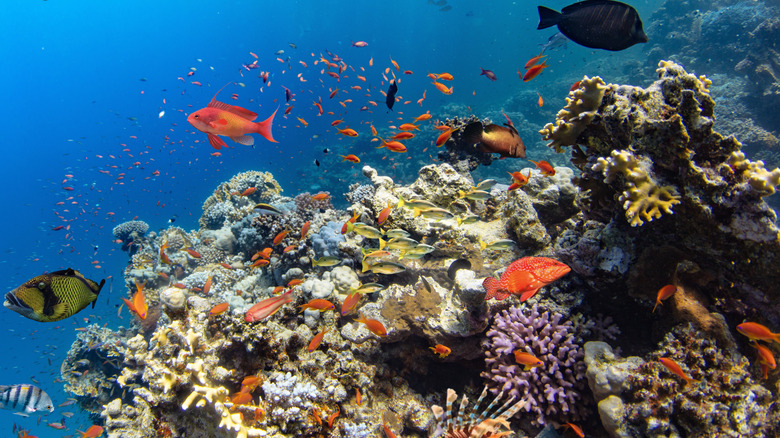
Coral reefs are more than just photogenic. They're vital to underwater ecosystems and biodiversity, serving as a shelter, food source, and breeding ground for over a million species, including a quarter of all fish in the ocean. On land, reefs protect coastlines from erosion and floods, which is vital for those living near the water. Coral could also have medical benefits, as scientists discovered a chemical within it that breaks down the biofilm that allows bacteria to resist antibiotics.
There are also economic benefits to coral reefs that extend beyond protecting infrastructure. In fact, coral reefs generate an estimated $29.8 billion worldwide each year from fishing, tourism, and more. Loss of coral means fewer fish, which impacts livelihoods and the local food supply. Healthy reefs are also great places for snorkeling and scuba diving (provided they're done without disturbing the environment), which drive visitors to places that have come to rely on tourists.
The wide range of environmental and economic benefits are why artificial reefs have become a crucial part of reef restoration. Still, even if they can help with biodiversity, they can't replace actual healthy coral, which is why breakthroughs that reverse bleaching are so important. Another promising study showed that underwater speakers may help coral reefs recover by luring marine life back.