

South Korea Is Cracking Down On Tesla Users Using This Dangerous Mod
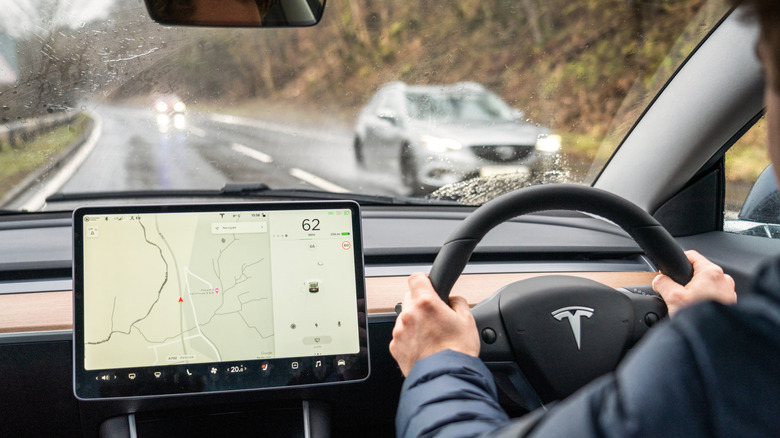
South Korean law enforcement has begun to crack down on an illegal modification to Tesla vehicles. About 80 people were booked in the country after being found to have activated Full Self-Driving on the Tesla, a feature the car line was pitched to have since 2014, on vehicles not yet legally able to drive with it on. South Korea receives Teslas from both America and China, but only the American models are legally able to use FSD on South Korean roads. Chinese-made models are not yet verified to be able to have the autopilot on, with some Koreans opting for the illegal method of getting their promised feature.
Tesla has been fighting against this kind of mod for a while, with news in April 2026 detailing that the company had also begun cracking down on the illegal method. South Korea, Japan, China, the U.K., and some parts of Europe were seeing a rise in FSD activation. According to reports, the FSD hack stems from Poland and Ukraine, where a user managed to use more recent hardware scavenged from a newer Tesla to unlock FSD in vehicles it wasn't intended for.
Outside of that, unlocking FSD in regions where it's not yet legal has been made available by a Dutch developer, "jvanakker," via GitHub. The developer warns on the GitHub page that this could void warranties, as well as cause Tesla itself to intervene remotely. Gaining access to the systems needed to unlock FSD requires nothing more than a $20 board from Adafruit, which produces custom embeddable microprocessors, similar to Raspberry Pi or Arduino.
Car makers now have to consider computer hackers
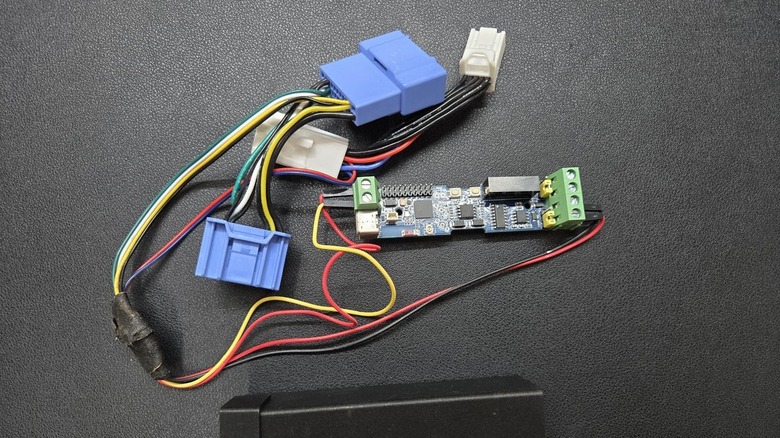
Full Self-Driving has been one of the defining reasons for people to still acquire a Tesla. Since 2014, Musk and his cohorts have continued to promise that it'll come to their vehicles, and now, it's only just gaining traction within different countries outside of the U.S. With certain countries lagging behind due to regulations, buyers have circumvented the law to activate a feature literally not approved by the road safety standards set by the government. In China, it's estimated that 100,000 owners of Tesla vehicles have already done this. Tesla's competitor and most popular EV brand worldwide, BYD, already has its own version.
Other companies had begun shoring up cybersecurity years ago, with Ford's S650 Mustang described as "much more difficult" (via Road and Track) when it comes to tuning, due to the fact that Ford clamped down on how open the underlying system is. Road safety is something these car companies cannot even consider letting any wiggle room into. While you needed know-how and equipment before to alter the physical machine, now drivers who want to get around something, like a locked-out FSD, can just download software onto a USB stick.