

Here's How Much An AMD CPU Cost In 2006 Vs. 2026
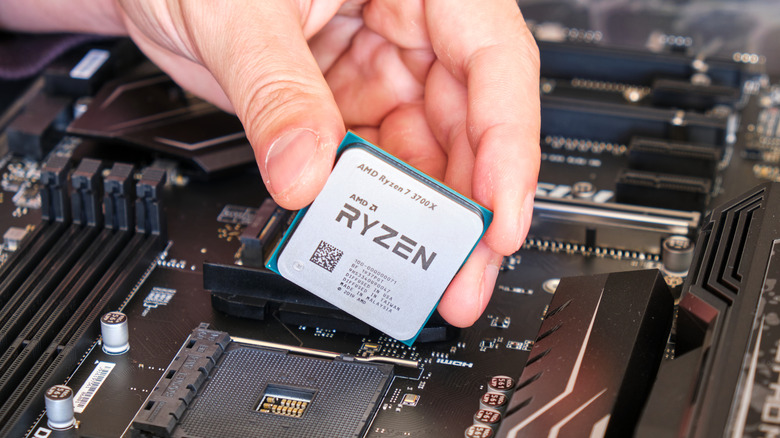
If you wanted to do high-end work or gaming on your computer in 2006, you needed a powerful CPU. That's no different than it is today, but 20 years ago, the price you paid for a CPU was much different. While their function hasn't changed over the course of time, they have largely gotten more expensive, depending on what's under the hood. You may have wanted to play "World of Warcraft," one of the biggest multiplayer online games at the time, or needed to do some video editing. If that was the case, upgrading your CPU would have helped with gaming, editing, and any other huge tasks you may have wanted to do on your PC.
AMD made the Athlon 64 X2 series of CPUs in 2006 with its 5400+ going for around $485 and its 5600+ being around $505. If the 5400+ was brand new today, it would cost around $811, which is less than the modern AMD Ryzen 9 9950X3D2 Dual Edition Processor at $899. Those AMD CPUs included fewer cores and power than the ones you can get today. Both came with a new dual-core system, as opposed to the 9950X3D2 Dual Edition's 16 cores.
The changes in AMD CPUs across the years
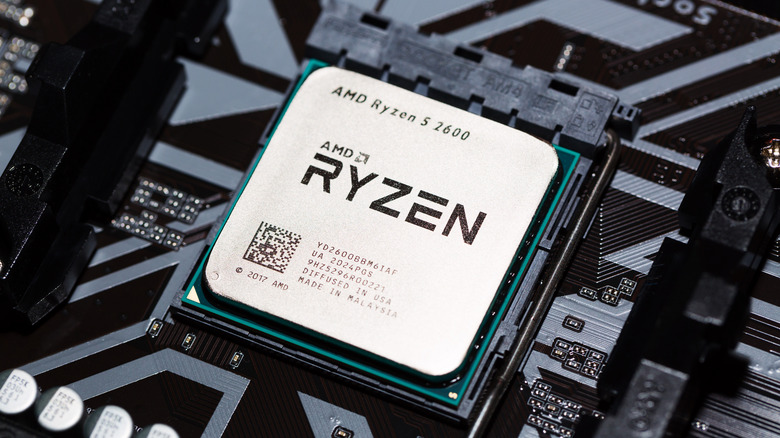
There have been many updates to AMD CPUs over the years since the release of the Athlon 64 X2 series of CPUs. Changes include increases in the number of cores inside of the CPU, GHz, wattage, and cache size. As technology advanced, so did the number of each feature of an AMD CPU.
Using the build specs of the two AMD CPUs released in 2006, the Athlon 64 X2 models, we can get a clearer picture of what exactly has changed. Both the 5400+ and 5600+ were built with a dual-core system. Modern AMD CPUs have way more and can run anywhere between six to 16 CPU cores. Having more cores increases processing power and performance when handling large tasks such as rendering and gaming.
Cache is related to memory speed, and CPUs with more cache can handle more memory and therefore improve the time required to access data. The Athlon 64 X2s had up to 2 MB of cache, whereas modern AMD CPUs can include multiple caches, such as the AMD Ryzen 9 9950X3D2's 1,280 KB, 192 MB, and 16 MB. Understanding how much cache is in a CPU is one thing to know before buying a new CPU. Other updates include a jump in GHz, with the old models having 2.8 GHz and the new models having up to 5.6 GHz, and more or less depending on the CPU. The wattage also increased, improving the power of the CPU.
Why the price has changed in 20 years
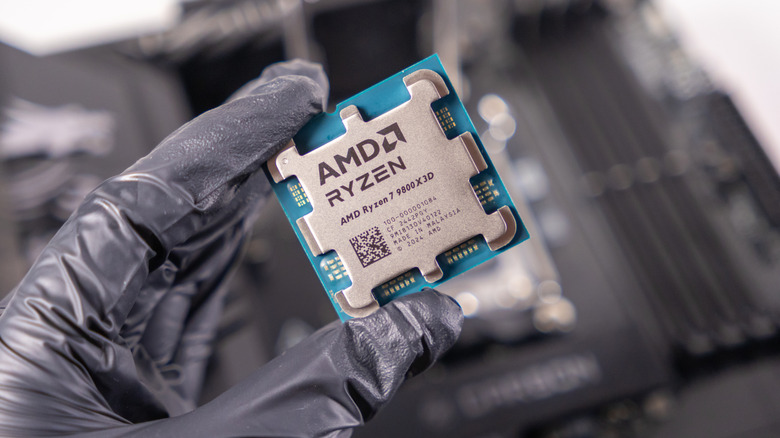
There are several reasons the price has changed for an AMD CPU throughout the last 20 years. Innovation, advancement in technology, and an increase in the cost it takes to make CPUs are some examples of why the cost for an AMD CPU has fluctuated since 2006. Another major reason could be related to the increase of AI and AI data centers. Companies such as Microsoft have been raising prices due to data centers' demand for components such as RAM, causing prices to spike.
In 2006, dual-core CPUs were still a relatively new feature for computers — AMD only launched the Athlon 64 X2 in May 2005. This was a major reason for why models such as the Athlon 64 X2s were priced the way they were. Today, that technology still exists, but it has been upgraded to multi-core CPUs, such as the AMD Ryzen 9 9950X3D Processor, with some having multiple for improved performance and power.
One other explanation for the price difference between then and now may be linked to how the CPUs are made. There has been an increase in manufacturing costs associated with CPUs, with AMD being included. However, it does all depend on what CPU you want and how you are going to use it. CPU prices changed over the years, as did the price you'd pay for buying an AMD GPU as well.