

4 Common Mistakes Owners Make With Power Banks
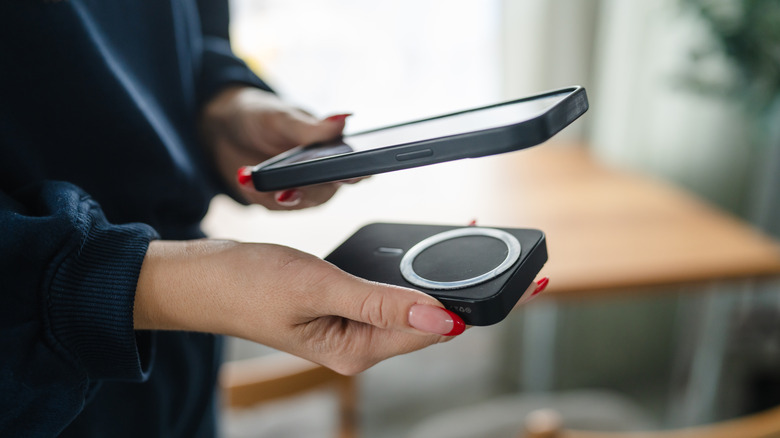
I rarely ever leave home for a full day or night without a power bank unless I know there's somewhere I can charge my phone. These handy accessories can keep your phone charged and top up other devices too, like headphones. Even though the latest phones can last for more than a day per charge and even have low-power modes to use in a pinch, it always seems like your phone battery is in the red at the worst possible time. It might be when you're trying to order an Uber to get home or need to scan your mobile wallet to pay. Plus, using your phone for streaming during a commute, navigating to a destination, communicating, snapping photos, and more can drain the battery more quickly than you realize.
The best portable chargers offer enough power to get your phone to a full charge in a decent amount of time. A good one should have multiple ports, or better yet, built-in cables and Qi2 wireless charging. But there are some mistakes people make with power banks, and these can range from getting one with a capacity that isn't big enough to charging in the wrong environments or opting for cheap off-brand models and cables. These can all impact the charging experience in ways you might not be considering.
Forgetting to charge it
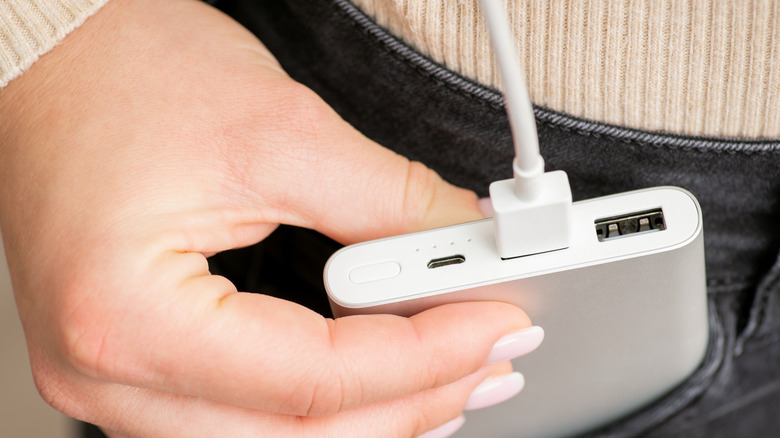
The irony of having a power bank that has no power isn't lost on me. I can't count how many times I was ready to leave the house and grabbed a power bank only to realize that I forgot to recharge it. Recharging too far ahead means the battery will slowly discharge over time. But you should always keep it topped up. Otherwise, you run the risk of shortening the power bank's lifespan by letting it completely discharge and potentially reaching a deep discharge state if left this way for too long. Just like with phones, the sweet spot is to keep power banks between 20% and 80% charged as much as you can. So recharging after every extended use is not just handy to ensure it's ready for you, but also one of the best ways to preserve power banks.
Ideally, plan ahead and plug your power bank in the day or night before you know you'll need it so it's fully charged. A feature to consider if you find this happens often is a power bank with pass-through charging. These types of power banks can charge your device at the same time they recharge themselves, and good ones ensure they don't overheat while doing so. Charge both the power bank and your phone from the same port in the car or use a plug at the airport or on the train to fuel up before taking off or arriving to your destination.
Improper storage or charging environments
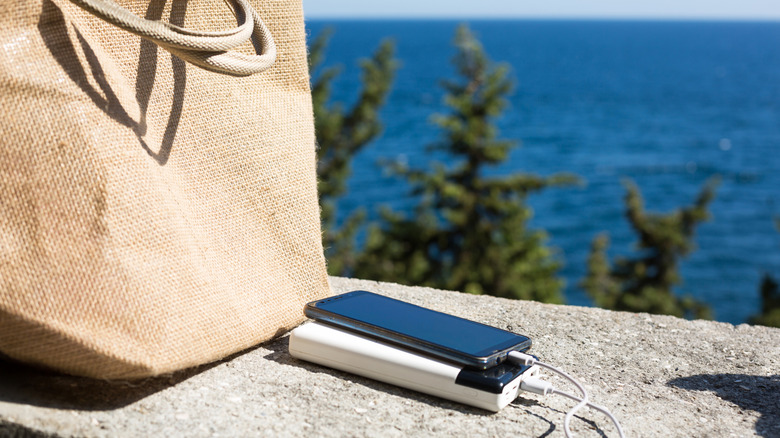
You might need to recharge your phone on a hot and humid day at the beach, especially if you're using it to play tunes on a portable Bluetooth speaker. In fact, you might even need to recharge the speaker itself. But leaving the power bank exposed to extreme heat can damage it. The same rings true for a frigid cold winter day. A power bank should not be exposed to temperatures above 95 degrees Fahrenheit or below 32 degrees Fahrenheit, and certainly not while charging.
If you need to recharge in an outdoor scenario with extreme temperatures, keep the power bank tucked away in a bag or in the shade so it can maintain a proper operating temperature. A model like the new Anker MagGo Power Bank Pro 2 has a built-in fan to help ensure proper cooling — but even so, it should not be exposed to extreme temperatures. Yes, that even includes ultra-rugged models like the Iniu Outdoor Rugged 10,000 compact power bank. That model even protects against water, dust, and shock, but you still need to be mindful of temperature-related risks.
Buying the wrong type
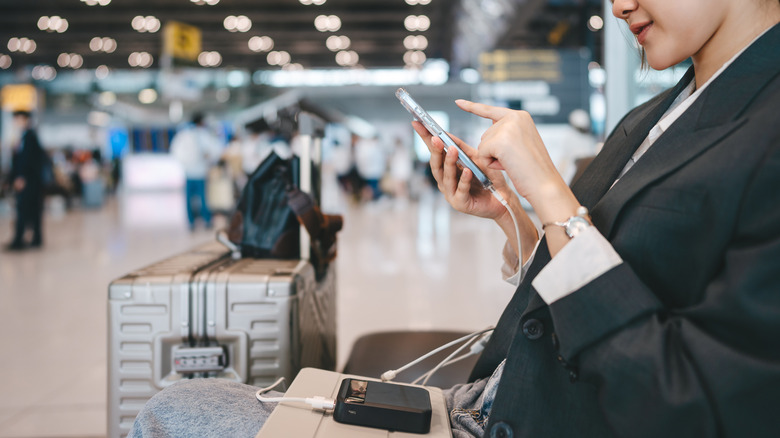
It's important to get the right type of power bank to meet your needs. The most common sizes are 5,000 mAh and 10,000 mAh. A 5,000 mAh battery should be able to give a new model phone approximately one full recharge. They are typically ultra small and lightweight, but they might not provide enough to meet your needs. The sweet spot is a 10,000 mAh power bank, which can charge smaller phones up to three times, or recharge your phone and other devices to provide top-ups as needed. If you want to recharge a laptop, it's best to get a power bank that's at least 20,000 mAh.
Alongside this metric, you also need to consider watt-hours (Wh) if you plan to bring the power bank with you while traveling. Gadgets with lithium batteries need to be in your carry-on, not in checked luggage due to fire hazard risks. Further, there's a limit of 100 Wh. Most power banks do not exceed this, with some even advertising on their packaging that they are "airline friendly." But you may come across larger, more powerful laptop power banks that do hit the 100 Wh threshold. So, you need to be mindful of that to avoid the power bank being confiscated by security at the airport. Some airlines may allow larger batteries with special permissions, but it's best to check ahead or stick with power banks under that limit.
Opting for cheap, off-brand chargers and cables
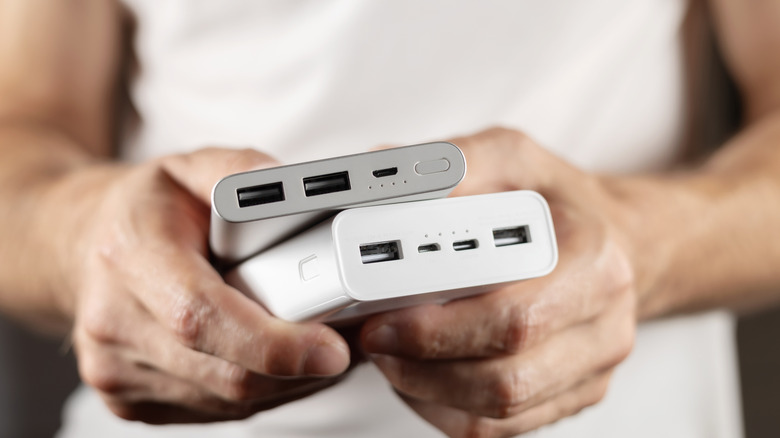
It's a given that you should buy your power bank from a reputable brand like Anker or Belkin. But don't forget to also refrain from using a cheap, no-name cable with it. While some off-brand cables are fine and sport all the necessary certifications for safety, your best bet is to go with a good quality cable from a known brand. Aside from being potentially dangerous, the cable may not be capable of passing the same current and could result in slow charging of the device. What's more, you also want the cable's certification and rating to match that of the power bank's output. For example, power banks with USB-C PD ports require USB-C PD cables to support the fast charging capability.
A simple solution that also happens to be convenient is to consider a power bank with a built-in cable. This means you don't need to buy or bring a separate cable, and you can be confident that the cable matches the same high quality as the power bank itself. But even these usually have a second USB-A or USB-C port for secondary charging with an optional cable. A recent recall on a specific brand of power banks due to the risk of the battery exploding or igniting is a reminder of how important it is to buy quality products. And that includes both the power bank and the cable you connect to it.