

This California Oil Field Has 65,000 Solar Panels - Here's Why

The idea of a solar farm assisting with oil-pumping operations may sound incongruous, but that's exactly what's happening at the Lost Hills oil field in California. Developed by solar company SunPower for oil giant Chevron, the facility's 65,000 solar panels cover around 220 acres of land alongside the Lost Hills oil field. The installation has a generating capacity of 29 megawatts and began supplying electricity back in 2020.
The field itself has been producing oil since 1910, using pumps to bring crude to the surface. The extracted fluids are then separated and processed, while water is injected underground to maintain reservoir pressure and sustain production. Before the solar installation, all of the electricity needed for those operations was purchased from local utility sources. The solar farm was designed to meet around 80% of the field's electricity requirements, with any surplus daytime generation exported to the electricity grid.
You'd be forgiven for thinking there's a big contradiction here. After all, renewable energy sources are meant to be replacing fossil fuels rather than helping to produce them. But the situation isn't quite as straightforward as it first appears. By generating its own electricity, Lost Hills is actually reducing the amount it needs to draw from the grid, which still relies partly on natural gas and other fuels. So in this case, solar power is displacing some conventional electricity generation, but it isn't replacing the oil itself. Instead, it's making the process of extracting that oil potentially less carbon-intensive. As you can see, it's an unusual partnership, with renewable energy helping to sustain the very industry that the energy transition is ultimately supposed to move us away from.
Renewables are powering offshore oil and gas fields, too
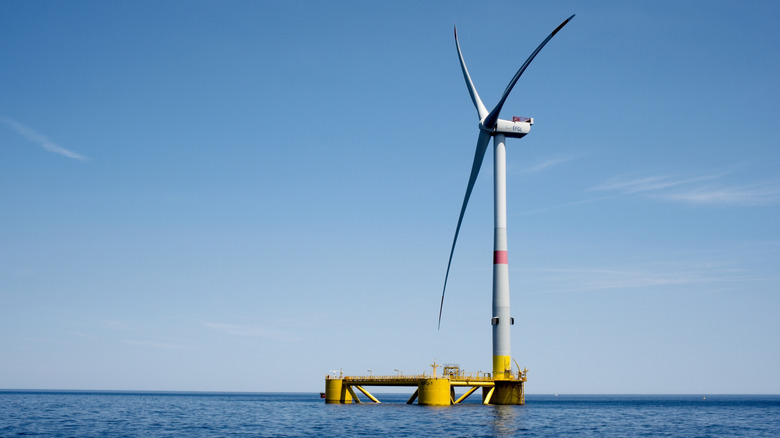
California's Lost Hills isn't the only place where renewable energy and the production of fossil fuels are working alongside each other. Indeed, oil and gas companies are increasingly turning to solar and wind power to meet the substantial electricity demands of their energy-hungry operations. In the U.S. state of Colorado, for example, Chevron has installed another solar farm to power an oil and gas facility, while off the coast of Norway, energy company Equinor's floating Hywind Tampen wind farm is supplying electricity directly to oil and gas platforms in the North Sea.
Meanwhile, Hywind Tampen uses 11 wind turbines mounted on floating concrete foundations anchored to the seabed by mooring lines. Unlike conventional offshore wind farms, which are fixed to the ocean floor, the floating design allows turbines to operate in deeper waters, and they can even have a positive effect on nearby sea life. With a combined capacity of 94.6 megawatts, the wind farm supplies electricity directly to five oil and gas platforms across the Snorre and Gullfaks fields, helping to power their operations. It's estimated that the turbines meet around 35% of the annual electricity demand of the five platforms, reducing reliance on natural gas-fired turbines used for offshore power generation. The project is expected to cut CO2 emissions by around 220,000 U.S. tons annually.
The Hywind Tampen facility started generating electricity in 2022, with the first power supplied to the Gullfaks A platform. The wind farm became fully operational in August of the following year when all 11 turbines had been installed and connected to the offshore electrical system supplying power to the oil and gas platforms.