

These States Generated More Electricity From Solar Than Coal Or Natural Gas For The First Time
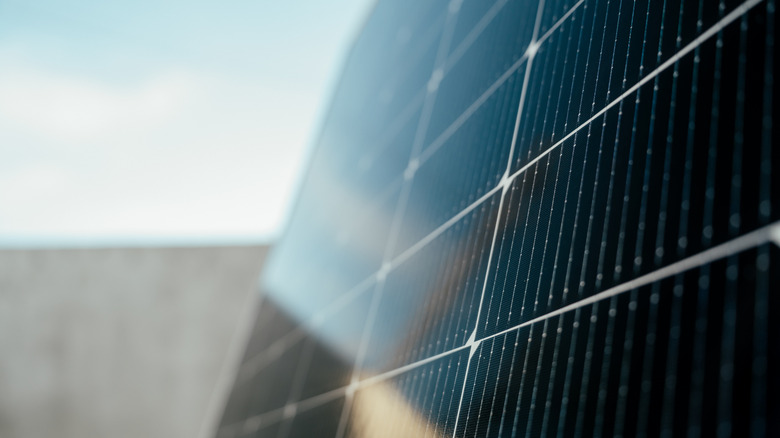
Three U.S. states reached an exciting milestone by generating more electricity from solar panels than any other source for the very first time in their history. According to global clean energy think tank Ember, the states of Maine, Massachusetts, and Utah all produced more power from solar than either coal or natural gas in May 2026, the last month for which data is available. We've linked to Ember's data on each state so you can see for yourself how the total share of different energy sources has changed over the last five years.
In Massachusetts, there was a significant drop in gas of nearly half a terawatt-hour (TWh) between April and May. That helped the solar panels overtake gas as the state's top energy source with a sizable gap between the two. However, in Maine and Utah, the difference was much smaller. Maine produced 0.34TWh from solar and 0.3TWh from gas, though it also gets quite a bit from wind, hydropower, and biofuel; Utah produced 0.96TWh from solar, with gas and coal close behind at 0.94 TWh and 0.82 TWh.
Still, while the difference may be small, it's particularly exciting to see clear results from solar expansion in Utah, which still gets around two-thirds of its electricity from fossil fuels. It will also be interesting to watch how these trends hold as solar production peaks in the summer months.
More states are embracing clean energy
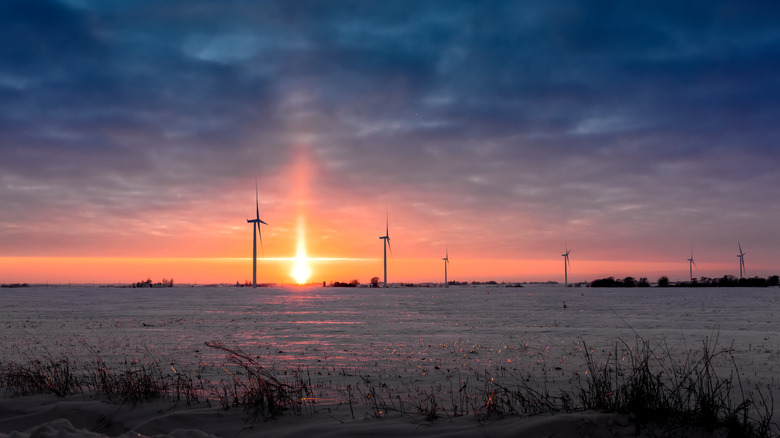
Maine, Massachusetts, and Utah, along with over a dozen other states (plus Washington, D.C.), are among the states where at least one renewable energy source currently accounts for the largest share of generated electricity. The following states have a renewable as their top energy source:
Solar
- California
- Nevada
- Washington D.C.
Wind
- Colorado
- Iowa
- Kansas
- Minnesota
- New Mexico
- Oklahoma
- South Dakota
Hydropower
- Alaska
- Idaho
- Montana
- Oregon
- Vermont
- Washington
It's worth noting a couple of specific cases, all of which are based on data from May 2026. Perhaps the most impressive is California, where solar accounts for about 57.8% of the state's massive 17.03TWh total energy output.
In a few states, renewables account for a much larger percentage of total electricity generation. Vermont and Washington, D.C. get virtually all of their electricity from renewable sources. There are an additional four states where green energy accounts for at least 70% of total production: South Dakota (84%), Washington (82%), Montana (79%), and Iowa (70%).
All of this being said, there's still a lot of work to be done. This accounts for well under half of the states, most of which have relatively low populations, and there are larger states with more solar panels where clean energy only amounts to a fraction of total output. Gas still accounts for a vast majority of the U.S.' total energy production, followed distantly by nuclear (which is relatively clean but nonrenewable), solar, coal, and wind.
Transitioning to clean energy is good for the economy
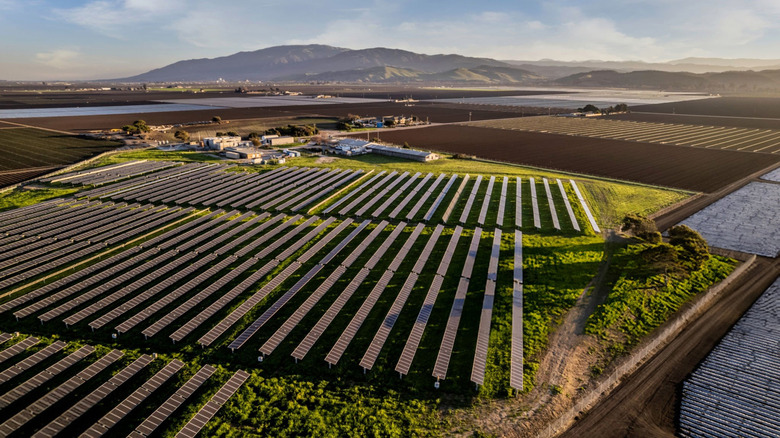
Phasing out fossil fuels may be the primary and most pressing goal, but renewable energy projects open up new economic opportunities, too. Solar farms in particular have proven to be good for the land they're installed on and those living nearby. The panels block solar radiation and allow the soil to retain more moisture, creating fertile ground, like in China, where a massive solar farm has changed the surrounding desert.
That, in turn, has opened up new opportunities for farmers to supplement their income. First is a practice called solar grazing, where farmers bring their livestock to solar farms to keep the vegetation below the panels at a safe level, serving as a clean and efficient landscaping team. Some farmers have even installed solar panels on their land, which both creates better conditions for certain plants to thrive and generates excess energy that can be sold to local utility companies.
These efforts show how clean energy expansion can also stimulate the economy, particularly for farmers struggling amid climate change-related heatwaves and droughts. That's not to say the effects of solar and wind farms are always positive, but the environmental and economic benefits are worthwhile, especially if we can mitigate their current issues.