

Fitbit Edge Not Cutting It? Here Are 5 Alternatives Worth Buying
We may receive a commission on purchases made from links.
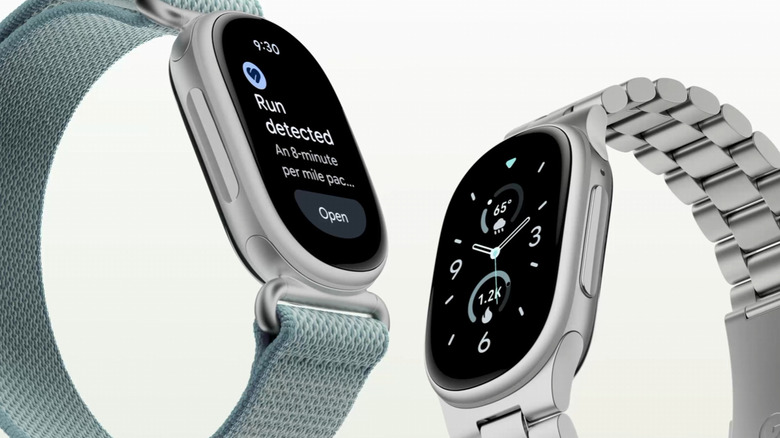
The Fitbit Edge is the 2026 mid-range fitness wearable from Google. We reviewed the Google Fitbit Edge and found it to be a very practical lifestyle accessory for its affordable $180 price tag. However, it lacks some of the more advanced health monitoring features and premium smartwatch gimmicks that other fitness bands can boast. If these drawbacks are deterring you from the Fitbit Edge, don't fret; there are plenty of fitness trackers that might be exactly what you're looking for.
We compared the Fitbit Edge directly against five other wearables worth buying in 2026. Some items on our list are dedicated fitness bands, while others are full-fledged smartwatches with competent health and fitness features. Our list highlights multiple brands with different feature offerings. Each one has its own degree of focus on fitness relative to generalized smartwatch usability, so there's something here for every lifestyle. We explain how we selected these wearables at the end of the article.
Fitbit Air
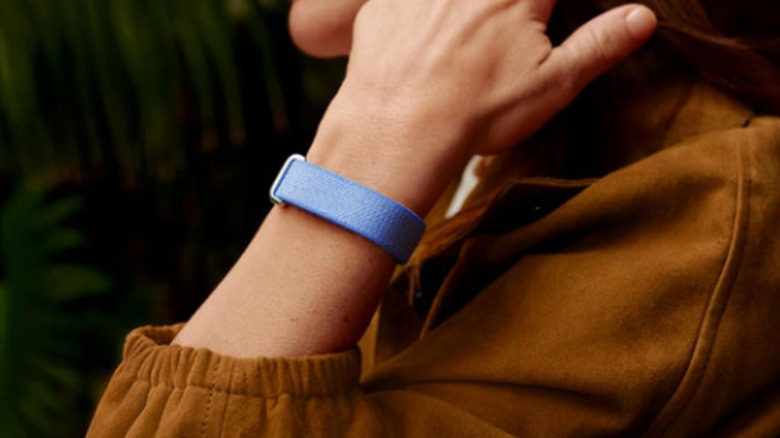
Google's other big wearable from this year is the Fitbit Air, and it might be the perfect alternative for you if you're not a fan of the Edge. We compared the Fitbit Air against the Fitbit Edge to see which one is the better buy. Both are priced quite affordably compared to other wearables, but the Air is even less expensive at just $100. The Air has drawn a lot of attention for being a screenless Fitbit device, which makes it appealing to users who want less distraction and a slimmer form factor.
Ultimately, the Fitbit Air and Fitbit Edge function extremely similarly to one another. Both use the Google Health app to track your fitness data. Google Health syncs with your Fitbit to monitor activity, sleep, and various other wellness statistics. All of this information is viewable in the smartphone app, which is why the screenless Fitbit Air can be such a practical alternative for minimalists.
Amazfit Active 3 Premium
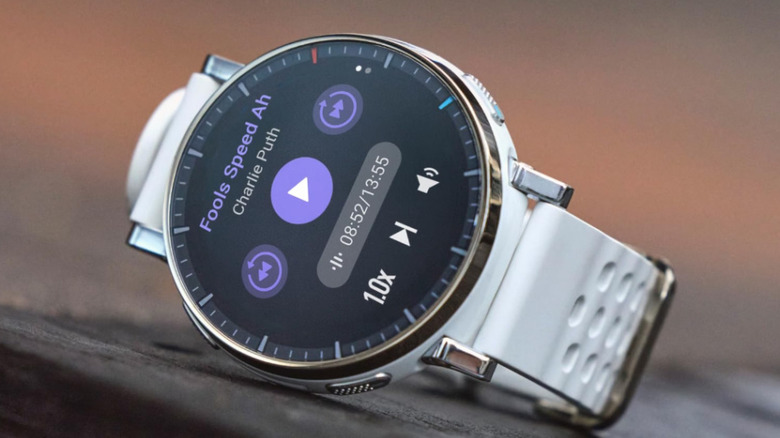
The Amazfit Active 3 is the latest fitness-focused watch in the Amazfit Active lineup. For $170, you get a versatile all-purpose sports watch, albeit one that may struggle with accurate heart rate sensing during high-effort activity. The Active 3 mainly appeals to runners with its physical buttons and built-in warm-up routines. The duration of software support for Amazfit smartwatches extends for up to three years for some models, which is a respectable figure against the minimum two years of support that Google guarantees for Fitbit devices after they are last sold in its store.
One thing that really stands out about the Amazfit Active 3 Premium is its 3,000-nit AMOLED display with sapphire glass. It's the kind of vibrant and durable screen that's not exactly common at this price point. As an added bonus, Amazfit watches got some new features in 2026. These include recovery time estimates, improved navigation tracking, and more. If the Fitbit Edge isn't quite what you're looking for, Amazfit might have what you're looking for at a very similar cost.
Garmin Vivoactive 5
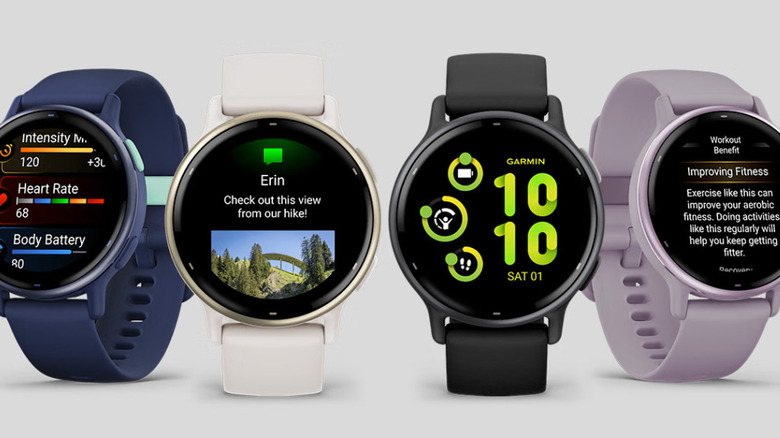
The Garmin Vivoactive 5 is a mid-range, fitness-focused smartwatch released in 2023. Reviewers maintain that it's still worth buying in 2026, and you can actually get it for as low as $168 these days. It's worth noting that the Vivoactive 5 lacks the training readiness metric, which has become an expected feature in competing smartwatches and fitness bands. Garmin watches beat the Apple Watch for fitness users, though, so you can still find plenty of bang for your buck.
What makes the Vivoactive 5 so appealing is that its capabilities have stood the test of time. It offers up to 11 days of battery life in smartwatch mode and impressive accuracy for monitoring workouts. Its successor — the newer Vivoactive 6 — costs $300 and comes with a few notable improvements, such as niche sports profiles and Training Effect metrics. However, if you want a mid-range smartwatch at a discount, you won't miss out on much by grabbing the Vivoactive 5 for its current price.
RingConn Gen 2 Air
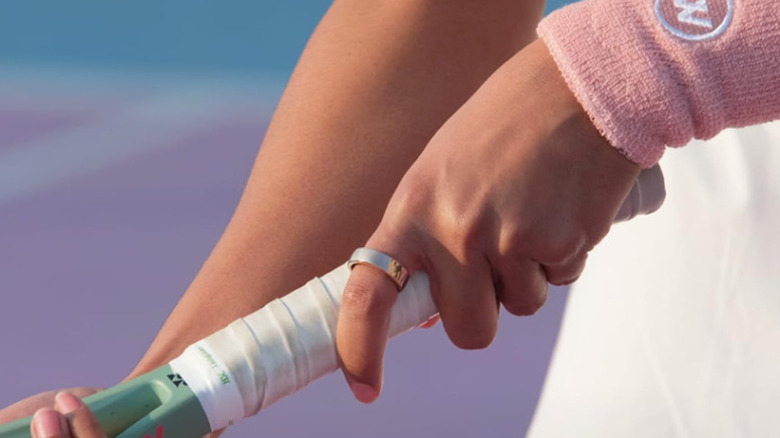
The RingConn Gen 2 Air is, of course, a Fitbit Edge alternative that you don't wear on your wrist at all. It's a sleek and discreet fitness tracker that won't distract you throughout the day. And if you frequently find yourself adjusting your watch or wristband, that won't be an issue with this wearable. Experts say RingConn stands out as a capable competitor to the likes of Samsung and Oura. Its products tend to be more affordable, too; the RingConn Gen 2 Air costs just a bit more than a Fitbit Edge at $199.
There are even some things smart rings can do that smartwatches can't. In addition to minimizing distractions, fitness rings tend to last longer than a Fitbit on a single charge. The RingConn Gen 2 Air has a 10-day battery life and can charge to full in about 90 minutes. It's a competent device for tracking sleep metrics, but it's worth acknowledging that its exercise tracking and health readings aren't quite perfect.
Samsung Galaxy Watch 9
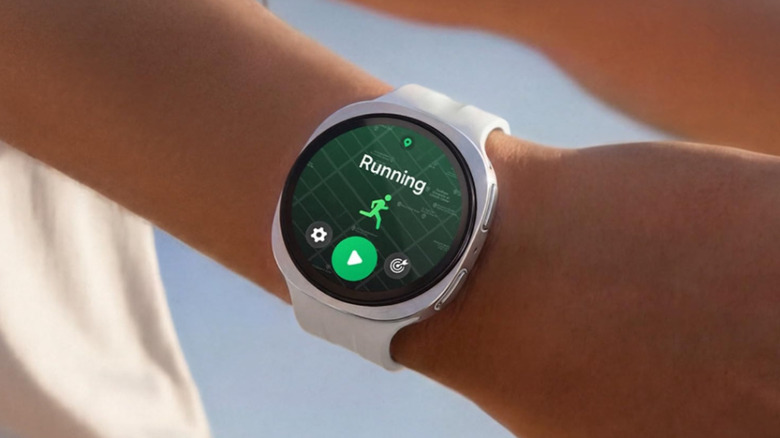
The Samsung Galaxy Watch 9 is not a dedicated fitness tracker, but it is a feature-rich smartwatch with its own health monitoring capabilities. The Galaxy Watch 9 starts at $380, which is a big leap from the Fitbit Edge, but it comes with the full mobile operating system experience that you might be missing from other trackers. The Galaxy Watch can act as a fitness coach, heart rate monitor, or a blood pressure monitor in addition to syncing with your phone's texting and mobile wallet apps.
We took an in-depth look at the pros and cons of using a Samsung Galaxy Watch compared to other wearables. It empowers you to control your Android phone, your smart TV, or even your computer directly from your wrist. The watch's UI is intuitive, too, which makes its broad connectivity a joy to utilize. The battery life and overall longevity can leave something to be desired, though, especially if you want to use it all day every day. But if you want something more rugged and durable with a more robust battery, and have close to $700 to spare, you might consider the Galaxy Watch Ultra 2 instead.
How we selected these Fitbit Edge alternatives

To help you find the best Fitbit Edge alternatives, we highlighted five well-reviewed fitness trackers also available in 2026. Our list mainly focuses on products that you can buy for around the same price as a Fitbit Edge, so we primarily discussed wearables that you can get for $200 or less. We also made sure to highlight how these different wearables serve unique purposes, whether that's screen-free health tracking, optimized smartphone connectivity, or hardcore training.
Each product on our list has an average user rating above 4 stars on Amazon at the time of this writing. We checked professional reviews and customer feedback to make sure none of these products have any major defects that would be likely to affect your experience.