

Amazon Echo Dot (6th Gen) Review: Better Audio, Twice The Price
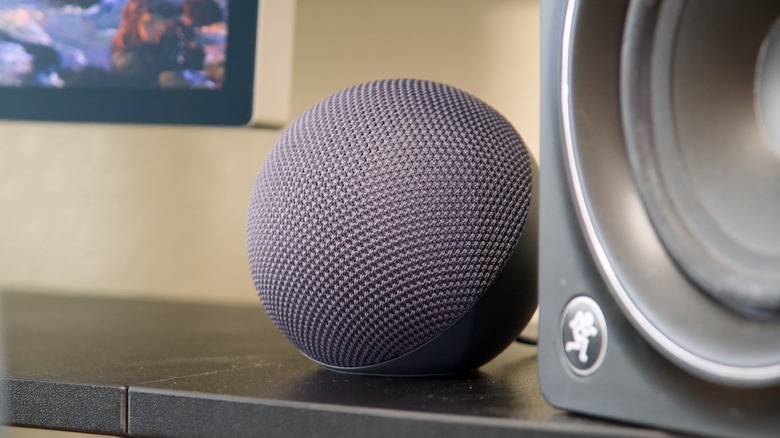
It's been a while since the Amazon Echo Dot has gotten an update — four years, in fact. Amazon finally unveiled the Amazon Echo Dot (6th Gen) in October, and it's designed to dramatically improve what the Echo Dot can offer while also doubling in price compared to the fifth-gen model (though it's worth noting that model recently received a price hike to $79.99).
At $99.99, the Echo Dot (6th Gen) does still sit below the $119.99 Echo Dot Max, but it still isn't necessarily cheap. In terms of what you get for that higher price, the Echo Dot (6th gen) essentially serves as a smart home hub and Eero Wi-Fi extender. The hub is what makes it more useful in a smart home setup than its predecessor, since the 5th Gen already had Eero.
Of course, at this price point, it has to compete in even more areas. For example, its price isn't far off from the HomePod mini 2 and the new Google Home Speaker. Neither of those have a Wi-Fi extender, but simply serving as a Wi-Fi extender probably isn't enough to make the Echo Dot worth buying over those competitors. So, does it also compete on things like audio quality and other smart assistant features? I've been using the Amazon Echo Dot (6th Gen) to find out.
Design
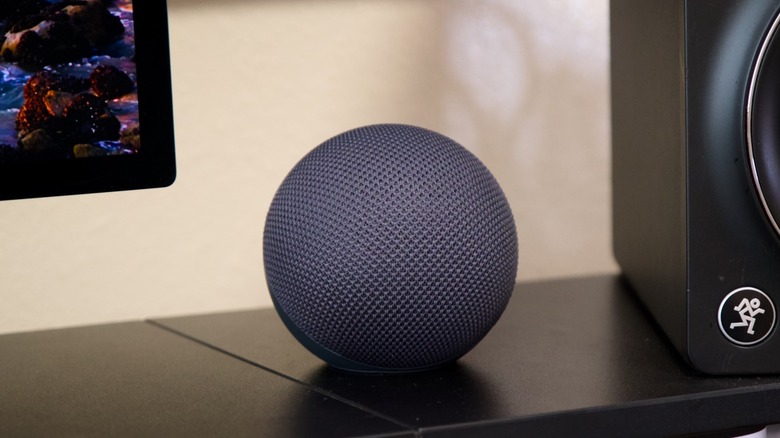
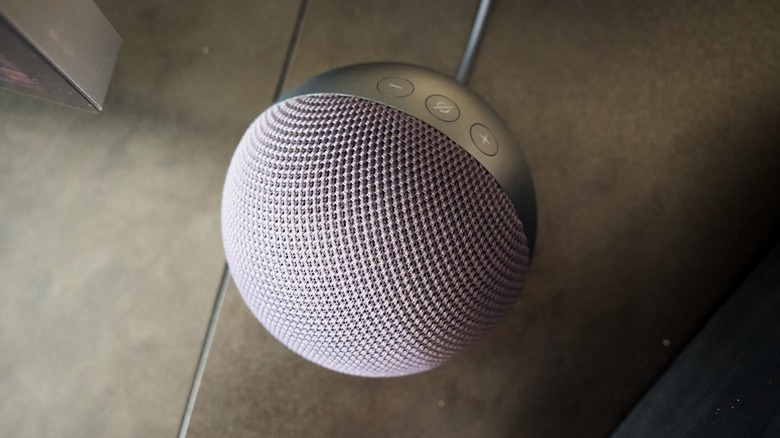
Visually, the 6th Gen Echo Dot sticks fairly close to the look of the 5th Gen's fabric-covered sphere, with a slimmer light bar and slightly revised buttons on top. It's a similar small globe shape that looks perfectly fine in most environments.
I don't mind that Amazon hasn't reinvented the shape. A speaker on a nightstand isn't really a status object, and an unchanged footprint means existing placement should still work for those who upgrade. If you're hoping for a dramatic visual signal that you bought the newest model, you won't find it here, but that matters less than it would on a watch or phone. The four colors (graphite, agave green, coral pink, and glacier white) do at least make it easier to match the speaker to a room.
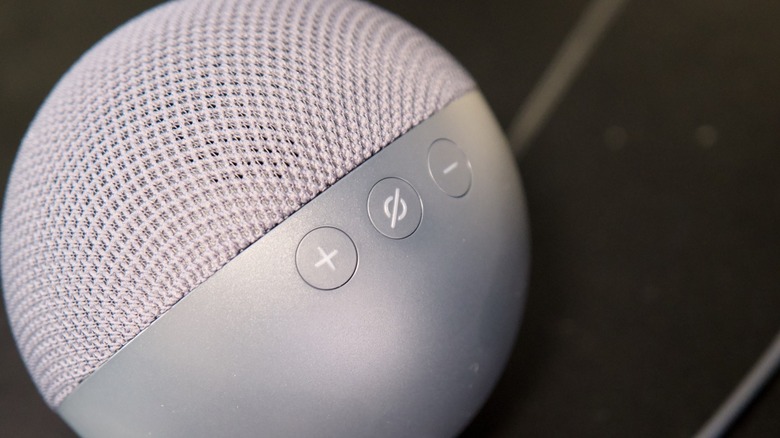
On top of the device are basic volume buttons and a button to mute the microphone. Any other controls can be found in the Alexa app. The Echo Dot comes with a power adapter, but unfortunately it's not powered by USB-C, so you can't use other cables if this one breaks. That's a little annoying at this point. Even Apple has moved to USB-C. Still, the speaker gets the basics right. It looks nice enough — not high-end, but not cheap either. It's about what you would expect from an Echo Dot.
Features
Inside, Amazon uses its AZ3 chip, the same custom processor found in the Echo Dot Max and the rest of the 2025 Echo lineup, along with a new AI accelerator. That accelerator is designed to handle more AI processing on the speaker itself rather than relying entirely on distant servers.
Amazon says the combination delivers faster, more natural Alexa+ responses and better background-noise filtering. I found that responses were adequate when it came to timing. They didn't seem to be especially quick, but they also certainly weren't slow. Four microphones handle voice pickup, up from three on the 5th Gen. These are the kinds of microphones that are designed to pick up what you're saying from across a room, and they seem to work quite well.
The built-in Eero support could be the most useful extra — for the right house. Eero is Amazon's mesh Wi-Fi system, which spreads a network across multiple routers and extenders instead of relying on one box to cover every room. Of course, plenty of people don't use Eero routers, including me, so this isn't something that had any impact on my usage. Even Eero users might find it to not be all that helpful if they already have decent whole home Wi-Fi coverage. Amazon rates the device as offering up to 1,000 square feet of added coverage, though most won't quite get that far.
One of the bigger advantages of this device is that it can act as a smart home hub, including having sensors built straight into it. Amazon's Omnisense platform adds temperature and presence sensing, which can help the speaker combine different inputs to build a picture of what's happening in the room, and that can trigger automations such as turning on the lights when you walk in or adjusting the heat when the room gets cold. It replaces the 5th Gen's simpler temperature sensor and ultrasonic motion detection, which used high-frequency sound to sense movement. A speaker often has better placement than a wall-mounted thermostat, so this is a genuinely useful addition.
Audio quality
The Echo Dot (6th Gen) has a new full-range driver powering its audio. It's still a single driver (so audio isn't split between multiple drivers like it would be on higher-end speakers), but Amazon still claims 50% more bass than the last Echo Dot. Of course, that's not a super high bar. The last Echo Dot had notably weak bass, but that could be forgiven because of its low price.
Ultimately, the speaker actually sounds decent for its size. The bass improvements are clear — kick drums actually have some weight to them, and while they don't quite reach those low lows that you'd get from a larger speaker, I was pleasantly surprised with the bass.
The high-end detail is perhaps less impressive than the bass. Details aren't quite as crisp as I would have liked, which is pretty common in cheaper speakers like this, but still something that I hope gets better over the next few years. There has been a lot of emphasis on bass response from tech companies, and that has made for better sounding audio overall.
Of course, given the price point, the speaker actually competes with Amazon's own Echo Dot Max, which is larger and has a 2.5-inch woofer with an 0.8-inch tweeter. While I didn't have one on hand to test with, I would expect it offer even better bass. More importantly, given the dual driver setup, I would expect the Echo Dot Max to deliver more crisp details as well — however, again, I didn't have an Echo Dot Max to test with, so I couldn't verify that. Given the fact that the two speakers are only $20 apart, if you care about audio but still want a cheaper Amazon speaker, it might be worth spending that extra cash, even if I suspect the gap is smaller than the spec sheet suggests.
In the end, this isn't an audiophile speaker. It's still quite small, and I found that it didn't really get all that loud — though it was loud enough for background music or casual listening. One thing that might help is using two Echo Dots in a stereo pair, which could also improve audio response by allowing the speakers to play left and right channels instead of only playing in mono.
Where the new Echo Dot runs into trouble is in comparison to similarly-priced competitors. Google's Home Speaker has a 58mm omnidirectional full-range driver designed to spread sound evenly in every direction, and Google also supports using the speakers as TV surround speakers with its Google TV Streamer. Then there's the HomePod mini 2, which combines a full-range driver with dual passive radiators. That gives Apple a lot of control over how a small speaker behaves — and, as you would expect, the HomePod mini 2 does indeed sound much better than the Echo Dot. Of course, if you choose a HomePod over an Echo, you have to be willing to stick to Apple's ecosystem instead of Amazon's, which may or may not be possible for you.
App and subscription
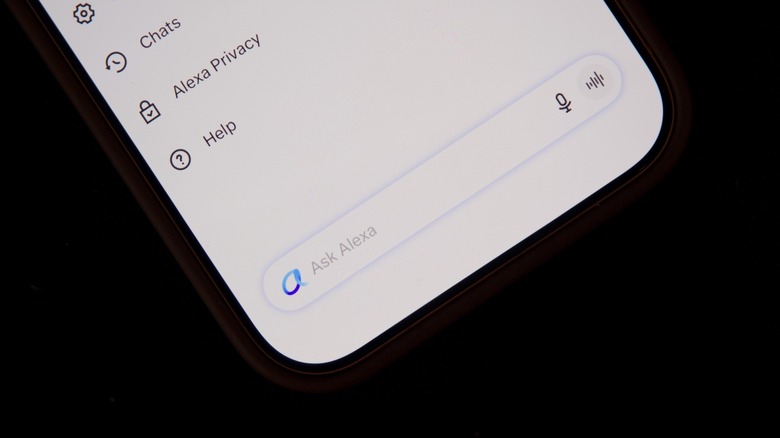
Given the fact that the Echo Dot doesn't have a display, you'll set it up and control its settings largely through the Alexa app. The app does a fairly decent job of keeping a lot of smart home controls in one place, but it can often feel crowded, and some of the Dot's more useful settings take a bit of digging to find.
The speaker itself is designed for Alexa+, Amazon's more conversational assistant that generates responses with AI rather than relying only on preset answers. But, unlike the previous generation of Alexa, Alexa+ comes at a price, at least for those who don't already have Amazon Prime.
If you don't have Prime and want Alexa+, you'll get it free for a limited time with the Dot, after which you'll need to pay a $19.99-per-month subscription. That said, there's no good reason to do that — Amazon Prime costs $14.99 per month and includes Alexa+. Even if, for some reason, you don't want Prime, it would make sense just to get it, since it's the cheaper option.
All in all, Alexa+ isn't an especially compelling AI companion. Claude, ChatGPT, and Gemini all offer much more when it comes to AI assistants. You just can't use them on your Alexa speaker. If you do want an AI assistant on a smart speaker, Gemini may be the way to go. Google includes Gemini with the Home Speaker, but Gemini Live requires Google Home Premium Standard at $10 a month, and with it, Gemini is significantly more capable than Alexa+.
Smart home support
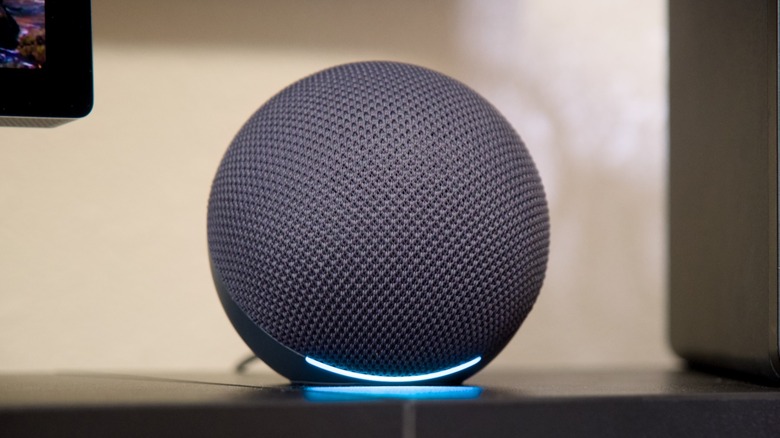
The built-in smart home hub functionality is a first for an Echo Dot — and the clearest reason to consider paying more. The device supports Zigbee and Thread, on top of the Wi-Fi support that lets it talk to most other smart home devices.
Matter is a shared standard designed to make accessories work across different smart home platforms, while Thread is a low-power mesh network for devices such as locks and sensors. The Dot also acts as a Thread border router, connecting that device mesh to the rest of your home network. In practice, compatible locks, bulbs, blinds, and thermostats can pair directly without a separate bridge, though reliable control across real accessories matters far more than simply having all three logos on a spec sheet.
Amazon is catching up here, but not leading. Plenty of other devices around this price point support being used as a Thread border router, though a lot less support Zigbee. Thread support has become table stakes for a serious smart home controller, but bundling those radios into a speaker changes the math. A Thread-only lock without a border router can be severely limited, including losing remote control unless you add another device, and separate bridges can cost around $40. The Dot eliminates the need for that extra box for compatible accessories while giving you a speaker at the same time.
That also gives Amazon its sharpest advantage over Apple. The HomePod mini 2 supports Matter and acts as a Thread border router, but it doesn't include a Zigbee hub, so it can't directly run the Zigbee bulbs, locks, and blinds that the Dot can. Google's Home Speaker covers Matter and Thread too, but Amazon's listed accessory support is broader again. Neither rival has an Eero extender at all. All that to say, the smart home is still confusing, years into Matter. Most people will want to buy a speaker based on its ecosystem though — not based on what smart home radios it has.
Conclusions
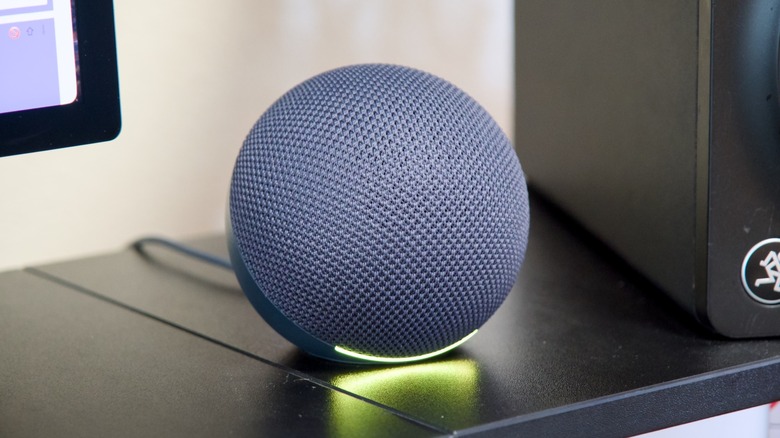
Amazon's first-party hardware keeps improving, and the Echo Dot (6th Gen) earns its $99.99 price tag mainly through what the extra money buys — a smart home hub and a Thread border router. If you already own a 5th Gen Echo Dot and don't need a hub or mesh extension, you probably don't need to upgrade. But if you're looking for a relatively small speaker and already exist in Amazon's ecosystem, the Echo Dot (6th Gen) is a solid product.
If you want better audio, though, the Echo Dot Max is worth considering, too. It's only a little more expensive than its smaller sibling, offers nearly the same features, and boasts better audio. It just comes down to being willing to spend $20 more.