

How Tesla's $10 Billion Factory Could Transform US Solar Production
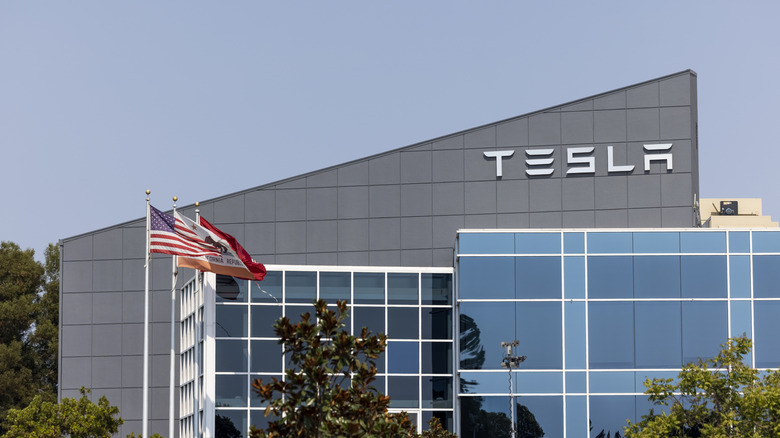
The electric vehicle manufacturer and clean energy company Tesla has begun laying the groundwork for a $10 billion solar energy manufacturing facility near Houston, Texas. Tesla CEO Elon Musk confirmed the project with a post on X, dubbing the initiative "Project Crystal Sun." This comes in the wake of SpaceX — another of the companies owned by Elon Musk — ordering 100 gigawatts (GW) of solar production equipment from German equipment maker Singulus Technologies (via Interesting Engineering). Putting two and two together, one could speculate that the Houston facility could ultimately give U.S. solar production a 100 GW boost.
The Project Crystal Sun plant will reportedly produce all manner of solar equipment, from component parts to finished solar cells and panels. However, the manufacturing stage may only be one small part of Musk's Project Crystal Sun. When SpaceX signed the contract with Singulus to procure 100 GW of solar manufacturing equipment, Musk took to X to say, "This is for Starmind to create a sentient sun."
Starmind is the proposed constellation of AI data center satellites by SpaceX. This cluster of thousands of satellites could capture continuous solar power in space, then transmit AI computations down to the surface. This project could certainly stand to benefit if the output of Tesla's new factory can keep up with growing energy demands and expanding space-based ambitions.
What Project Crystal Sun means for future solar production
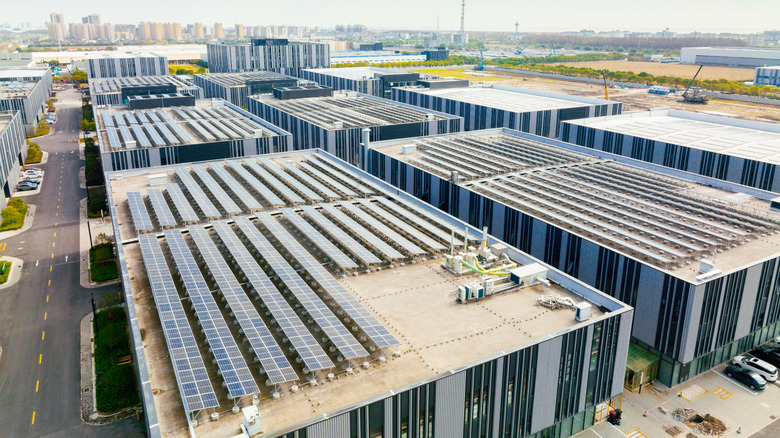
According to the U.S. Energy Information Administration, electricity consumption in the United States reached 4.2 million gigawatt-hours (GWh). Dividing that by the number of hours in a year, one can estimate that the U.S. consumed approximately 480 GW of electricity. This puts into perspective just how impactful a 100 GW Tesla solar factory could be — this one facility could, over several years, produce enough solar equipment to help offset 20% of the nation's energy consumption. Wind and solar already generated 86 GW of electricity in 2025, so the country looks to be on track to generate half of its energy through clean methods.
The Project Crystal Sun factory is slated to begin operations in the first quarter of 2029. That's a long way off, but it's also not guaranteed to always be the only one of its kind. It would merely take five such factories with a projected 100 GW of solar equipment output each per year, operating for several years, to completely offset the nation's current energy consumption. It could set a promising precedent for Tesla ramping up solar production, and it would be a huge rebound for the company after Tesla called it quits on a failed solar roof program.