

The US Army Just Flew A Drone With A 3D-Printed Engine
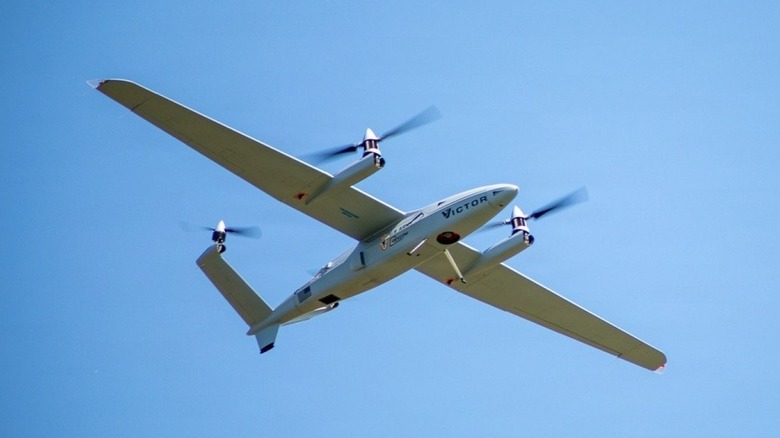
As the modern battleground continues to develop, the use of drones is becoming a strategic imperative for militaries worldwide. As part of the U.S. Army's research initiatives into making drones and drone parts more readily available in the field of battle, researchers from the Army Research Laboratory (ARL) at the U.S. Army Combat Capabilities Development Command have successfully flown their first drone with a 3D-printed metal engine. This first flight came after years of research involving more than 30 universities, all aimed at eliminating the weight of liquid-cooled radiators that make flight harder, and physics challenges of making the fuel reliably combustible. The breakthrough could significantly alleviate the logistics burdens associated with getting drones that can fly higher and carry heavier loads to the front lines.
The Army isn't the only branch of the military working on 3D printing capabilities. The Navy already 3D printing drones at sea, with parts like engines supplied separately — though this new engine might help make logistics for them easier too.
The air-cooled, 3D-printed engine that was flown as part of this initiative is coupled to a 400-volt motor-generator that forms part of a hybrid-electric propulsion system. 3D-printing metal parts isn't a new concept, in fact even a material as tough as Titanium can be 3D-printed. The entire aircraft is known as the Versatile Intelligence Controlled Tactical Operational Reconnaissance and Attack system (VICTOR UAS), with the airframe designed and built around the propulsion system by Griffon Aerospace.
Adding further value to the U.S. military, these 3D-printed engines are built to burn heavy fuel, which the Army has gone to great lengths to standardize across nearly all of its gas-powered machines because of its safety and energy capabilities when used correctly. The fuel's higher ignition point and ability to remain in long-term storage without degrading is one of the key reasons behind the requirement. Standardizing on a single type of fuel also makes logistics on the frontlines significantly easier.
3D printing metal parts at sea
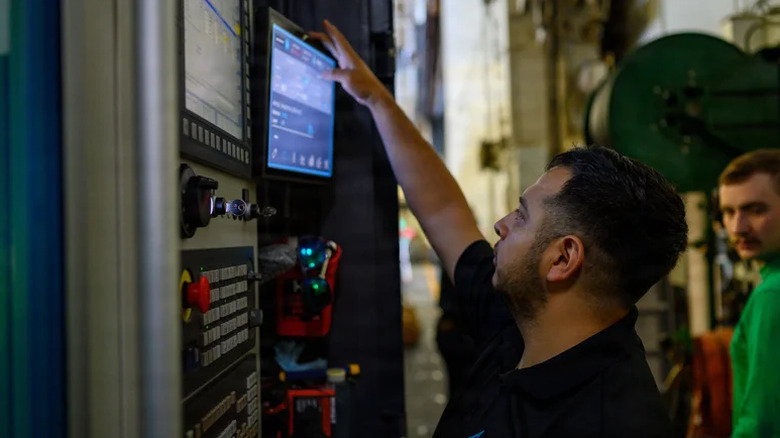
Other branches of the military are also focusing efforts on advancing 3D printing technology that when used out in the field, could provide strategic advantages over its adversaries. During the 2026 Rim of the Pacific exercise, a 3D metal printer was installed aboard the USS Theodore Roosevelt, demonstrating the advantages of 3D printing parts for U.S. aircraft carriers while at sea. If 3D printers can become standard equipment onboard aircraft carriers, drones like the VICTOR UAS could be manufactured almost entirely out in the field, in a much smaller time frame than waiting for pre-made parts to arrive on ship.
Sailors worked with civilian contractors from ADDiTEC to design and print custom components for maintenance while aboard the ship. This demonstrated that navy ships could make significant strides towards achieving greater levels of self-sufficiency and maintaining planned deployment endurance. Early experimentation of 3D printing parts was conducted ashore, exploring prototypes and ideas before containerized 3D printers were installed aboard the carrier.
How much time and money does the military save by 3D printing parts?
The military clearly sees a future where 3D printing can produce components in a very short space of time, which could ultimately be what makes or breaks long-term deployments. While no overarching study has shown exactly how much time and money the Navy has saved thanks to 3D printing, an tests are clearly demonstrating the possibilities. The Navy, for example, has in some instances slashed component lead times by 70%. Additionally, military supply chains don't guarantee the availability of subparts, and entire components would have had to be replaced in the past in cases like these.
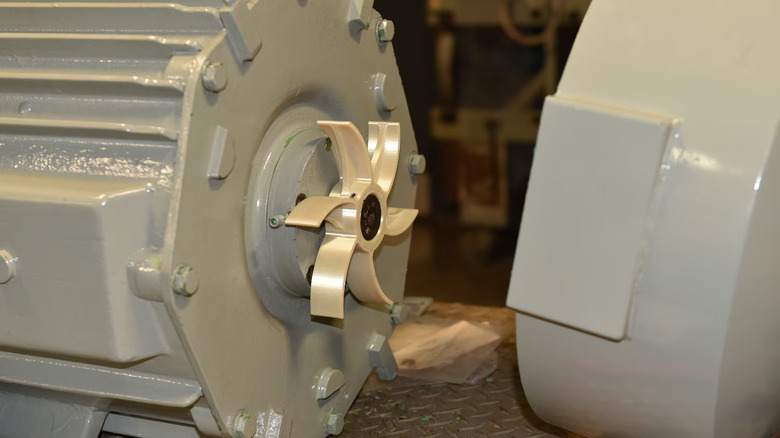
One notable example of how this plays out in the theater of operations was when a chilled water pump cooling rotor aboard a guided missile destroyer needed replacement in 2025 due to a failed six-bladed part. An entirely new $300,000 pump would have had to be purchased to fix the issue, as the manufacturer didn't offer the part for sale separately. The part was 3D printed and installed for around $131. 3D printing has the potential to have a massive impact on operational readiness across military branches, and in time, 3D printing will become a capability that the U.S. Military cannot go without during active operations.