

Your iPhone's USB-C Port Can Do More Than Charge The Battery
Ever since Apple switched its iPhone models from the proprietary Lightning port to a USB-C one, the possibilities of what the gadget could do increased exponentially. While all the iPhone models Apple currently sells feature a USB-C port, there's a fundamental difference between the regular models (like the iPhone 17 and the iPhone 17e) and the premium lineup (like the iPhone 18 Pro and iPhone Duo), and that is port speed. Basically, the Pro models feature USB 3 support, with up to 20 times faster transfers than the port available with the regular versions, which uses USB 2.
Still, all of the latest iPhones have USB-C ports that can do a lot more than charge their battery. They can let you connect to an external hub, hook up a portable SSD, use a gaming controller, plug in a pair of wired headphones, or even charge other devices like your earbuds.
With Apple's move away from Lightning, an entire USB-C accessory category that was focused on the Android market at the time opened its arms to iPhone users, who can now enjoy the versatility of a universal port that can be used for charging solutions and transferring data from one device to another. With several surprisingly useful iPhone USB-C accessories on the market, it became a lot easier to make iPhone peripherals a lot more interesting. Some of these even help with Apple-specific functionality, like offering a place to store the massive ProRes files that an iPhone Pro's camera can capture, so there's a lot to explore here.
From charging to gaming, your iPhone's USB-C port can do a lot
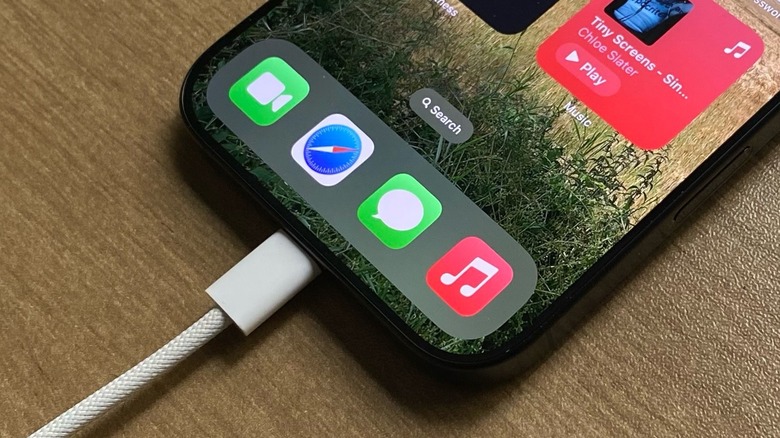
Many Android smartphones have a clever feature that allows users to charge their smartwatches or earbuds on the back of their devices through reverse wireless charging. While Apple never enabled this functionality, the company does let the iPhone charge those small gadgets by outputting 4.5 W of power through a USB-C cable. It's not the fastest charging and your iPhone's battery doesn't have a ton of power to spare, but it's enough to add a bit more charge to a dying Apple Watch or almost unusable AirPods. As long as your phone has a decent charge, you should be able to use this feature without worrying about draining your iPhone completely.
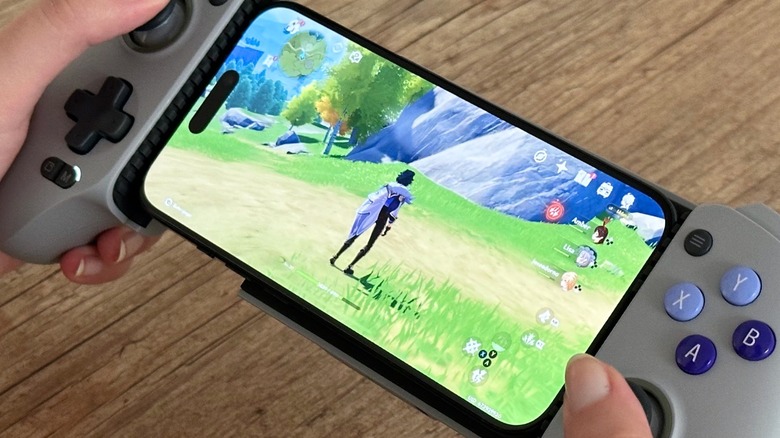
Still, reverse charging isn't the only feature available to the USB-C port. Another great option is the ability to connect gaming controllers to the USB-C port, such as the GameSir Galileo G8. Accessories from third-party manufacturers can help iPhone users transform their devices into a Nintendo Switch-like console, where they can not only smoothly run their favorite games, but play them with a proper controller that gives more freedom for users to run combos, control their characters, and enjoy a traditional gameplay experience.
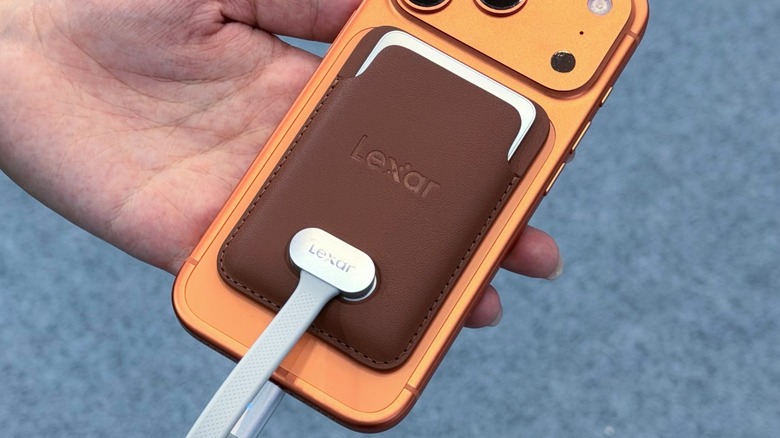
The USB-C port also provides functionality as simple as greatly expanding the storage of your iPhone, and one device that showcases this well is Lexar's Muse portable SSD, which was among the most interesting gadgets of IFA 2026. It looks like a MagSafe wallet, but this thin portable SSD unlocks extra space for iPhone Pro users recording at maximum ProRes quality. Even everyday users who would rather have their pictures and other data stored locally rather than on iCloud can benefit from this setup.
There's even more that the iPhone's USB-C port can do
In addition to gaming, adding more storage, and charging devices, there's a lot more the iPhone's USB-C port can do. For example, content creators can connect a proper microphone to the port to get more accurate audio for interviews or podcast recording — and you don't even need to spend much to upgrade your iPhone's audio recording capabilities. For those who aren't satisfied by a single USB-C port, you can even connect a USB hub to the iPhone, which could allow microSD support, wired peripherals like a keyboard and mouse, or even extending the iPhone's display to an external monitor.
Even though Apple doesn't offer Samsung DeX-like capabilities on the iPhone, it has allowed third-party manufacturers to leverage some functionality of the iPhone's USB-C port. For external display support, users can get a digital AV multiport adapter so they can connect the iPhone directly to the HDMI input of a hotel TV, for example, and enjoy their favorite shows and movies on a bigger display.
That said, these are just a few examples of what your iPhone's USB-C port can do. A lot more can be unlocked, such as lossless audio support with your favorite streaming services and wired headphones, or even powering scientific gadgets for medical workers in remote locations with limited equipment access. The "U" in "USB" stands for "Universal," after all.