

3 Budget-Friendly OLED TVs You Shouldn't Ignore
We may receive a commission on purchases made from links.
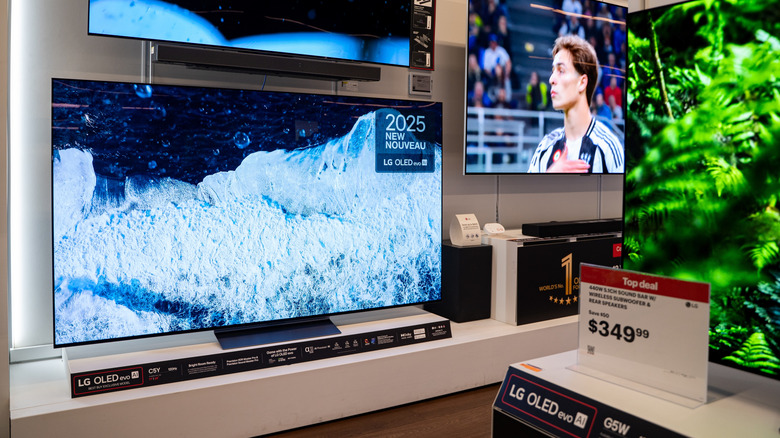
Backlit LED televisions were the standard throughout the 2010s and early 2020s. The panels were and still are super cheap, and the colors carry a tone respectable enough for a casual experience. However, backlit LEDs have always fallen short in one aspect: they just can't reproduce perfect pitch blacks. A single giant backlight emits white light across the entire screen in an LED TV, so even when a pixel is black, it still receives some light and appears grey.
Now, with OLED technology becoming cheaper, backlit LED TVs are gradually phasing out. The organic light-emitting diodes in an OLED television harbor millions of microscopic pixels that produce their own light independently. This means OLED pixels not only use less electricity but also produce accurate blacks and much better color contrast across the board.
Competition between brands like LG and Samsung, along with manufacturing efficiency, has helped make OLEDs more affordable. They are finally selling within a price range accessible to many consumers worldwide. However, people now face a different problem: deciding which OLED to buy. One brand promises better features, while another packs punchier colors and contrast. That's where this guide comes in. We've picked both well-known and newer brands below, along with what each TV offers and why it's a bang-for-the-buck choice today.
LG B6 provides the best value
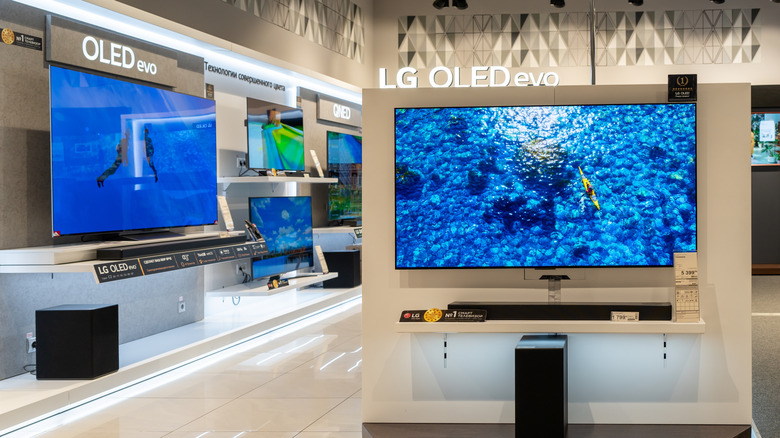
LG's 2026 entry-level OLED lineup includes the B6, a 4K panel packed with nifty AI features, Dolby Vision, and a native 120Hz refresh rate that goes up to 144Hz with VRR. The alpha-8 AI Processor Gen3 powers the B6, opening the door to upscaled content. The chipset upscales low-resolution YouTube shorts, videos, and other media to 4K. The resulting image isn't as sharp as native 4K, but it's still an invaluable feature for watching older, lower-quality content on the big screen. Moreover, LG does pay the Dolby Vision licensing fees for its budget-friendly OLEDs, unlike Samsung. The Dolby Vision HDR format supports 68 billion color depth compared to one billion on standard HDR10. This produces better color accuracy on the LG B6 and makes content on it look more realistic.
Another useful feature on the B6 is its built-in ambient light sensor. If the sensor detects a well-lit environment, it automatically adjusts shadow brightness and contrast. Furthermore, the LG B6 isn't gun-shy for gaming sessions. The panel runs at 120Hz and supports variable refresh rate, a must-have for consoles like the PS5 Pro. Its four HDMI 2.1 ports support 4K, include a low-latency mode, and support NVIDIA G-Sync and AMD FreeSync.
Normally, LG lists the 48-inch B6 at $1,200, but that's not the ideal price. Instead, buyers are encouraged to time their purchases around sale seasons. For instance, during promotional pre-sales and Black Friday promotions, the B6 sells for $599 at select retailers like Best Buy. That's a flat 50% off, and considering the LG B6 contains a suite of gaming and content essentials, it's the perfect pick for a budget-friendly OLED.
Samsung S85H is a mighty budget-friendly alternative
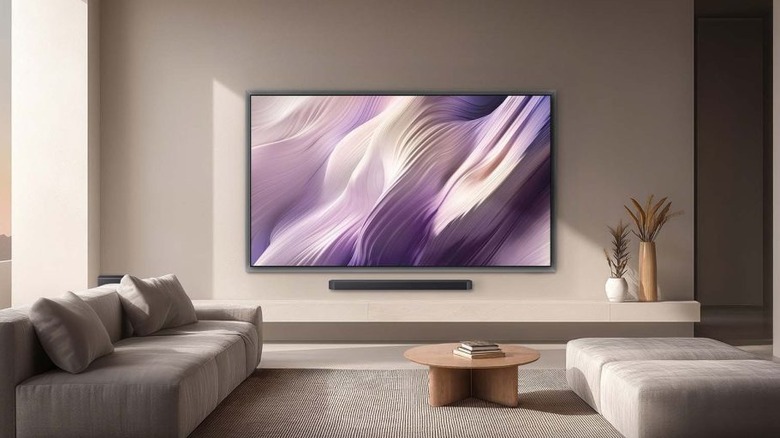
The 48-inch Samsung S85H has an MSRP of $1,200, but can drop as low as $799. The S85H can't beat the LG B6 on affordability, but it does outshine it in other areas. In a side-by-side analysis of the S85H and B6, TechRadar found that the S85H had higher peak brightness in both HDR and Standard Dynamic Range (SDR). SDR peaks at 470 nits on the S85H, about 2 times the B6's peak of 253 nits, while the S85H's HDR peak tops at 833 nits, 10% higher than the B6. Live cable and standard video content therefore look much better on the S85H in well-lit rooms.
Samsung's AI upscaling is sharper and clears artifacts as well as any budget OLED. Moreover, Samsung offers 7 years of software updates for the S85H, highlighting its future-proofing and potential AI architecture improvements. The S85H OLED TV also has a 120Hz panel, with the same game-ready features such as Nvidia G-Sync and VRR. The B6 offers the best value for money at its lowest promotional price of $599. However, if you find the S85H and B6 for similar prices, the Samsung S85H's higher peak brightness and longer software support make it the better long-term investment.
The Roku Pro Series OLED is the best all-year-round pick
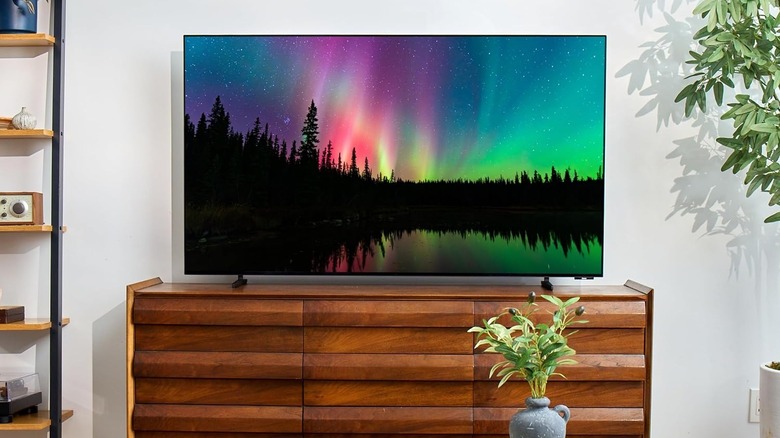
Roku might not be a household name, but users daring enough to make the switch won't be left disappointed. The Roku Pro Series has two big advantages over both the LG and Samsung variants. Firstly, it has a cheaper base MSRP of $1,000, making it the cheapest budget-friendly OLED TV year-round. Secondly, the Roku Pro offers more real estate for less. Samsung and LG charge $1,200 for 48-inch displays, while Roku offers a bigger 55-inch panel for $200 less. But if a potential buyer does want to spend $1,200, they can grab a 65-inch Roku Pro Series OLED.
The Roku has a peak brightness of 800 nits, a 120Hz panel, and includes Dolby Vision. One place it falls short, though, is the lower number of HDMI ports. The Roku has only two, which limits the number of peripherals and external devices you can connect at a time. However, other than that, the Roku is a solid bargain for the price. It has a bigger 55-inch display with Dolby Vision and HDR10+, custom Roku Smart AI upscaling, and a respectable brightness level, just minus the prestige of owning a Samsung or LG.
How we chose the best budget-friendly OLED TVs
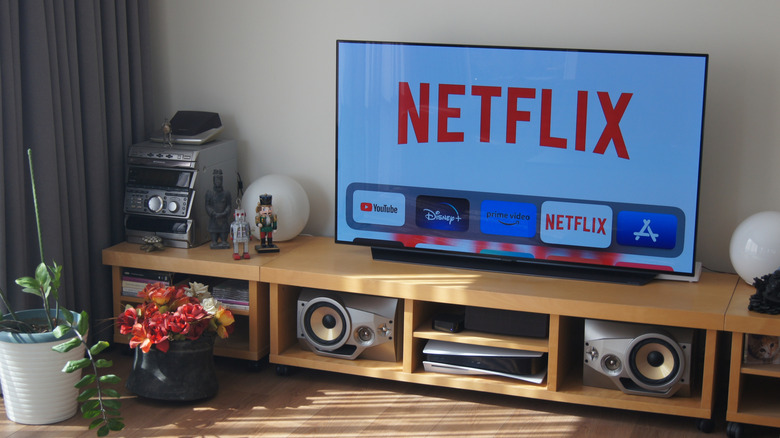
Several key factors shaped the best budget-friendly OLED TV list. Because affordability was the top priority, displays around or under $1,000 took precedence. All TVs in this price range are native 4K, so we focused less on resolution and more on features like AI upscaling, external device support, Dolby Vision, and game-readiness. The LG B6 has amazing colors and is unbeatable at its promotional price of $599 for the 48-inch model.
The Samsung S85H's higher HDR and SDR brightness, plus its longer 7-year software support, make it a worthy alternative. Then there's the 55-inch Roku, which is bigger and sells at a lower MSRP year-round, making it an overlooked, underappreciated, budget-friendly OLED competitor among famous brands. Ultimately, OLED TVs have improved a lot in the past few years. They aren't separated from each other by leaps and bounds anymore. Instead, nuances like the number of HDMI ports, color accuracy, and longevity decide which one is worth buying.