

Tesla's Cybercab Has Crashed 8 Times Already, Electrek Reports
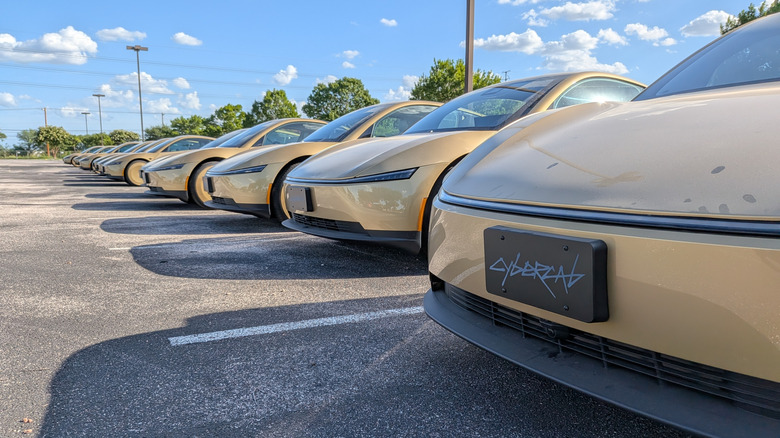
There's more bad news for the beleaguered Tesla Cybercab, as the National Highway Traffic Safety Administration (NHTSA) has recorded eight different crashes with the self-driving taxi. This comes two months after the automated vehicle began offering rides to the public in Austin, Texas. Of the eight reported crashes, four involved the fully autonomous (Level 4) Cybercab models that are currently only operating in Austin. The other four involved human-supervised Cybercabs — the kind that are fitted with steering wheels and brake pedals — in Austin, Lehi, Philadelphia, and Tampa.
Reports from Electrek have tracked that Tesla actually has over 40 different robotaxi incidents; however, the Cybercab itself now has eight reported crashes. Some of these incidents were caused by Tesla's own remote operators. Reports show that every takeover appearing in these crash reports resulted in a collision of some sort. However, some of these are small incidental collisions, like vehicles hitting poles and dumpsters. One was with an SUV at "0.40" mph.
Digging further into the seen data, Tesla has logged hitting a pothole at 5 mph, being hit by another car in a parking lot, being rear-ended in traffic without a driver onboard, and driving down the curb after going across the sidewalk at 3 mph. Most of these appear harmless, but other crashes have resulted in hospitalization. Detailed as causing a "minor" injury, the Austin crash was at 5 mph and needed involvement of the hospital.
Cybercabs keep having incidents on the road
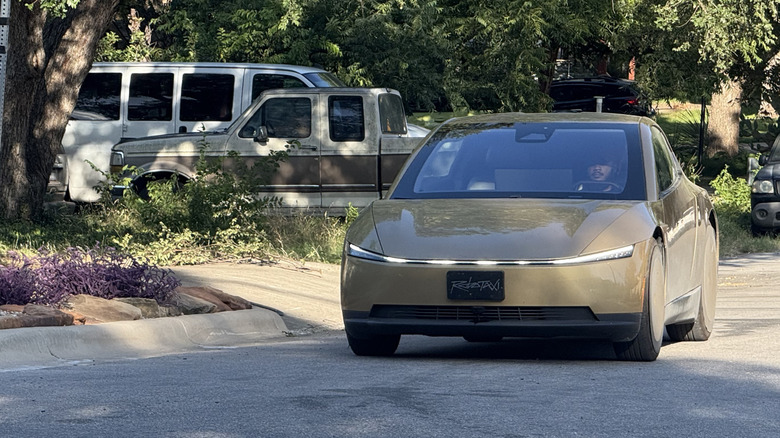
A crash at 11 mph in Lehi, Utah, involved hitting an SUV, but no one was hospitalized. Florida saw property damage, but a 53 mph crash with a passenger car is listed as "unknown" in the injury filing. There were two incidents involving Cybercabs in the Philadelphia area, though Tesla doesn't have a license to operate autonomously in Philly, so these were human-supervised vehicles.
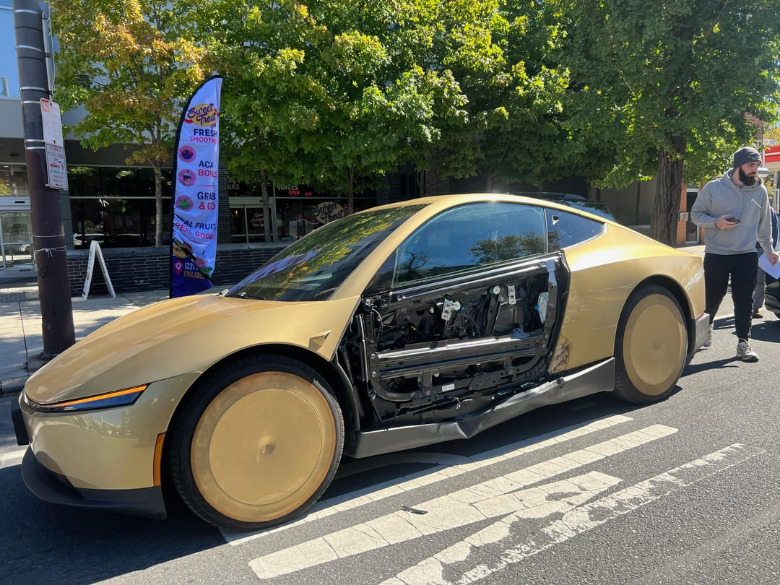
In October 2026, a Reddit user posted photos of a Cybercab with its whole panel ripped off the front door. Unfortunately, there doesn't appear to be any indication of why the crash happened, and only speculation and memes are being shared in the Reddit thread itself.
Unlike others in the self-driving space, Cybercabs don't come with LiDAR, or light detection and ranging, which uses onboard computing to determine things like depth or assist with detecting objects in a space, even in low-light conditions. The tech is so ubiquitous nowadays that LiDAR is even available on iPhones. Without that, Tesla had previously given its autonomous Cybercab service in Austin an 11 p.m. curfew — understandable considering the reduced visibility at night — though the company has since changed course and started offering robotaxi rides 24/7 in all the cities it services.
Elon Musk has famously gone against the grain with the solved problem of object detection and opted not to add more sensor hardware to the vehicles. Everything must be done via cameras and software onboard the Tesla Cybercab itself. By omitting additional sensor hardware, along with steering wheels and pedals (although some Cybercabs do have them if full self-driving isn't allowed), Tesla aims to lower the cost of Cybercabs to increase the fleet size.