

4 Things You Should Never Do When Cleaning Your Solar Panels
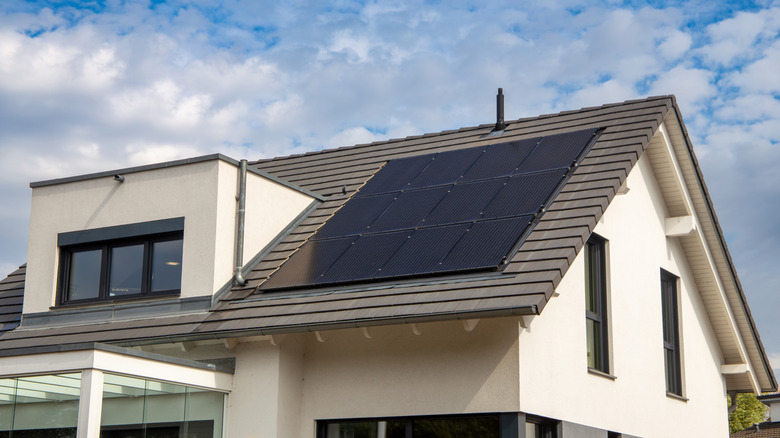
Cleaning solar panels isn't too cumbersome if you know what you are doing and understand a few easy do's and don'ts. For example, when using water, avoid hard tap water, which has more minerals than distilled water, which lacks minerals. Mineral deposits can affect how your solar panel works, forcing you to clean it again with a less abrasive method to remove them. Even rainwater is better, since it has less mineral content. Plus, you can combine rainwater with a squeegee to dislodge any remaining grime. Still, it won't be perfect, as this might not be enough to remove the dust, bird droppings, and pollen that can accumulate on its surface.
Before you clean solar panels manually, always turn them off first. Otherwise, the panels can still shock or short-circuit if you leave them on while cleaning. When shutting them down, always follow the manufacturer's instructions, which typically include information on the next step: the best and safest methods for removing built-up dirt and debris from a panel surface.
We're not just nagging about reading instructions. Ignoring instructions and using the wrong methods can void the warranty if anything gets damaged. Alas, if you aren't comfortable with what's being outlined or you find that the solar panels are too high up to clean, consider hiring a professional to do it for you — there's no sense endangering yourself for something that only needs to be done, typically, only a few times a year.
Never use a pressure washer
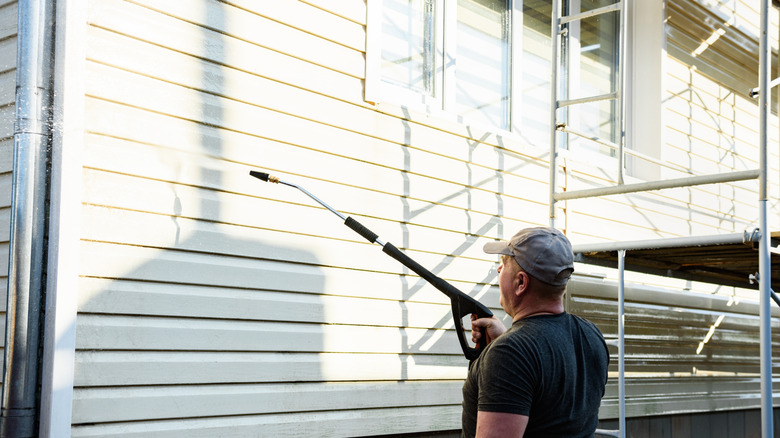
Solar panels are sturdy, but not sturdy enough to withstand the high-velocity water from a pressure washer. Doing so can create micro-cracks, or tiny fissures that you can't see. By continuously blasting high-pressure water onto the surface, you'll keep wearing down the panel's coating, too. As a result of this, water may eventually seep in and corrode the material if moisture continues to remain. Plus, the micro-cracks you can't see will reduce the panels' effectiveness and shorten its lifespan, which the manufacturer likely won't replace under warranty if the cause is from improper handling.
Instead, use a low-pressure garden hose if you're going to wash your solar panels. While doing this, be careful with hard water sources; most experts recommend distilled or deionized water to avoid mineral buildup, but soft tap water is often fine if you don't have access to purer water.
Don't spray cold water on a hot solar panel
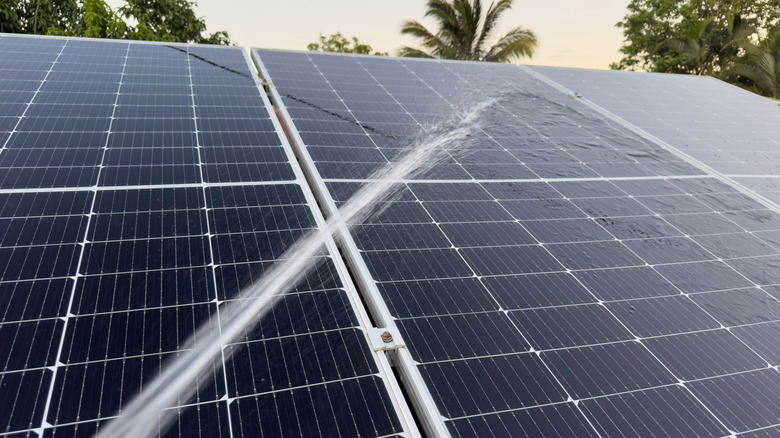
You might be tempted to use cold water while the turned-off solar panel is still hot — don't. When you do this, two things can happen: First, you can cause thermal shock. Materials like your solar panel expand in the heat, and contract when they cool. When you put cold water on a panel that's been in the sun, it adds internal stress because the inner layer expands and contracts out of sync with the outer layer. As a result, it can cause accidental shattering or cracking.
The second issue of using cold water on hot solar panels is that it can leave mineral deposits, smudges, and streaks behind, since the water evaporates faster than it would in milder temperatures. Leftover minerals, like calcium and magnesium, can form a white crust on the surface, which can cause uneven light absorption and even sometimes contribute to hotspot formation. SunPower Global recommends cleaning your solar panels early in the morning, before sunrise, to avoid peak sunlight hours.
Avoid using detergents
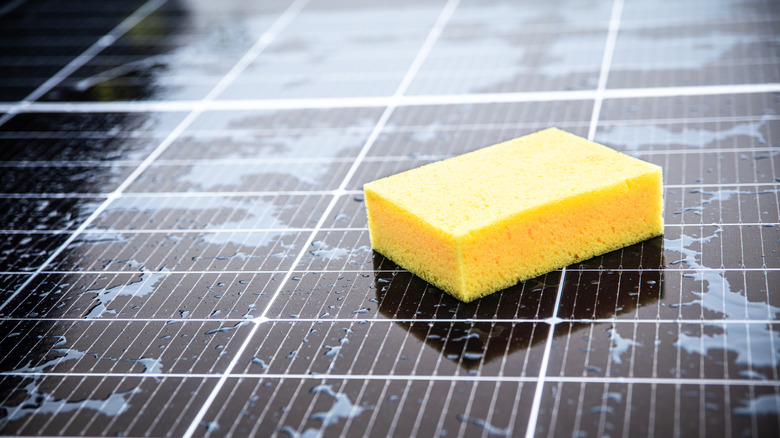
Harsh chemicals, including glass cleaner, can strip the protective coating and sometimes leave residue that blocks sunlight from reaching the panel. Dishwashing and laundry detergents are great at removing grease and grime, so you might wonder whether they could help clean solar panels. The answer is, yes, it would technically do the job, but it isn't worth the risk. Plus, dish soap and other household detergents leave behind a foamy layer that can act like a dust magnet. Then, of course, the chemicals can run-off washed roofs, harming your home or the environment. Lastly, if the unsolicited harsh cleaning solvents damage your solar panels, your warranty probably won't cover it.
To be on the safe side, consider gentler methods like waterless/dry dusting to remove loose dirt and pollen, and use soft water when you do wet cleaning. If that still isn't enough, diluted vinegar is still a safe enough option for stubborn stains that refuse to leave — though you should triple-check with the manufacturer if this is still approved under the warranty. If you do use vinegar, you shouldbe cautious that it is properly diluted because acetic acid can still be harmful to the anti-reflective coating.
Don't add weight or step on the solar panels
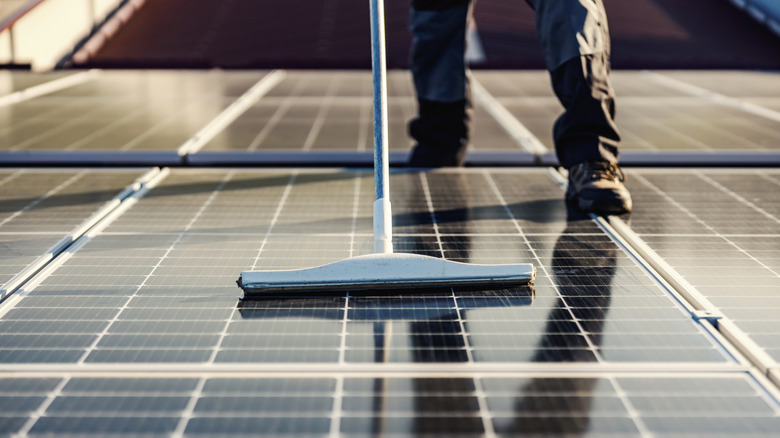
Solar panels are more fragile than you think. They are not meant to be walked on or leaned heavily against. Most solar panels are manufactured using thin tempered glass as the protective front layer. Thin tempered glass can withstand distributed loads — which is fine for snow — but it isn't very good against concentrated weight, like a human body. Even if the glass doesn't visibly crack, it can still bend beneath the surface under mechanical stress, breaking parts or worse. Those micro-cracks can start forming again too, which damages the solar cells, reduces efficiency, and shortens lifespan, especially when moisture seeps in. Damaged cells can also create hotspots, which can reduce a panel's overall output and create a potential fire risk.
To be safe, if there are tricky spots to reach while cleaning, consider using a long telescopic pole to avoid putting any direct weight on the panels. For solar panels on hard-to-reach roofs, that's when you'll want to stick to just hiring a professional to clean it for you.
How we came up with this selection
We based our selection on common, easy-to-access surface-cleaning practices — meaning no difficult-to-acquire specialty chemicals most people wouldn't think to use. Since installing solar panels is expensive, we also chose options that could irreversibly damage your setup. We assume you're following the manufacturer's instructions on which chemicals and tools are safe to use, since no cleaning method is universal.
We recognize there's no set cadence for how often you should clean panels, though it is typically suggested as a few times a year, depending on the climate and area you live in. So in this article, we assume your solar panels are dirty and need to be maintained, and that you are considering doing it on your own. We also emphasize reading the manual multiple times because well-meaning advice isn't a replacement for individualized instructions, and when it comes to expensive items with warranties, you should definitely read them from your manual.