

Delivery Drone Services Are Taking Off, But Major Challenges Still Exist
We may receive a commission on purchases made from links.
It was way back in 2013 when Amazon founder Jeff Bezos unveiled his grand vision for drone delivery. The prospect of small aircraft dropping off packages at the homes of Amazon customers within minutes of the orders seemed futuristic, even fanciful, but Bezos was deadly serious. A year later, another tech giant, Google, entered the sector with Project Wing (now Wing), laying out its own plan for autonomous drone deliveries. The core idea underpinning both systems was that drone deliveries could improve efficiency and reduce costs as the drones would be able to fly over the congested roads that slow down human delivery drivers.
But more than a decade on, progress has been slower in the U.S. than Amazon, Google, and other significant players like Zipline, had hoped, with the industry held back by everything from regulatory hurdles and technical challenges to questions of economic viability and public acceptance.
It doesn't mean, however, that those in the drone delivery business are considering abandoning their efforts. In fact, investment is still coming in and commercial services continue to expand, while improvements are also being made to the infrastructure. It remains to be seen whether the industry can overcome the numerous obstacles that are still preventing drone delivery from going mainstream.
Why scaling drone delivery is still difficult
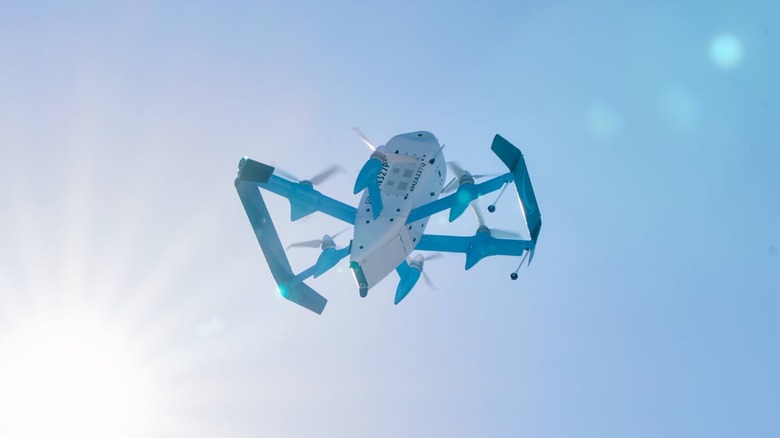
More drone delivery services are appearing across the U.S., but strict regulations mean they're still far from commonplace. While companies can obtain waivers and exemptions from the Federal Aviation Administration (FAA) to fly drones, the approval process remains complex. This can make expansion into new locations slow and potentially costly. The drone industry has been calling for a more standardized framework to simplify the approval and scaling of drone delivery operations. In response, the FAA proposed new rules in 2025 to create a clearer pathway for routine beyond-visual-line-of-sight (BVLOS) flights that include package delivery. As of late 2026, the framework is being reviewed by government, but existing waivers and exemptions will remain until it becomes effective.
Airspace management is another challenge. Drones must detect and avoid aircraft such as other drones, along with obstacles like buildings and power lines. In February 2026, an Amazon delivery drone struck a building during a delivery flight, while in 2022 a Wing drone in Australia accidentally landed on a power line, causing an outage affecting several thousand residents. As more drones take to the skies, having an effective traffic management system in place will become increasingly important.
Noise and public acceptance are concerns, too, with residents of Texas and Michigan among those who have complained about Amazon drones. The effects of adverse weather cannot be ignored either, with high winds and heavy rain disrupting flight operations. Payload limits and battery range are important considerations too, while apartment blocks and densely-built areas can make access difficult. Legal challenges can add further uncertainly, for example, in 2026, 15 U.S. states and Harris County, Texas, sued the FAA, claiming its environmental review of drone delivery operations failed to properly assess potential impacts like noise and battery fires.
Where drone delivery is already working
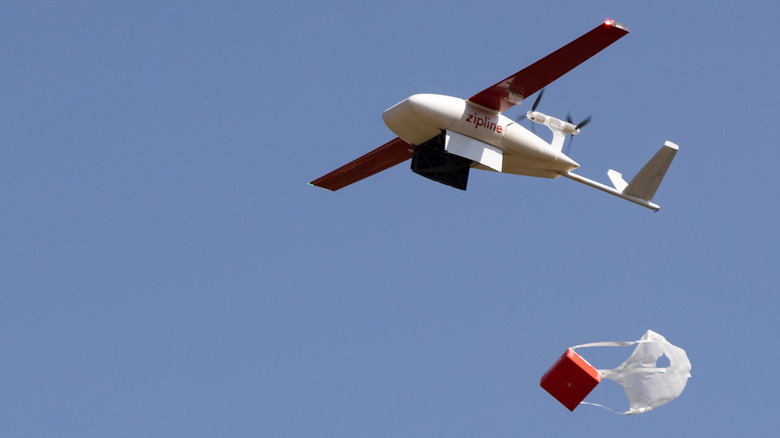
While challenges clearly remain, drone delivery has been gaining momentum in some parts of the world, often in places where the benefit is clear, outweighing residents' concerns about issues such as noise. A good example is Zipline, which, in partnership with the Rwandan government, has been using drones to deliver medical supplies like blood to hospital clinics in the African nation since 2016. The service has transformed access to essential healthcare, particularly in remote areas where road journeys can be slow and difficult. It means that instead of waiting for hours, healthcare workers can receive urgent deliveries in a matter of minutes.
More in line with Amazon and Wing's efforts to deliver everyday items using drones, Chinese tech company Meituan has managed to establish commercial food delivery routes in the bustling city of Shenzhen, using special kiosks in places like public parks. Visitors can order a meal and have it delivered within minutes to an easy-to-reach spot. By the end of 2025, Meituan was operating 70 drone delivery routes across several cities and had completed more than 780,000 orders.
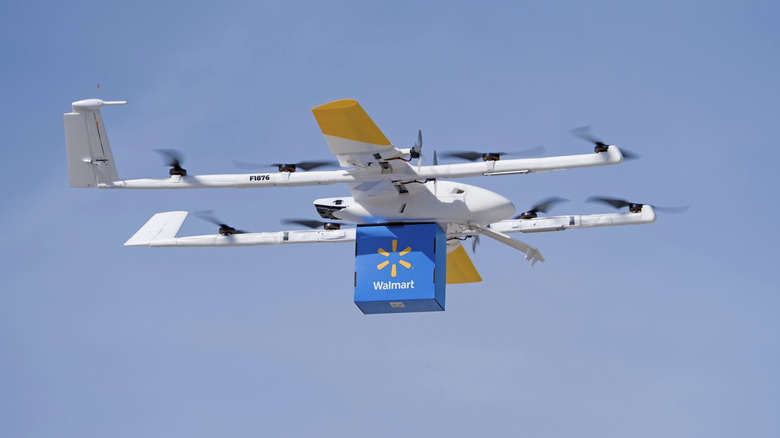
In the U.S., Amazon's Prime Air and Wing's partnership with Walmart have shown that some customers are willing to use drone delivery services when it's available, but acceptance is far from universal. Those living beneath flight paths are concerned about noise, safety, and privacy, reminding operators that a commercially viable service also has to be accepted by communities.