

The Reason Why Your Smartwatch Battery Drains Faster In Cold Weather
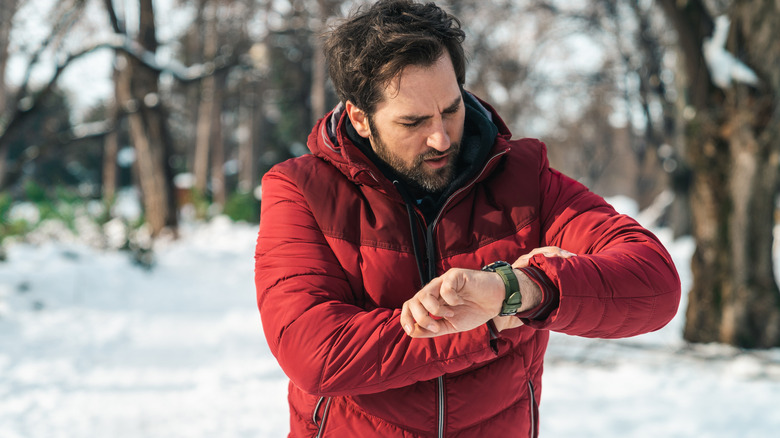
Most smartwatch owners likely know their wrist accessories run on lithium-ion batteries, but they should also know these power sources don't take kindly to extreme temperatures. Users may immediately think of oppressive heat, which can speed up the battery's aging process if it's exposed to high temperatures for too long. However, cold temperatures can affect a battery's overall health and charging ability just as much.
Smartwatch features such as GPS aren't the only factors that could kill a device's battery life. External factors such as cold weather can also have vampiric effects on your lithium-ion batteries' overall capacity and charging rate, regardless of the device they're used in. Some smart device owners may mistakenly charge their devices in extremely cold environments, which can cause permanent issues like overheating and weaker performance. It's often better to wait until you can get indoors before you bust out your portable or plug-in charger, or use your car charger after letting your vehicle warm up.
Why do cold temperatures affect smartwatches?

While some smartwatch users may think cold weather shouldn't affect their devices, the temperature's impact comes from the science of their lithium-ion batteries. As their name suggests, they generate a charge from lithium ions that travel back and forth between negative and positive electrodes. According to battery manufacturer Large, when a battery is exposed to extreme cold, the ions inside become sluggish, slowing the chemical reactions within the unit. This slowdown can also reduce the battery's ability to hold a charge.
Thankfully, users can easily keep their smartwatches warm by simply using them. You can keep a watch warm simply by wearing it and letting your body heat warm it under long sleeves. Smart devices like Apple Watches and Garmin watches also have low-power modes and battery savers that can help conserve power. Of course, the ultimate remedy is to bring your watch indoors or into heated spaces as often as possible, especially if it needs to be charged. As long as users follow good charging habits and don't regularly expose their devices to freezing temperatures without proper insulation, their smartwatches' batteries should still perform well and last longer without needing replacement.