

4 Major Brands Owned By Walmart

Walk down the electronics aisle at a Walmart, and you'll see a familiar selection of products: giant TVs, earbuds and headphones, tablets, smartwatches, phones, and more. But what a lot of folks don't realize is just how much of the tech on those shelves is actually owned or made by Walmart itself. Over the years, the retailer has moved beyond just selling other companies' gadgets, and now it is steadily making its own name in electronics, from smart TVs and tablets to other tech accessories we all use regularly.
Having this behind-the-scenes ownership matters far more than you might think. When a retailer owns the brand on the box as well as the store it's being sold in, it gets to control how products are built, put them front and center in thousands of its own stores, and, to some degree, even dictate how they're priced across the market. Unsurprisingly, some Walmart-owned brands are obvious store labels you've most likely seen before when grocery shopping; others might be a total surprise to you. Either way, whether you're needing a cheap streaming box or looking to buy a new TV from Walmart, there's a fair chance your money might go straight to one of its brands. So let's dive in and explore four major brands you might not know Walmart owns.
1. Vizio
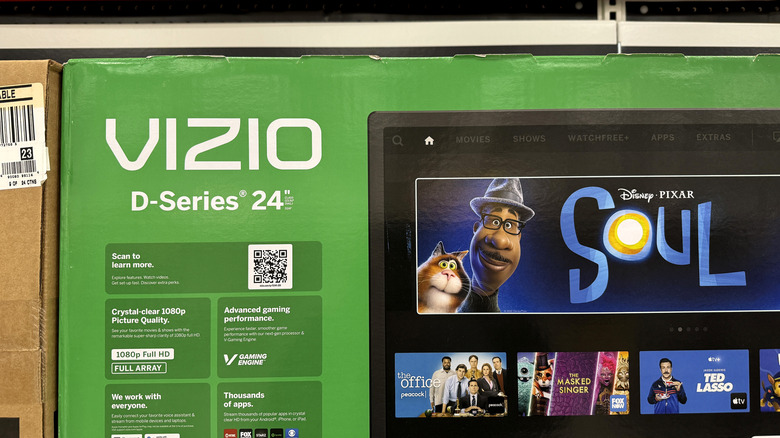
If you've shopped for a budget-friendly TV or soundbar in the last 20 years, you've almost certainly seen something by Vizio. Founded in California in 2002, the brand became most well-known for selling 4K screens and home theater audio for way lower prices than Sony or Samsung. In late 2024, Walmart officially bought Vizio for a whopping $2.3 billion.
But Walmart didn't spend billions just to sell some budget TVs. Besides a recognizable name, what Walmart really gained in the acquisition was SmartCast, Vizio's built-in smart TV software. Every time you turn on a Vizio TV to watch a movie or TV show, you'll likely see home-screen ads and sponsored content. So by taking over SmartCast, Walmart instantly got control of living room screens all over, letting it run targeted ads on your TV (and even potentially tie them to what you buy from it). For the record, neither the Vizio name nor its hardware has disappeared. You can still pick up Vizio 4K displays, QLED models, and soundbars without spending a ton. The big difference now is who owns the software behind the glass.
2. Onn
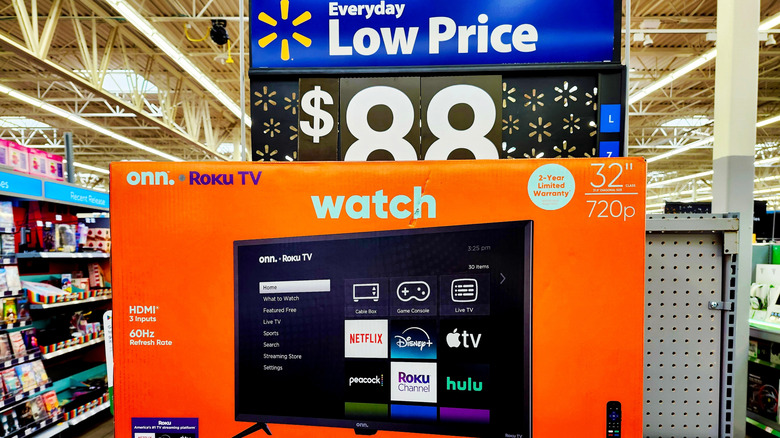
Long before buying Vizio, Walmart built its own surprisingly decent tech brand from the ground up: Onn. What started out as a basic label for cheap charging cables and phone cases turned into a full-on electronics lineup, launched back in 2019. Today, you can walk into almost any Walmart and find its house label slapped onto everything from Roku-powered TVs and Bluetooth speakers to computer accessories and Android tablets.
While some store-brand gadgets can feel like throwaway junk, Onn's are pretty decently regarded, which is why a good amount of its hardware caught so many tech fans off guard. Its Onn 4K Google TV streaming boxes, for example, are increasingly popular. They cost a fraction of what you'd pay for an Apple TV or high-end Roku options, yet they run smoothly, support all the popular streaming apps, and even come with a decent remote. In fact, there's a reason why Onn TVs are so cheap, as well as its other gadgets.
Onn probably isn't going to beat the likes of Bose or Apple when it comes to build quality. But for casual users just needing a reliable monitor, an HDMI cable, or a dirt-cheap streaming box for a guest bedroom in their house, Onn is pretty hard to beat. It puts functionality — and Walmart's stellar manufacturing and distribution network — over flash.
3. Great Value
You may think of Great Value as the brand behind your cheap pasta, paper towels, laundry detergent, and frozen pizza. It's easy to forget, however, that Walmart's huge house label also owns a big chunk of the battery aisle. Right next to Duracell's copper tops and the bunny-laden packs of Energizer batteries, Great Value sells bulk packs of AA, AAA, C, D, and 9-volt batteries for a remarkably lower price.
Batteries certainly aren't glamorous, but if you own a bunch of tech gadgets, they're plenty essential. Despite there being a seemingly endless amount of USB-C rechargeable devices out there, a good chunk of our everyday tech still relies on disposable battery power. Things like gaming controllers, TV remotes, wireless mice, smart door locks, and motion sensors can all chew through batteries non-stop. And paying top dollar for an on-brand logo adds up fast when your house is full of small electronics. Great Value's batteries keep things affordable, so you can power your remotes and other such devices without draining your wallet.
4. Sam's Club
It might be tough to believe, but not everything under Walmart's roof is about ultra-cheap store brands. The company has also owned Sam's Club since it opened its first warehouse back in 1983. As much-beloved Costco's biggest rival in the warehouse-membership game, Sam's Club takes a notably different approach to selling you tech, and it's a darn good spot for anyone sneakily hunting for some high-end gear.
If you're wondering whether it's Costco or Walmart with better tech deals, you might be surprised. Walk past the giant pallets of snacks and you'll find rows of big-name premium electronics that rarely get the same treatment at a regular Walmart. Sam's Club leans heavily into higher-end tech gadgets like flagship OLED TVs from the likes of LG and Samsung, Apple MacBooks and iPads, top-shelf gaming laptops, wearables, and unlocked smartphones. And just like Costco, it uses your annual membership fee to offer up discounts, exclusive bundles, better warranties, and other perks compared to standard big box stores. Between its budget approach to shopping at Walmart stores, and the far more premium experience at Sam's Club, it's safe to say that Walmart's retail empire has a foot in the door with shoppers of all economic levels.