

Why Was Microsoft's Zune Discontinued?
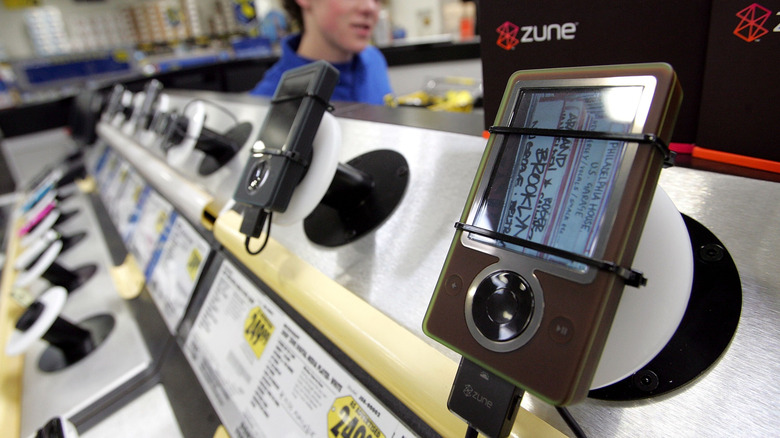
Microsoft's Zune, the competitor to Apple's iPod, was a fairly public failure for the Windows company. There's a multitude of reasons for why the Zune failed, including some backed up by a former leader of Microsoft's home entertainment and mobile business, Robbie Bach. However, the very obvious and boiled-down answer is money, as the Zune was not a hot seller at any point during its lifetime.
The Zune hit the market in 2006, about five years after Apple debuted the iPod. In the intervening years since the iPod's launch, the MP3 market became quite lucrative, with alternatives to Apple's options providing either more or different functionality (not locked down to iTunes, for instance) or a lower cost for entry. That said, by 2006, it was mostly settled that Apple had won the portable music market.
Bach, speaking at an event in 2012 and reported by GeekWire, essentially said as much, stating, "The portable music market is gone, and it was already leaving when we started ... we ended up chasing Apple with a product that actually wasn't a bad product, but it was still a chasing product." Per The New York Times, Microsoft posted a $289 million loss in an earnings report from January 2007, attributed to its "consumer entertainment and devices unit," which included the Zune.
Apple was already the dominant force
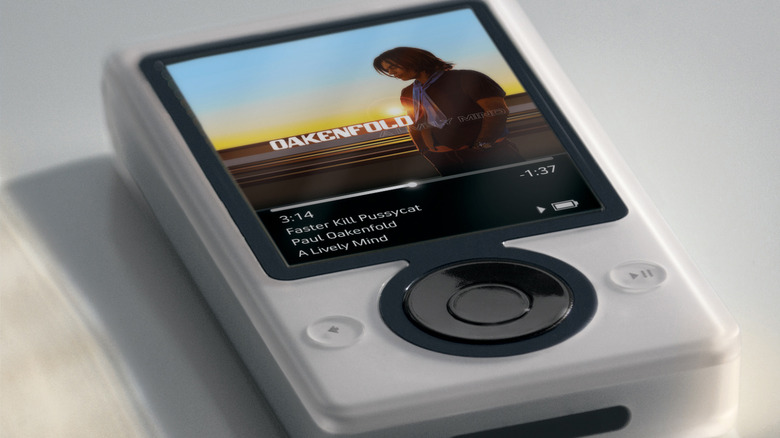
When it launched, the Zune cost $249.95, and it came with a 30 GB hard drive. Meanwhile, Apple had swooped in just two months before the Zune with a refresh of its 5th-generation iPod, cutting the price by $50 to $249. Why settle for the alternative, right? Microsoft executive Robbie Bach later agreed, adding in his talk that "there wasn't a reason" to go for a Zune. Just a year later, the iPhone would change the entire game, with MP3 players becoming a niche.
One element that can often get overlooked is the marketing. Microsoft had no direction for the Zune, with a lot of the commercials sort of being a smattering of ideas, rather than the unified, easily identifiable approach Apple went with. The ads swing from lifestyle, soft rock, and very 2000s-styled to abstract explanations of the file sharing Zunes could do between each other.
Bach is quoted as saying that the "really artsy ads" didn't really do it for the mainstream market. Without the broader audience knowing about the Zune, it just failed to really take off outside of the initial launch. In July 2007, it was reported by CNET that 1.2 million Zunes had been sold. In April 2007, Apple reported it had sold its 100 millionth iPod. Of course, there's a five-year head start, but Apple sold around 41 million iPods from October 2006 through June 2007, roughly the same period.
Zune lacked direction, but had cool features
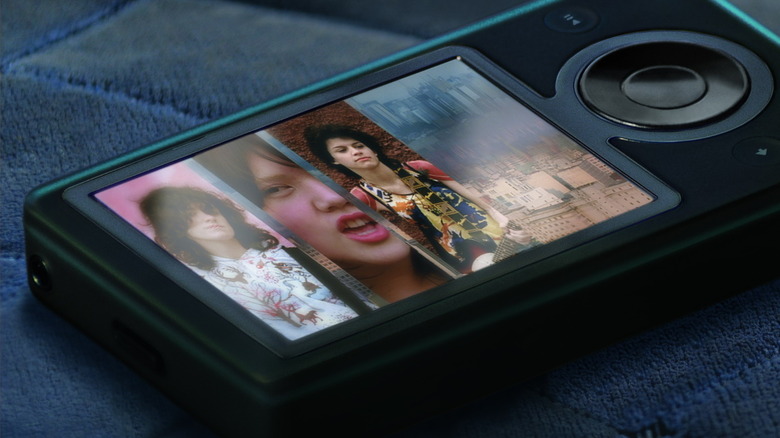
Microsoft lacked direction for the Zune, and the inevitable shutdown came after continued losses on the entire project. Without consumer support, after the final run of hardware (the Zune HD released in 2010), Microsoft pulled the plug in 2011. With it, the Zune software suite on Windows saw its final release and was discontinued entirely in 2015.
While an abject failure in terms of commercial success, the Zune did come with some neat features. "Squirting" was what Microsoft called the Zune's file sharing (ex-CEO of Microsoft, Steve Ballmer, said he wanted to "squirt" you a picture of his kids). You could share photos and songs across devices. Unfortunately, the record industry, being the record industry, locked this down for some tracks. You could listen three times before it would automatically erase the track; then you'd have to go get it from the CD, the Zune store, or most likely, some MP3 site. This file protection was eventually hacked.
The Zune will go into Microsoft's pile of shame when it comes to producing hardware. After the Zune flopped, the company moved into smartphones with Nokia for a time (something many wish would come back), before also shuttering that too. Of course, around the same time in 2006, Microsoft's Xbox 360 was facing its biggest fiasco in the red ring of death, which also cost the company a billion dollars when all was said and done. As of right now, the only hardware Microsoft produces is Xbox, as well as the incoming follow-up, Helix, and its Surface PCs and laptops, plus the accessories.