

Tesla Cybercabs Are Facing An Unexpected Limitation That's Slowing Down Production
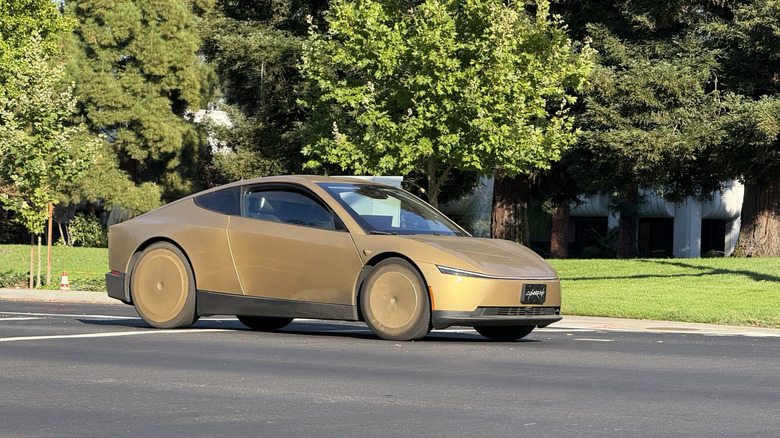
The Tesla Cybercab is facing a variety of issues. There have been multiple reports of crashes involving Tesla's autonomous vehicles, and this comes as yet another Chinese company is breathing down Tesla's neck as a competitor. The gold-colored taxi is a little unique among other vehicles in its vertical, as it is designed to eliminate the driver in favor of a fully self-driving car.
Now, it's also facing one very bizarre problem: overproduction. Tesla is finding that it cannot deploy the vehicles fast enough in the limited states where it operates. With regulations causing headaches for the Elon Musk-led company and a potential surplus of cars piling up, Tesla is reportedly slowing down production as factories are rife with yet-to-be-deployed Cybercabs. States across the U.S., and even some cities, will have their own regulations in place to ensure safety standards are met, especially with automated vehicles that don't feature steering wheels. As Cybercab models are going up for sale to the general public in select markets, these restrictions present a hindrance for that revenue stream as well.
The issue has gotten to the point that Tesla doesn't run the factory line every day just to ensure that it isn't overstocking. According to Lars Moravy, vice president of vehicle engineering at Tesla, the reason is that the Cybercab is so quick to build, so until deployment time can be squashed down, the company will keep operating its production this way. Speaking to Munroe Live, Moravy said, "It's currently outpacing our deployments. So, it's a bit of a race right now."
Cybercabs can be built faster than they can currently be deployed
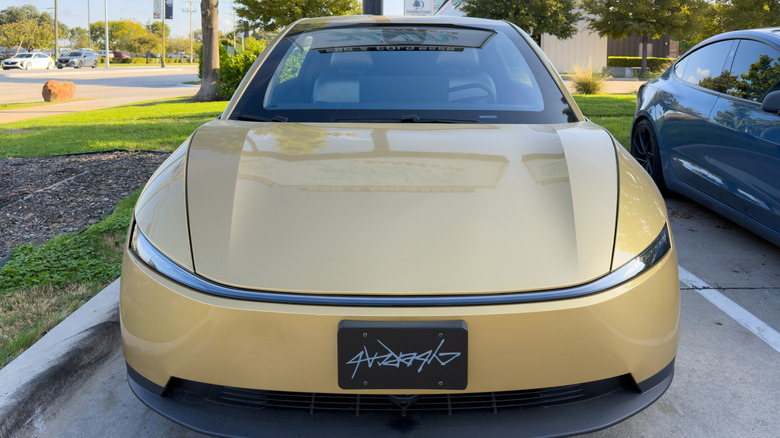
So why are Tesla Cybercabs so quick to build? Aside from removing some of the mechanisms within the vehicle (the pedals and steering wheel, for example), the vehicle is actually very modular. During the build, each segment of the car is dealt with individually, tested, and then sent for final assembly. That said, some models are equipped with steering wheels.
Each module has the front, back, and two side panels. Only the panels themselves are coated, while the golden shell the Cybercab is best known for is actually done during the plastic molding process. Eliminating elements from the production line means that Tesla can do a lot more in terms of actual manufacturing, rather than the additional steps necessary for other models. Tesla's representatives have said that the number of final-assembly stations needed to put a Cybercab together is a fifth to a tenth of what is required for a Model Y.
On top of this, the Cybercab takes up physically less space on the factory floor, and other choices, like using a modular battery, allow for quick fixes. Rather than having to remove the entire battery for replacement, just the broken section can be replaced. As explained by Tesla, the Cybercab can be repaired without having to remove major components or even raise it up.