

HDMI Vs. Optical: Which Should Your Sound System Use?
We may receive a commission on purchases made from links.
You've spent thousands of dollars on your home theater system, with much of the upfront cost going toward your brand-new 4K TV and Dolby Atmos-ready soundbar. Conveniently, that soundbar you purchased also has HDMI switching, so you won't have to worry about connecting a bunch of wires to your wall-mounted TV. But now it's time to connect that Atmos soundbar to your TV, and there are two connections to choose from: HDMI and digital optical.
Which should your sound system use, you may be wondering? The answer is HDMI — all day, every day. Ever since the rollout of HDMI ARC on smart TVs, soundbars, and AV receivers, HDMI has become an end-all-be-all solution for sending and receiving audio data between a host device and AV components. This isn't to say that optical is obsolete: For those of us with older home theater equipment, it may even be the only connection you can use.
That said, digital optical tops out at 5.1 for surround sound processing. So even if you wanted to pair a pre-HDMI ARC era TV with a shiny new Atmos-enabled soundbar, you'd hit a hard ceiling fast.
Why HDMI leaves optical in the dust
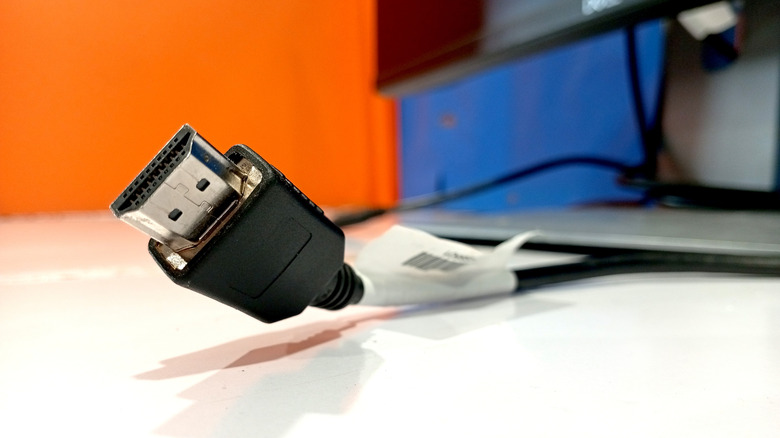
Optical just doesn't have the bandwidth to push object-based audio. If you want those overhead channels, room-filling effects, and the whole Atmos experience, HDMI is the only lane that gets you there. But object-based surround formats like Dolby Atmos and DTS:X aren't the only advantages of connecting your sound system via HDMI. HDMI eARC also helped to standardize lip-sync correction and HDMI CEC. That means you can expect a smoother-looking home theater experience that also lets you use your TV remote to adjust the volume of your soundbar or speaker system.
Really, if you're looking to achieve a completely uncompressed 7.1 audio system or greater — and money is no object — you'll want to make sure all your home theater hardware uses HDMI eARC. While HDMI ARC is able to send and receive stereo and 5.1 surround formats like Dolby Digital and Dolby Atmos, it requires compression. The only way to enjoy formats like Dolby Atmos and Dolby TrueHD in their pure, lossless forms is HDMI eARC with an Ultra High Speed HDMI cable.
HDMI ARC/eARC: The highway for high-res sound
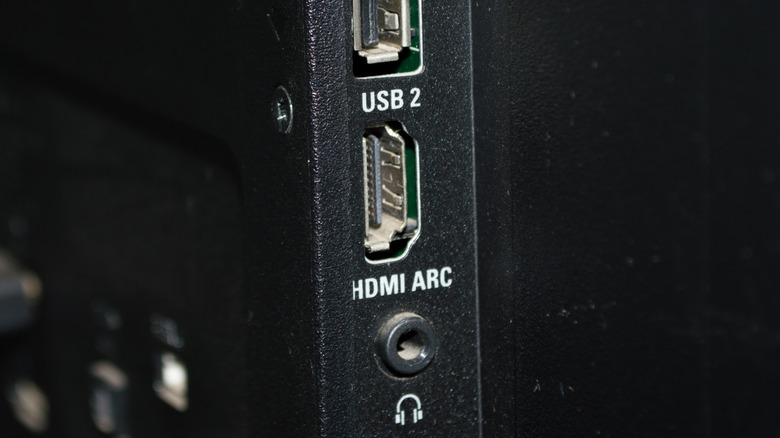
Fortunately, the actual sound quality of HDMI ARC versus digital optical isn't a night and day difference. Both do an exceptional job at delivering a compelling 5.1 surround-sound experience — but if you're building a system from the ground up, you're better off doing so around HDMI ARC/eARC technology. And if you're dealing with a setup where your TV is on one end of the room and your AV receiver is on the other, you'll also need to be mindful of how long your HDMI cables are — regardless of whether you're using HDMI ARC or eARC.
When HDMI cords are longer than 25 feet, the connections can start to become rather finicky. It's also worth noting that not all devices require HDMI for a smart TV hookup: Some may use connections like RCA and USB to send and receive audio and video data. There's also a good chance that your new TV includes a coaxial input for wiring up an HD antenna, too.