

9 Least Reliable Electric Vehicles According To Consumer Reports

Electric vehicles keep improving every year, but reliability is still a sore spot for a surprising number of models. That gap becomes even more obvious when you look at the difference between electric vehicles (EVs) that suffer from various issues and EVs that stand out for reliability. While some models feature impressive ranges, fast charging speeds, and futuristic interiors, others still struggle with basics like software stability, build consistency, or malfunction-prone components.
The amalgamation of such issues results in unreliable EVs that cost you more than they should. That's where this list comes in. We wanted to put together something simple and straightforward that shows which EVs are least reliable in the eyes of an expert like Consumer Reports. All-electric vehicles are already known to have more issues compared to hybrids and gas cars — at least in the reliability rankings of Consumer Reports – but some excel at being bad.
Consumer Reports' reliability scores are based on survey responses from about 300,000 vehicle owners. These surveys covered 20 potential problem areas, including the engine, electric motor, and infotainment system. While model years between 2000 and 2024 were given proper reliability ratings by Consumer Reports, newer models were only given "predicted" reliability scores, which took into account the reception of previous years' models and the improvements the new version actually provides. Without further ado, let us look at the nine least reliable electric vehicles according to Consumer Reports.
2024 Audi Q8 E-Tron
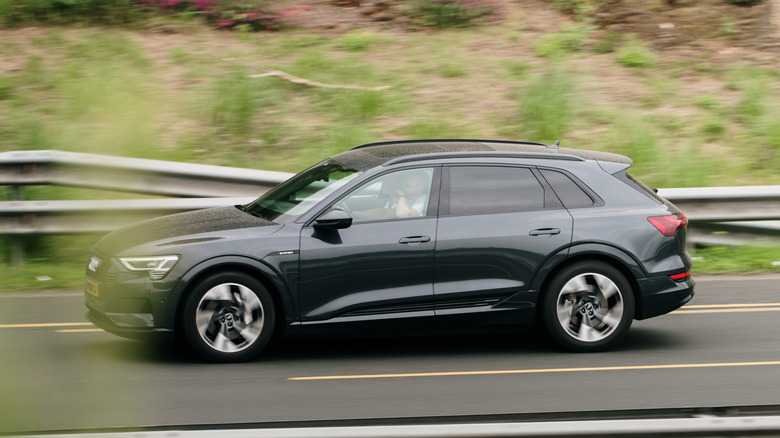
The 2024 Audi Q8 E-Tron is a full-size electric SUV with a Sportback variant built on Audi's E-tron architecture. The 2024 E-Tron comes with a gross battery capacity of 114 kWh and 106 kWh net capacity paired with dual motors for all-wheel drive. Audi promises an estimated EPA range of 296 miles and up to 402 hp, claiming the car can accelerate from 0 to 100 km in just 5.2 seconds (just over 62 mph). Audi also states the E-Tron supports DC fast charging at up to 170 kW.
On paper, the Q8 E-Tron seems like a solid luxury EV, but Consumer Reports' testing revealed a very different story. The outlet highlighted multiple electronics issues, including recurring EV charging problems mere days after purchase, brake failure problems, steering linkage and suspension issues, among several others. For a big, high-tech SUV, these problems can affect confidence in long-term ownership.
Consumer Reports has given the 2024 Q8 E-Tron a very low reliability score with the lowest owner satisfaction rating. Despite the great specifications, the failure to live up to owner expectations and justification of its purchase has pulled the Q8 E-Tron down the trenches as one of the least reliable electric vehicles according to Consumer Reports.
2025 Rivian R1S
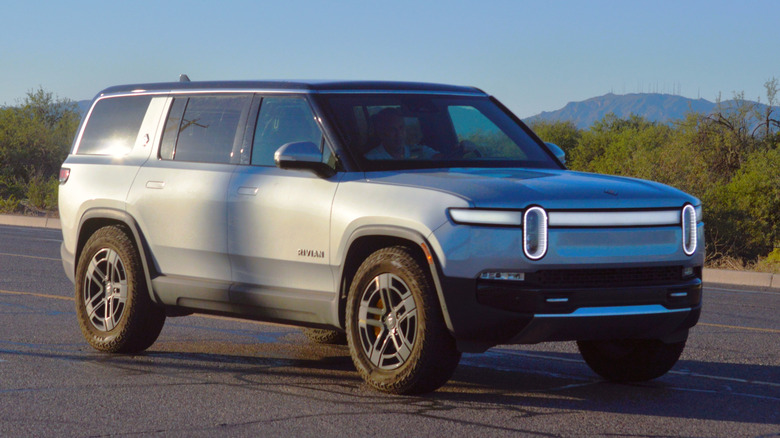
The 2025 Rivian R1S is Rivian's electric, all-terrain SUV that offers three battery packs. These include a 92.5 kWh standard pack, which gives 270 miles of range when paired with the dual-motor; a 109.4 kWh large pack, down from the previous 129.4 kWh; and a 141.5 kWh max pack, which boasts 410 miles of range in the dual-motor setup. The R1S supports dual and tri-motor AWD options, and the range fluctuates with each configuration and battery-motor pairing. For example, the same max pack that gives 410 miles with dual-motor, will deliver 371 miles with the tri-motor pairing. The 2025 Rivian R1S' standard battery charges at 200 kW on the DC fast charger, whereas the large and max batteries can go up to 220 kW.
But despite all that versatility, Consumer Reports shows seven recalls for this model, ranging from failures to detect other vehicles to deactivated exterior lighting that reduced the vehicle's visibility to other drivers. All of the recalls increased the risk of a crash for the driver — that's a bit concerning for a recent EV. The bigger issue, however, is its reliability score. Consumer Reports provided a "predicted" one, meaning its previous models also failed to live up to expectations. This egregious past performance, combined with disappointing future indications, certainly mark the Rivian R1S as one of the least reliable EVs you can own.
2024 Chevrolet Blazer EV
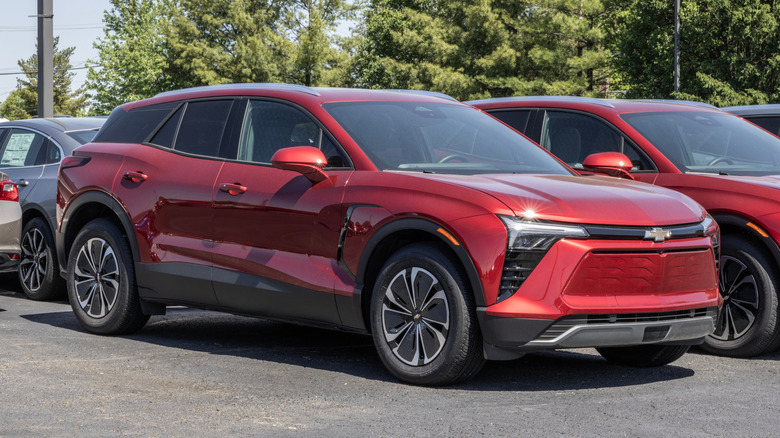
The 2024 Chevrolet Blazer EV is Chevrolet's sporty, mid-size electric SUV, offered in either the single-motor rear-wheel-drive or the dual-motor all-wheel-drive options. The rear-wheel drive RS trim delivers the most range, giving up to 324 miles, whereas the all-wheel drive RS or LT trims deliver only up to 279 miles of range. The 2024 Blazer EV uses a GM Ultium battery with a capacity of 85 kWh or 102 kWh, depending on trim. While the power source supports DC fast charging, speed varies depending on the configuration.
Consumer Reports highlighted a number of troubling patterns for the Blazer EV, starting from four recalls issued to the 2024 model. The first recall was from December 2023, where "a door opening while the vehicle is being driven, increasing the risk of injury or a crash." Its most recent recall came in December 2025, citing "unintended activation of the parking brake while driving increases the risk of a crash. Loss of the parking brake function while parked can result in a rollaway, increasing the risk of a crash."
All of these problems, combined with the owner feedback from the surveys, have significantly reduced the predicted reliability of the Blazer's 2025 model — which, spoiler alert, is also on this list. Consumer Reports gave the 2024 Chevrolet Blazer EV one of the lowest reliability scores. The outlet considers it one of the least dependable EVs you can own.
2024 Cadillac Lyriq
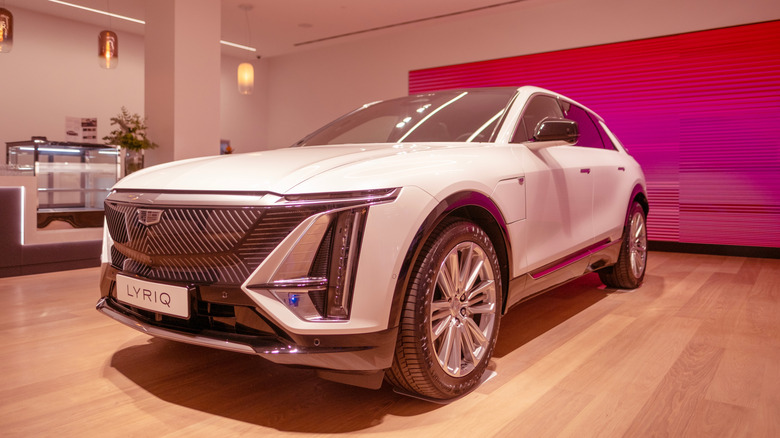
The 2024 Cadillac Lyriq positions itself as one of GM's flagship luxury EVs, built on the Ultium scalable battery technology. Cadillac offers various trim options, all packed with the 102-kWh battery and available in either the rear-wheel-drive or all-wheel-drive options. The RWD models come with a single motor, generate 340 hp, and deliver up to 314 miles of range. In contrast, the AWD models are equipped with a dual-motor powertrain, boasting up to 500 hp and a slightly lower range of 307 miles.
Although it appears to be a well-rounded electric luxury SUV, the 2024 Cadillac Lyriq suffers from a serious lack of quality control. Owners have reported issues with the car not charging at home and even some battery malfunctions. That's not all, though; Consumer Reports listed a myriad of other issues, including five recalls ranging from problems with the electrical system to the seat belts not functioning properly.
Consumer Reports has given the 2024 Cadillac Lyriq one of the lowest reliability scores, tied with the Chevrolet Blazer EV. The owner-reported issues, alongside the concerning recalls, have marked this Cadillac as one of the most unreliable EVs and even affected the predicted reliability scores of its subsequent models.
2025 Lucid Air
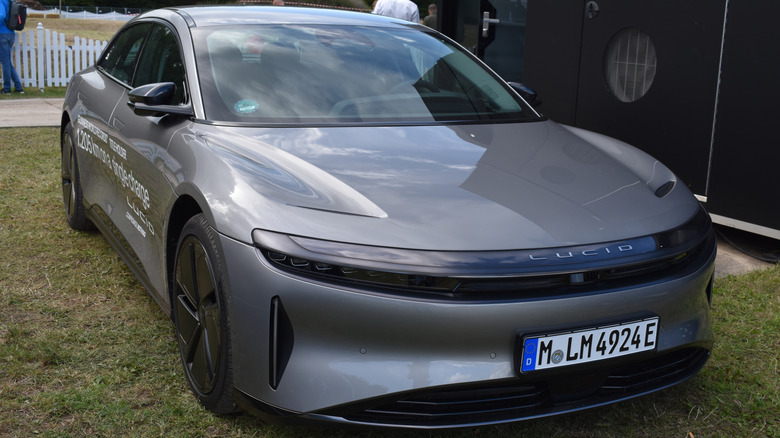
The 2025 Lucid Air is one of the most technically advanced EVs in the world, offering four trims with single, dual, or tri-motor setups producing anywhere from 430 hp to 1,234 hp — even faster than Porsche's new electric Taycan — and delivering a range between 406 and 512 miles. The base trim, Pure, is a single-motor RWD vehicle with the lowest horsepower and a moderate range of 420 miles. On the other side of the spectrum, the Sapphire trim is a tri-motor AWD vehicle that generates the most horsepower and a slightly higher range of 427 miles.
While the 2025 Lucid Air sounds impressive, it did not wow the experts at Consumer Reports and the many owners who participated in their surveys. The Lucid Air received a very low predicted reliability score from Consumer Reports due to the performance of past iterations. Moreover, the 2025 Lucid Air was recalled a total of three times for rearview image malfunctions, disconnected power trains, and faulty electric systems, all of which increased the risk of a crash. Due to its subpar scores, the Lucid Air has landed in our list of the least reliable EVs.
2023 Fisker Ocean
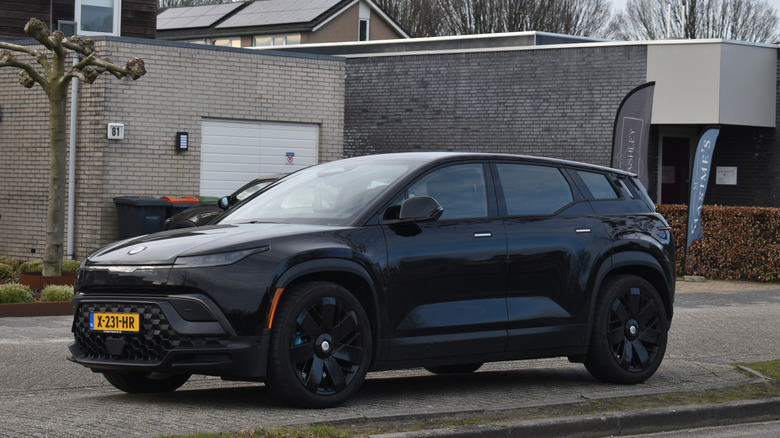
The 2023 Fisker Ocean is a compact electric SUV available in trims such as Sport, Ultra, and Extreme. The Sport trim is a single-motor FWD vehicle that generates 234 hp and delivers 231 miles of range. The other two trims both have an additional motor in an AWD powertrain, generating 564 hp with a range between 350 and 360 miles.
Unfortunately, the 2023 Fisker Ocean is one of the most unfinished products in the market. Fisker Automotive filed for bankruptcy soon after the car released, and with no one to look after the Ocean SUV, Fisker's sole child has faced countless issues, with websites such as Edmunds reporting over an 80% loss in the Ocean's value. The car also had six recalls so far, most of which focused on bad electrical systems and faulty brakes.
According to Consumer Reports, the 2023 Fisker Ocean is an unreliable EV, but with no hope for improvement in the future or even potential post-purchase support, it is one of the worst EVs you can own. Even if you manage to snatch a Fisker Ocean for as low as $10,000, you are probably better off with other cheap electric vehicles on the market.
2025 Cadillac Lyriq
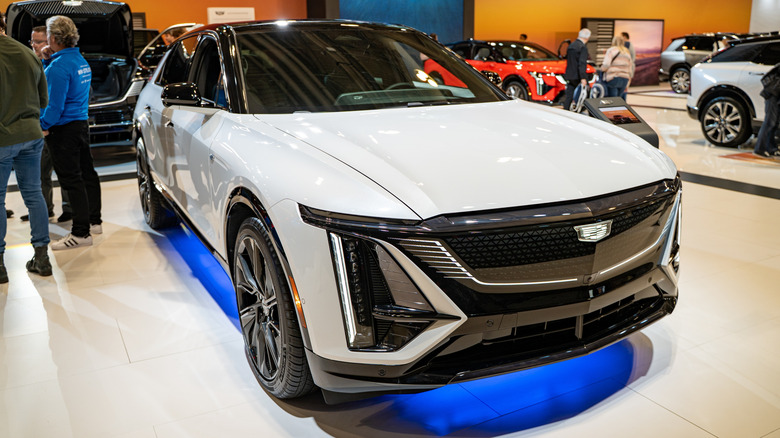
The 2025 Cadillac Lyriq continues the midsize SUV legacy in the Luxury and Sport styles. This EV uses the same Ultium technology, features a 102-kWh battery pack in all trims, and offers both RWD and AWD configurations. The 2025 Lyriq offers small improvements over prior models in terms of power; the RWD single-motor options deliver up to 365 hp, while the dual-motor AWD pairing provides 515 hp. The EV's range still sits around 326 miles across all configurations. While Cadillac added small refinements, the general structure and mechanical systems remain consistent with the previous model year.
Since the 2025 Lyriq shares most of its core internal and mechanical systems with the 2024 version, the driving dynamics and premium feel haven't changed much. Moreover, a lot of the issues that owners of the previous model reported seem to reappear in the 2025 model as well. Despite being a fairly recent iteration, Consumer Reports has listed three recalls related to improper seat adjustment, damaged cables, and a poorly secured battery.
Due to the poor reception and ownership experience of the 2024 model, the 2025 Cadillac Lyriq suffers from one of the lowest predicted reliability scores by Consumer Reports, tied with the previous iteration. Considering the trend in Lyriq, it could take a while for this line of EVs to regain the recommendation of Consumer Reports.
2025 Chevrolet Blazer EV
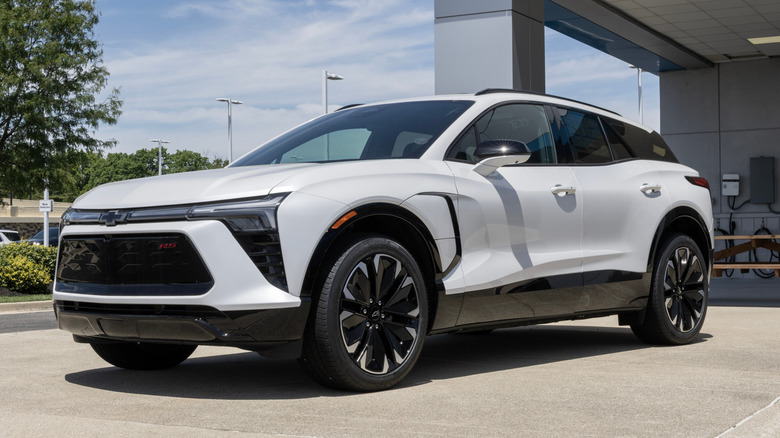
The 2025 Chevrolet Blazer EV continues Chevrolet's Ultium-based electric SUV lineup. This car offers similar trims to the previous year, including LT, RS, and SS. This year's Blazer EV LT is equipped with an 85-kWh battery and a single-motor FWD drivetrain that generates 200 hp and has a range of 312 miles. Meanwhile, the Blazer RS offers an additional single-motor AWD option with a 102-kWh battery that generates up to 365 hp with a range of 334 miles. Finally, the SS is the 2025 Chevrolet Blazer EV's most robust trim with dual motors and an all-wheel-drive powertrain that has 303 miles of range. While this trim normally produces 515 hp, it can go up to 615 hp with the Wide Open Watts launch control mode. Power and range can fluctuate depending on the Blazer EV's powertrain and motor options, meaning you can extend your electric vehicle's range with the right configurations.
The 2025 model tries to refine what Chevy started in 2024, but since the platform hasn't received an overhaul, the car suffers from many of the same problems. Consumer Reports gave the 2025 Blazer EV one of the lowest predicted reliability ratings, tying its scores with its previous iteration and the Cadillac. While owners didn't report much to Consumer Reports, one of the key issues with the 2025 Chevrolet Blazer EV (and of GM's all-electric vehicles) is the Ultium battery technology. This overarching problem, combined with the culmination of other quality concerns, seems to have cursed its all-electric EV line to the bottom of Consumer Reports' reliability charts.
2025 Rivian R1T
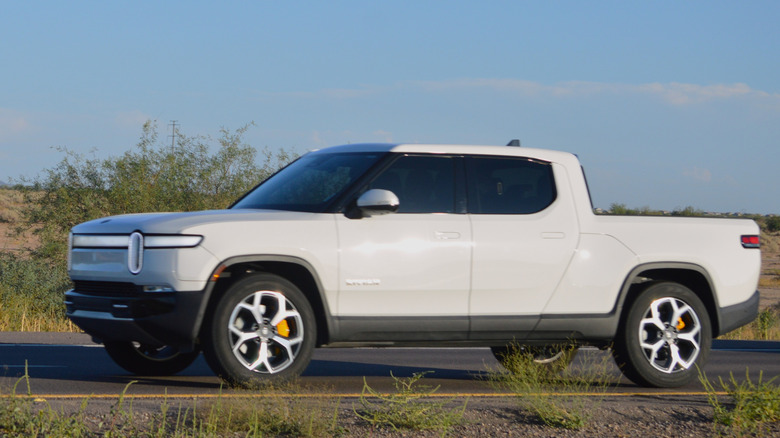
The 2025 Rivian R1T is an electric pickup truck that runs on the same general architecture as the R1S. The R1T is available in two trims: Adventure and Ascend. The former is equipped with a dual-motor AWD powertrain, while the latter can host either a tri or quad-motor AWD configuration. While Adventure can generate 533 hp, the Ascend is more powerful and can produce 850 hp with the tri-motor setup or 1,025 hp with the quad-motor configuration.
Despite its robust specifications, the Rivian R1T has been recalled six times, which is a lot for a recent model. Two of these recalls were over electrical systems, the most recent one cited loss of drive power. Meanwhile, there were two other recalls for exterior lighting — once for faulty turn signal lights and another for headlight failure. These are concerning issues, and the Rivian R1T could suffer even more recalls since the latest one was less than three months ago. Consumer Reports has given the 2025 R1T a low predicted reliability, and while it is the highest on this list, it still fails to reach a satisfactory level.
Methodology
We selected all-electric vehicles with a reliability or predicted reliability rating above a certain threshold. While owner satisfaction is a notable metric within Consumer Reports' rankings, it wasn't used to rank any of the models in this article and was primarily utilized to give context on issues with specific EVs. Models before 2025 all have a reliability score with direct ownership feedback from surveys, whereas the recent models lack survey responses and were given a "predicted" reliability score from Consumer Reports, which took into account the performance of past iterations.
But, don't let this fool you; even though electric vehicles can be unreliable compared to gas and hybrid cars, some models stand out for their long-term benefit. It can be cheaper to drive an electric vehicle than a gas car.