

5 Signs It's Time For A New Phone
Smartphones have gotten more and more expensive over the years, which is reason alone to hang onto your phone for as long as possible. It's not uncommon to see somebody using a phone that's two or three generations old despite newer models offering improved features and capabilities. Smartphones are now made to last longer than their earlier counterparts, but there's still a point when keeping an old phone stops being a smart decision and starts costing you in ways that may not be immediately discernible. Performance issues, for example, can slow your daily productivity, and security vulnerabilities in older versions of operating systems can put your phone and data at risk.
It can be easy to rationalize keeping a struggling device by telling yourself it still functions well enough, but there are plenty of signs to look for in order to tell if you're simply in denial. Your phone can't last forever, after all, and you can always repurpose your old phone upon purchasing a new one. The signs that it's time to make that move are recognizable across phone platforms and phone manufacturers, so whether you use an iPhone or something that runs on Android, let's explore some ways you can tell it's time to retire that old phone and purchase yourself something to start making new memories with.
It runs slowly
Sometimes adjusting settings on a slow phone can get it back to performing at its best, but if your phone seems to have chronic performance issues, it's likely just too old to keep up with modern software. Signs of this being the case are apps taking a long time to open, a noticeable lag when typing or scrolling through content, and the camera freezing up when trying to take pictures. Your old phone may even start to display a significant delay when toggling through open apps.
Newer apps and operating system updates can put a lot of strain on the processors of older phones. We expect more out of our smartphones than ever these days, and newer software is designed with the capabilities to meet those expectations. Additionally, the media we interact with is becoming of higher quality, and phones with older processors, older RAM, and older graphics hardware will take longer to process it.
While a sluggish phone may simply be an annoyance to some users, those who put their phone through its paces for work or content creation could be costing themselves money by refusing to upgrade. If you're finding yourself regularly frustrated with your old phone's performance, a phone with hardware and software that better support your workflow can be well worth its cost.
The battery can't hold a charge
A smartphone battery losing its ability to hold a charge is inevitable. These batteries are designed to handle somewhere between 300 and 1000 cycles, which is the number of times you use the phone until it has no battery life left, and subsequently charge the phone from 0% back to full capacity. You can always check the battery health on your phone, but after several years of use you're certain to notice degradation. You may start to notice your phone's battery dropping its charge percentage rapidly, and if your phone battery is in poor health you might even see the phone shutting down completely while still showing 5% or 10% of a charge.
A failing battery is one of the most obvious signs it's time to move on to a new phone. Unlike a phone simply slowing down as it ages, a phone with a malfunctioning battery is of little use whatsoever. There are a number of ways in which it can outright ruin your day, such as shutting down in the middle of providing directions to somewhere unfamiliar, during a video call with family or colleagues, or while you're about to photograph an important moment that can't be recreated. A phone that unreliable is worth replacing immediately.
You're out of storage
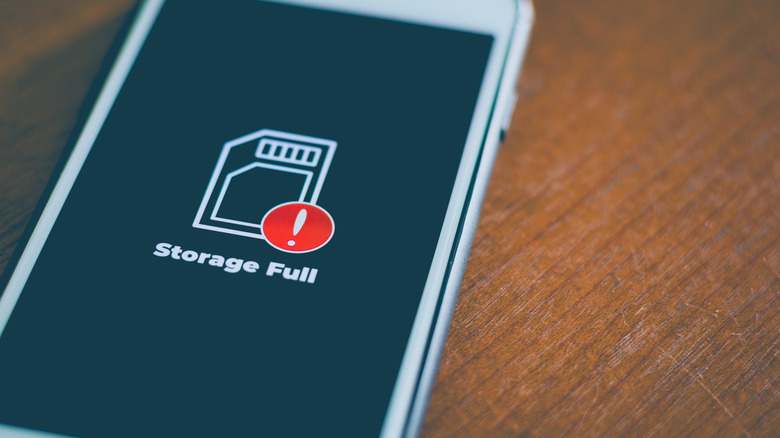
Filling your phone with apps and media to its capacity can actively interrupt you every time you want to use the phone. You'll start to see "storage full" messages that prevent you from taking photos and videos, downloading new apps, and even updating existing apps. Keeping little storage space available on your phone can also affect its performance, as the phone's operating software needs free space in order to create temporary files and manage data efficiently.
Clearing out some media and apps is a decent short-term solution, but this is a process you'll likely need to go through frequently, especially if you take a lot of photos or keep your music library stored locally on your phone. This may not bother some users, but the constant cycle of managing what stays and what goes can be one of the most annoying signs that it's time to move on and get a new phone.
If you're spending as much time managing storage as you are actually putting your phone to use, you can turn to newer generations of phones knowing they will likely come with more base storage than your old phone did. Older smartphone generations frequently came with 32GB or 64GB of base storage, while modern flagships like the Google Pixel 10 and Apple iPhone 17 come with 128GB and 256GB as standard.
The screen is cracked

A phone with a cracked screen makes everything from watching movies to answering calls more difficult. Even if everything else on the phone is in working order, a cracked screen immediately makes the phone feel broken and much older than it may be. But a cracked phone screen is more than just a visual annoyance. The cracks can impact how you use the device, as they can interfere with touchscreen responsiveness, as well as create dead spots on the display that make typing and other functions difficult.
If your old phone runs out of storage space, you can simply delete some files, but if it has a cracked screen, it's only going to get worse. Small cracks can spread quickly, and large cracks can allow water to get into the phone, which could make the phone completely unusable. Replacing the screen is always an option, of course, but screen repairs start at around $50 and can cost more than $500 on flagship models. If your phone is already several years old and exhibiting slow performance, poor battery life, or storage issues, you're better off putting that money toward a new phone.
It's no longer supported
Every phone reaches an age in which the manufacturer no longer supports it. This means the phone will no longer receive operating system upgrades, security patches, or bug fixes. These are crucial for keeping a phone secure against cyber threats and up to date in terms of features. The lack of official manufacturer support also means apps will eventually stop working on your phone. YouTube recently phased out support for some older iPhones, as developers build apps for current operating systems and older phones running unsupported software will eventually get left behind.
Manufacturers typically announce when they're ending support for a certain phone, but if you aren't one to keep up with such news, you may notice at some point that you stop receiving notifications for software updates. iPhone users can expect at least five years of iOS updates from Apple. Google offers seven years of support for its phones. Budget phones sometimes only receive two or three years of support. But whether you use a flagship or something more affordable, if your phone is several years old, it's worth checking out how much longer the manufacturer will support it so you can decide if it's worth moving on from.