

What Is 'Liquid Sapphire' Phone Screen Coating (And Should You Use It)?
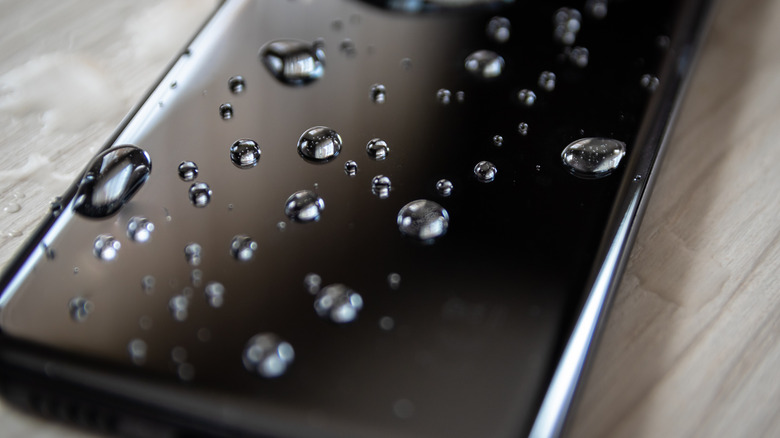
To protect a phone's display, or the screen on many modern tech devices, people often install tempered glass screen protectors — or use cases with similar screen protectors built in. They work great, to an extent, but installing them can be a pain. They often bubble, and it's easy to trap debris inside like dust or dirt.
Enter "liquid glass" or "liquid sapphire," a hardened coating for your screen that protects against scratches, scuffs, and bumps, and even creates a water-repellent seal. This product shouldn't be confused with Apple's new Liquid Glass redesign for its iPhone software, as an aside.
Believe it or not, there are several options that use the liquid hardening material, including Peach's kits and Liquipel's glass screen protector kits. Many manufacturers claim to offer a 9H hardness level when the solution is cured, on the Mohs scale. These coatings are inexpensive and, at least in Liquipel's case, the kits come with a 12-month limited warranty covering up to $150 in the "rare event" screen damage occurs.
The liquid material, after being applied, spread, and allowed to cure, forms a nanocoating — a thin, lightweight, invisible or transparent coating which enhances the properties of the materials adhered to. According to manufacturers, unlike traditional screen protectors, liquid coatings aren't affected by bubbles, sticky glue residues, nor do they alter haptic feedback or cause negative display effects. They're also incredibly transparent, which means they can even reduce the visibility of blotches or fingerprints. The downside is they can be quite difficult to remove if there's a problem, or they crack.
Should you use a liquid screen protector kit and how?
When weighing screen protection options: Even if you're not exposed to extremes, it's reasonable to want to protect your device, especially given how expensive flagship phones have become. A liquid screen protector kit, and the coating it creates, may afford better protection than traditional methods, being affordable and boasting relative longevity. They're more resistant, except against impacts — although you could pair them with a drop-proof case — are thin and lightweight, offer better clarity, and have water-repellent properties. They're fingerprint resistant, so you won't see as many smudges, and you can use them on other devices. Imagine reducing how often you clean your Steam Deck's touch screen?
Tempered glass may be more easily removable option to protect against occasional drops or scratches, especially versus other easily removable solutions such as plastic screen protectors. You should also note, while liquid screen protectors create an extremely durable and hard coating on the surface of your device, they aren't indestructible. They can scratch, crack, or break just like tempered glass. That presents a unique challenge when removal of the coating is called for, because they form a strong chemical bond, which is what gives the nanocoating its enhanced properties. To remove a liquid screen protector coating you'll need to use heat to soften it.
Applying a liquid protector is in some ways easier than applying a tempered glass equivalent. First, you clean your screen thoroughly — most kits include supplies. Then, you apply the liquid to the display using a sealing cloth, spreading it evenly. You let it sit for 10 minutes to harden. Polish it. Then, after about 30 minutes, the protective layer is hard enough to use the device — although most brands recommend you leave the coating to cure overnight.