

The 10 Most Expensive Satellites Currently In Orbit
Satellites are perhaps the most wondrous piece of technology mankind has invented. The idea of creating an artificial device and launching it into space to orbit our planet is simply amazing. It is also rather expensive.
Much of that cost is due to the logistics of the rocket launch itself. It takes a lot of energy to escape Earth's gravitational pull, which translates into thousands of tons of expensive fuel per launch. The spacecraft itself is also usually lost, though recent advancements are trying to change that. Then there is the massive cost of creating the satellite itself, which is packed with delicate instruments and must survive in outer space without any possibility of routine maintenance or repairs.
Unsurprisingly, this is an expensive and very difficult endeavour. Yet it is also an essential one, with satellites being crucial for research into both outer space and Earth's own natural processes, besides forming the backbone of the global communications network. Governments and companies invest billions into putting their satellites into space, in a race that keeps getting bigger and costlier. Here is a list of the most expensive satellites in orbit, at least those with publicly available information. Military satellites guard their secrets closely, so we will not be considering them, though you can expect them to cost in a similar ballpark to the lower end of this list. We are also specifically looking at active satellites, not a list of the most expensive space missions of all time.
International Space Station
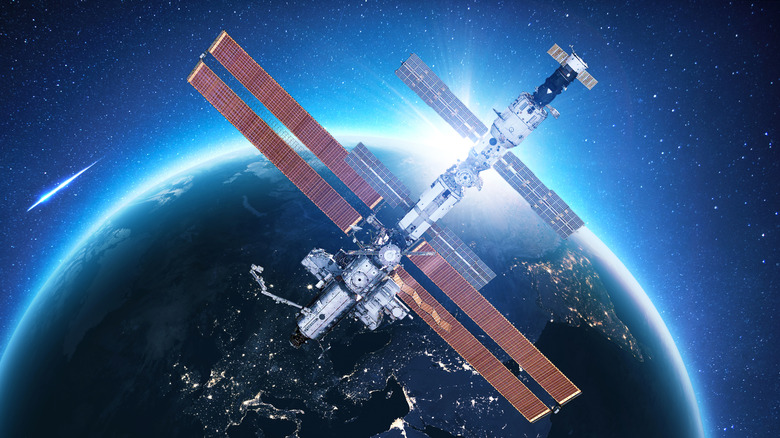
Generally speaking, satellites are thought of as unmanned devices without any life support or habitable enclosures, transmitting data back to Earth. This saves a lot of cost and effort as the machines can be packed efficiently into the smallest mass with minimal protection. But what if you want to create a satellite that people can live in?
This is how the International Space Station (ISS) began. It is the most ambitious space project in humanity's history, involving an unprecedented collaboration between the world's leading space-faring nations, who worked together to assemble the space station over multiple missions. The ISS is a gargantuan project, consisting of various modules that were each launched individually and connected in space. The result is a permanently livable space station with pressurized modules for habitation without protective gear.
Understandably, this undertaking costs way more than any other satellite, as every individual module adds its own manufacturing and launch expenses. Not to mention the much higher cost of maintenance, as it needs to be refueled and restocked regularly. While an exact amount is hard to determine due to the multiple space agencies involved, estimates place it at a whopping $150 billion, which dwarfs any other entry on this list. Its scientific value, of course, is unmatched, allowing astronauts to perform experiments in zero gravity and understand the impact of long-term spaceflight on the human body. Its journey is drawing to a close, however, with NASA planning to deorbit the ISS in 2030.
Hubble Space Telescope
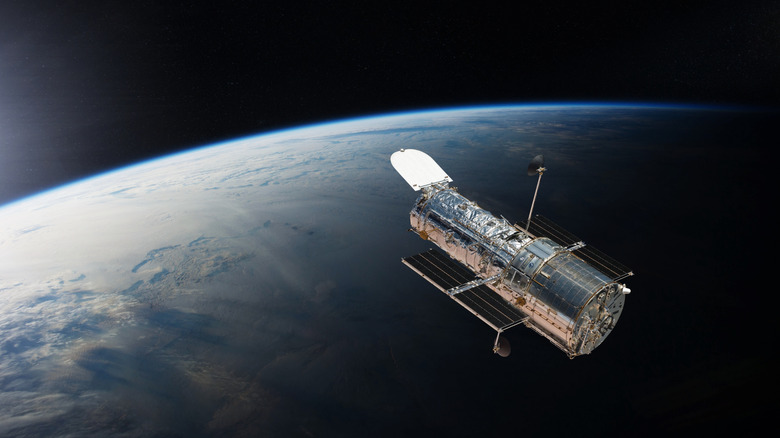
The most expensive normal satellite is not a cutting-edge Earth-monitoring device, but rather a somewhat older space telescope: the Hubble Space Telescope. While its initial cost of $1.5 billion may not sound like much, keep in mind that these are figures from 1990. Adjusted for inflation, with the cost of all the subsequent maintenance and upgrade missions added to it, the Hubble Telescope has cost $16 billion as of 2021.
That may sound like a lot (and it is), but it is offset by the fact that the telescope has been in operation for 35 years. A significant part of its cost was spent on upgrades to extend its lifespan, since it would have cost much more to replace it entirely. A lot of the cost was also incurred in fixing a critical flaw in the telescope mirror at launch, inflating the expenses.
And yet, the investment has paid off, with the Hubble telescope giving us a better look at the cosmos than ever before. It has taken breathtaking photographs of star clusters hundreds of thousands of light-years away, helping us better understand the universe. Terrestrial telescopes cannot match Hubble's accuracy, as the atmospheric interference scatters many wavelengths of light reaching us. As the longest-running visible light Space Telescope, it has played a critical role in bridging this gap. It is expected to continue working for years more, until 2030 to 2040.
James Webb Space Telescope
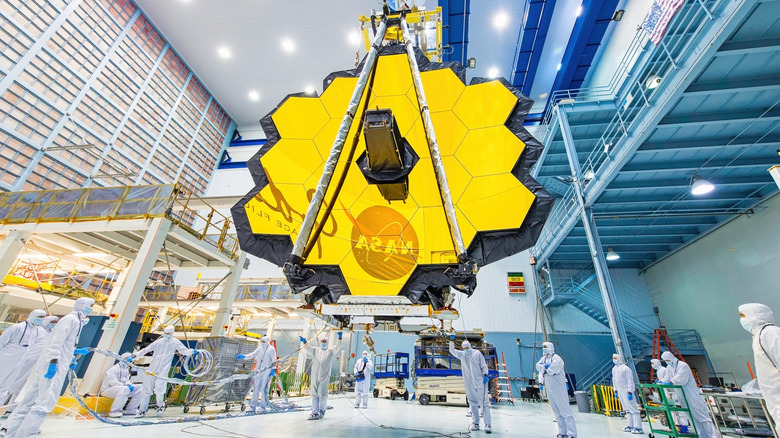
As we have seen with Hubble, space telescopes are a rather expensive category of satellites, and it wasn't even a new one. The James Webb Space Telescope (JWST), launched in 2021 and packed with state-of-the-art equipment, is even costlier. Kind of.
The James Webb telescope cost $10 billion to create and put into orbit, which makes it the single most expensive satellite ever put into space. The ISS and the Hubble might have cost more in total, but they were put together through multiple launches and upgrades, with initial costs being much lower. Even the JWST was estimated at $1 billion during the start of the project, only to keep increasing many times over as they ran into the engineering challenges of putting the most complex sensing equipment together.
The mission was a complete success, and the James Webb telescope now orbits the L2 Lagrange point, peering into the heart of the universe to understand the mysteries of how galaxies are formed. It mainly analyses the infrared spectrum using an array of 17 scientific instruments, enabling it to spot invisible celestial objects like supermassive black holes. As such, it isn't quite intended as a replacement for Hubble, but fulfills a very different role, and is working alongside the older telescope, at least for the time being.
NASA-ISRO NISAR
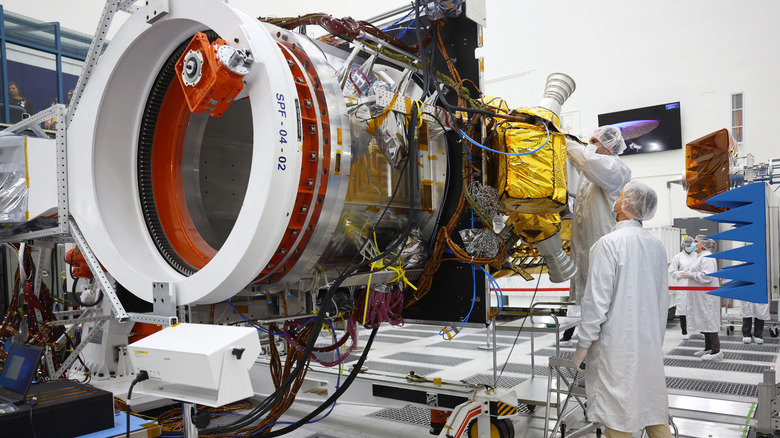
So far, we have talked about satellites focused on understanding outer space, but most are more concerned with terrestrial affairs. Remote sensing satellites, for example, are used to monitor Earth's surface and atmosphere, for both scientific and surveillance purposes. And the recently launched NISAR satellite is the most expensive and sophisticated remote-sensing satellite put in orbit so far. Created in a partnership between NASA and ISRO (the Indian Space Research Organization), the satellite cost $1.5 billion, making it the most expensive Earth-imaging satellite ever made.
The satellite actually costs less than it normally would, thanks to ISRO handling the launch and maintenance. The Indian space agency is known for its cost-efficient space missions and managed to get it into orbit at a fraction of what it would cost NASA. The two space agencies have collaborated on the development of the satellite as well, which is equipped with an array of scientific instruments to analyze the changes in Earth's ecology.
Most notably, this is the first dual-frequency radar-imaging satellite, and it will take periodic snapshots of our planet's surface with its S-band and L-band radars, developed by ISRO and NASA, respectively. This is expected to yield far more detailed research data than ever before, helping scientists understand the changing ecological patterns of our planet.
WorldView Legion
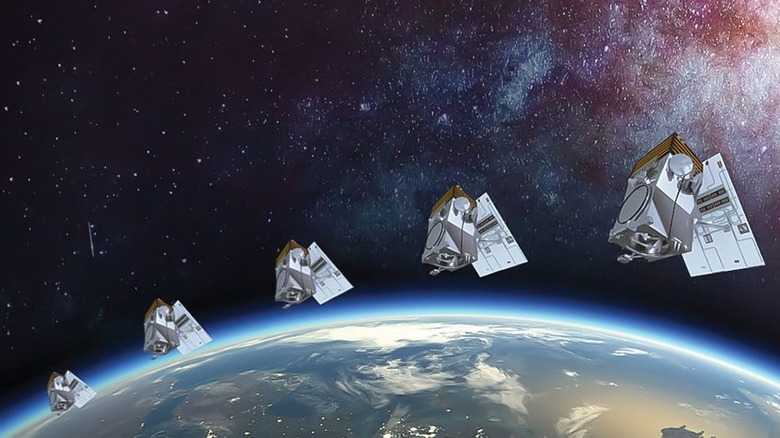
Advanced satellites that fly solo aren't the only class of Earth imaging technology. The more common approach is to use a constellation of multiple satellites, giving a larger coverage area at a comparatively lower cost. And the world's most powerful and expensive remote sensing constellation is WorldView Legion.
WorldView Legion is a constellation of six satellites launched in two batches, each equipped with high-resolution cameras and instruments for multispectral analysis. They join four existing WorldView satellites launched before to give global coverage, capturing a location up to 15 times a day. And as this is a commercial satellite, anyone can commission such images. Departments, labs, companies, and individuals worldwide leverage WorldView Legion's photographs for research and planning.
Of course, these satellites aren't cheap, which is why there is very little competition in this line of business. Each of the stand-alone WorldView satellites has cost Vantor (formerly Maxar) around $750 million each, including launch costs. The Legion class is much cheaper, with the company spending $600 million total in developing all six, since each of these satellites is smaller and can be launched together. The complete constellation of WorldView satellites is still one of the most expensive space infrastructures in orbit today, dwarfing the capabilities of most smaller countries.
Chollian-2A and 2B
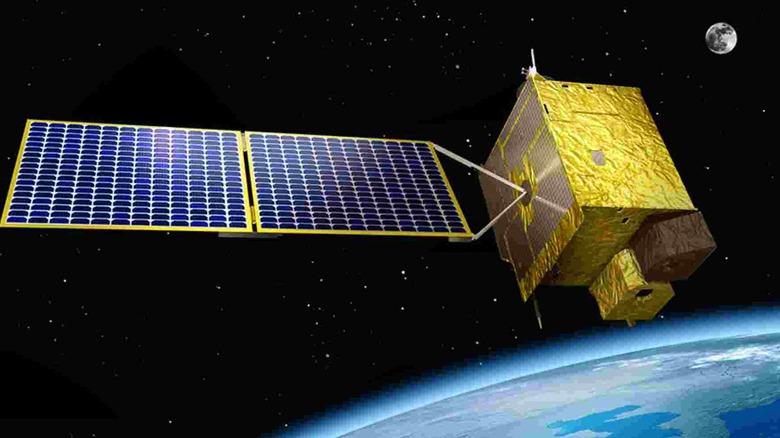
South Korea's space program has advanced by leaps and bounds over the years, with both its satellite technology and launch vehicles getting more advanced. The jewel of its efforts so far is the Chollian-2 constellation, also known as GEO KOMPSAT-2. It consists of just two satellites, but they are sophisticated, multi-purpose devices. And in a departure from the constellations we have seen so far, it focuses purely on the Korean peninsula, which means it was placed in the geostationary orbit over that latitude. This is a tricky orbit to reach, so Korea contracted private companies to handle the launch.
Arianespace won the contract over SpaceX thanks to its long experience and successfully placed the satellites into orbit in 2018 and 2020. The pair of satellites has split responsibilities, working in tandem to fulfill multiple key functions. The Chollian 2A, for example, carries an advanced meteorological imager to analyze weather systems and collect atmospheric data. The Chollian 2B, on the other hand, is equipped with an ocean color imager and an environmental monitoring spectrometer, allowing Korean scientists to study the environmental changes around the Korean Peninsula, capturing the movement of even fine dust particles.
As you might expect, these are pricey satellites. While none of the private companies involved in their manufacturing have disclosed the exact amounts, the project was ratified with a budget of $655 million, making the Chollian constellation one of the most expensive satellites in orbit today.
Orbiting Carbon Observatory 2
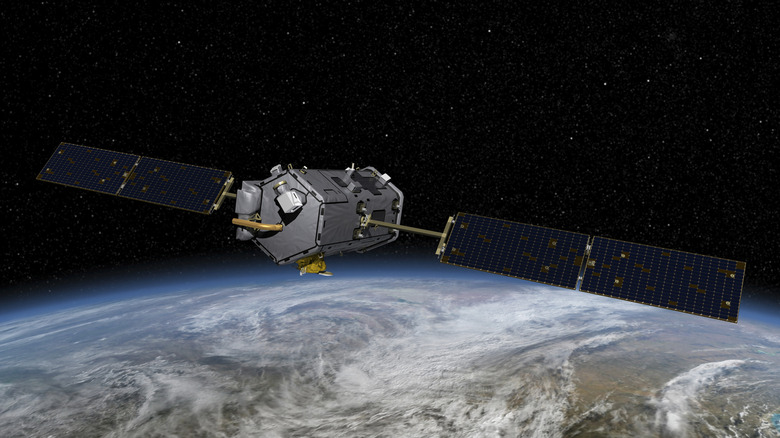
Remote sensing satellites are usually focused on Earth's surface or weather patterns. But there is one satellite that measures something completely different. The Orbiting Carbon Observatory 2 is a satellite launched by NASA to monitor CO2 levels in the atmosphere. It assumed a polar orbit that covers wide swathes of the planet. The observatory goes past the same spot every 16 days, letting NASA track CO2 emissions from space and build maps of its global concentrations.
This is the satellite's sole purpose, and as such, the only instrument it is equipped with is a high-precision grading spectrometer. That doesn't make it particularly affordable, as the mission cost NASA $465 million. A bulk of it was spent on the launch, with an earlier iteration of this mission with the same specifications costing only $275 million. But since that launch failed, NASA repeated the mission with a bigger rocket, finally putting OCO-2 in orbit in 2014.
The satellite's initial lifespan was projected at only two years, but thanks to efficient course corrections from ground control, it has far exceeded that lifespan and is still operating in orbit. But as of 2025, funding for this project has been terminated, and it is slated to be destroyed with a controlled descent, bringing the curtains down on this one-of-a-kind satellite.
TerreStar-1
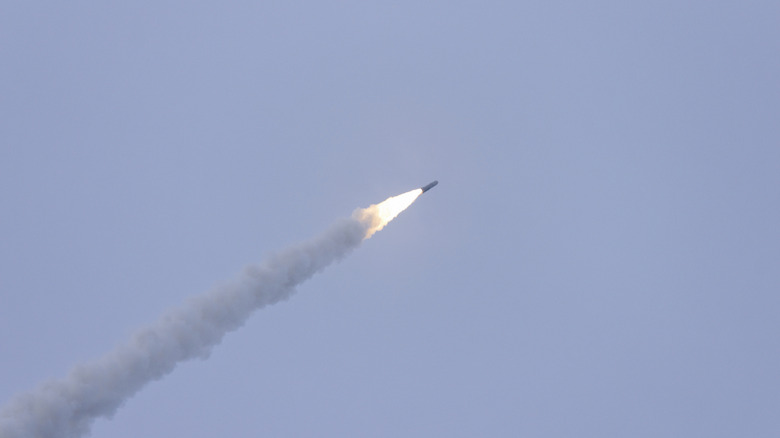
We have seen space telescopes and Earth observation satellites, but there is still one more category left in communication satellites. These satellites form the backbone of global wireless networks, including both satellite internet and direct-to-home broadcasts. A more ambitious project is to offer mobile connectivity using satellites as well, which few companies have successfully achieved. One of the pioneers of this technology was TerreStar, which launched the TerreStar-1 satellite in 2009.
The idea was for the satellite to provide direct cellular connectivity throughout Canada, bypassing the issues of local infrastructure or not being in service range. As such, it was designed to be a powerful device that would operate in the geosynchronous orbit, remaining in a fixed location over Canada and serving millions of calls. TerreStar-1 was the largest communication satellite of its time, and correspondingly expensive, setting the company back by $500 million in its manufacturing alone. The launch took more, though TerreStar never disclosed the exact amount. But it certainly took a significant sum, because the company went into a lot of debt and declared bankruptcy soon after.
The satellite itself still worked perfectly and was quickly acquired by the Dish Network for $1.375 billion, providing the most accurate estimate of its total cost. It now provides wireless broadband internet in Canada, joined later by Terrestar-2 over Europe.
Intelsat 35e
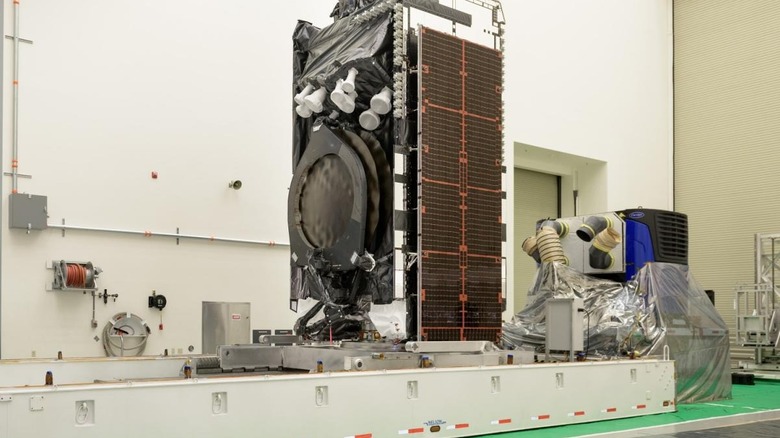
Intelsat is one of the world's best-known operators of communication satellites, with a large fleet of satellites serving as the backbone of global wireless networks. While most of these satellites are small and relatively cheap, the EpicNG class of satellites consists of powerful devices handling high volumes of commercial traffic over key locations. And the Intelsat 35e is one of its most recent launches, put into orbit in 2017. As with most commercial satellites, the company has not disclosed its exact cost, but the EpicNG satellites are known to be manufactured at upwards of $400 million, with similar amounts spent launching them to geosynchronous orbits.
Built by Boeing Space, it is one of the bulkiest satellites of its type, boasting a very high throughput. This enables the Intelsat 35e to service the Americas, Europe, and Africa, but that same heft makes it challenging to launch. The geostationary orbit is already tricky to reach, and the massive size of this satellite makes it even harder to reach. The earlier Intelsat 33e actually exploded in orbit. The launch contract for the new satellite was awarded to SpaceX, which had two aborted attempts before successfully launching the Intelsat 35e with its most powerful Falcon 9 rocket.
It took its place as an important broadcaster and relay device in Intelsat's fleet spanning the world, and continues orbiting in sync with the planet, handling a high volume of commercial traffic.
TDRS-13
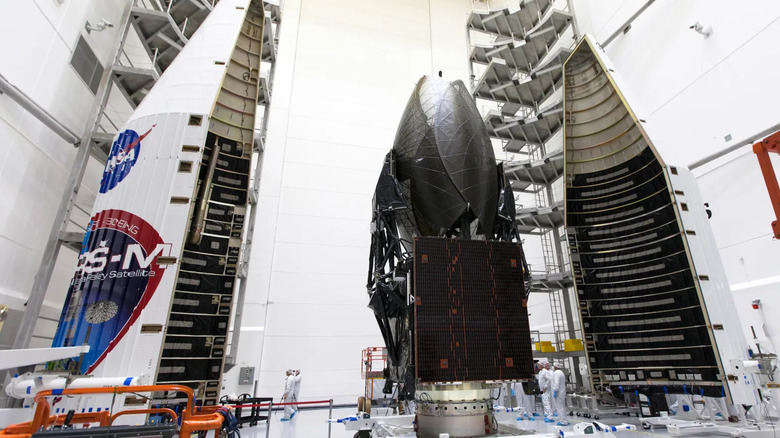
Commercial satellites aren't new, but they were certainly not as sophisticated in the past, capable of handling very limited traffic. This posed a unique challenge for space missions, which would often travel at very different speeds from Earth, making direct contact with the base stations on the surface intermittent. To deal with this challenge, NASA launched a network of its own communication satellites, focused on connecting with space missions. Called the Tracking and Data Relay Satellites (TDRS), this fleet allows NASA to keep up with its space missions in real-time, including low-orbit satellites like the Hubble Space Telescope and various research satellites.
The TDRS-13 (formerly TDRS-M before launch) is the latest satellite launched as part of this fleet, costing NASA $421 million in total, including both manufacturing and launch. It is a complex device featuring multiple antennas and transponders that communicate with spacecraft across multiple frequency bands. This delicate structure created some issues during manufacturing when an antenna was damaged, delaying the launch.
Ultimately, United Alliance successfully launched TDRS-13, placing it in a geosynchronous orbit where it communicates with other TDRS satellites to relay telemetry data. Despite its success, this was the last TDRS satellite to be deployed, as NASA is now shutting down the mission. The proliferation of advanced commercial satellites has made a private satellite network unnecessary, as commercial services now have the coverage and capacity required.