

Why Are Cars Getting Rid Of Android Auto?
Being able to easily integrate your smartphone with your car's systems has become a big pro of smartphones in recent years, especially as Android Auto and Apple CarPlay both continued to improve and expand. However, it seems the time of phone-driven infotainment systems may be coming to an end, as many companies are starting to move away from supporting Android Auto and Apple's competing functionality — as some car brands are also moving away from CarPlay. There are a number of reasons for this — though depending on who you ask you might get different answers.
For the most part, it's believed that carmakers are doing way with Android Auto support simply as a way to expand their control over user data. Because Android Auto utilizes your phone's connection, all of the data that runs through it goes straight to Android and the phone manufacturer. So, by utilizing built-in systems, the car manufacturers would indeed be able to collect more data about how you use the systems in place, while also possibly getting more money out of you through subscriptions.
Of course, the overall specifics behind it are a lot more complex than that, especially as companies like GM — who has announced plans to replace CarPlay and Android Auto support with its own Gemini-based AI system — look to bring things more in-house than they have before. The company has already pulled Android Auto from its EVs, so it has a headstart on the idea.
Some cars have never supported Android Auto or Apple CarPlay
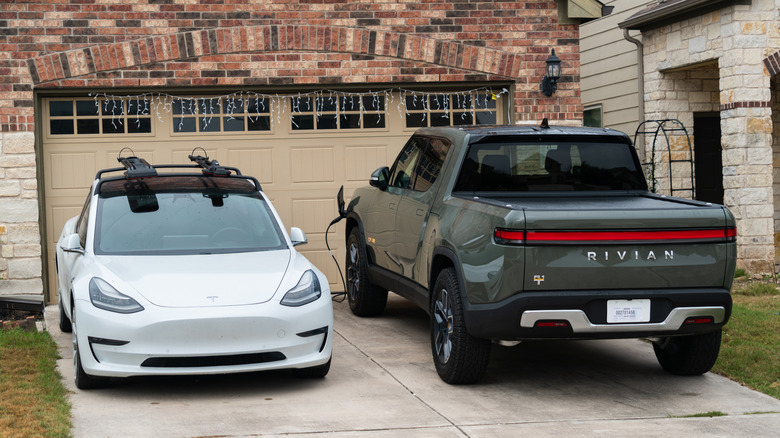
While many vehicles are working toward removing Android Auto — or just trying to make their own systems more enticing while still offering it like Ford is — there are some vehicles out there that have never offered Android Auto at all. Both Rivian and Tesla, which are popular electric brands, have both shied away from offering support for both Android Auto and CarPlay, so it isn't surprising that they haven't started offering them just yet. Though, Tesla is changing its stance on CarPlay as of November 2025.
There's also the argument to be made that having custom systems designed specifically for each car brand can help integrate more pieces of the system. While Apple has expanded its CarPlay offering to do something similar, Android Auto has not, and that means that brands need to rely on their own systems to make those kind of integrations happen. It could also allow for easier alignment of what is shown in the car's primary digital displays — like the speedometer, mileage, etc — and the infotainment system specifically.
Still, a lot of people have become invested in both Android Auto and its Apple counterpart. Getting rid of the systems for good is going to take a lot more than manufacturers and car brands just saying they're going to transition away. Some are even convinced that CarPlay (and thus Android Auto by extension) aren't going anywhere. There's also the fact that people can still buy devices to add Android Auto to their vehicle without it being a mainline component, which is really handy if you do end up with a car brand that doesn't support it.