

4 Trends To Expect From Smart TVs In 2026
Each year at the Consumer Electronics Show (CES), brands share innovative new products and updates to existing offerings, giving us a glimpse at upcoming releases. Roborock has some new vacuums that climb stairs and dance. XGIMI's MemoMind AI and AR glasses introduce dual-screen tech. But perhaps the real allure, at least for home entertainment, is the introduction of LG's new OLED paper-thin TVs that will transform your living room — or any room they're in, really. Which calls for one question: What can we expect from smart TVs in the year, or years, ahead? What kind of new innovations are coming, like LG's Wallpaper series?
From new display technologies to AI baked into the software and hardware experience, there sure is a lot going on in consumer tech. You might be surprised to learn it's the year of the art TV, a thoughtfully, and more elegant styling for TVs — see Samsung's The Frame series. It's also the year that OLED is no longer the top dog. OLEDs are still here and thriving, so don't worry if you're a fan, but there are other technologies taking the electronics show by storm. Let's explore.
Ultra-thin, stylish, art-friendly TVs
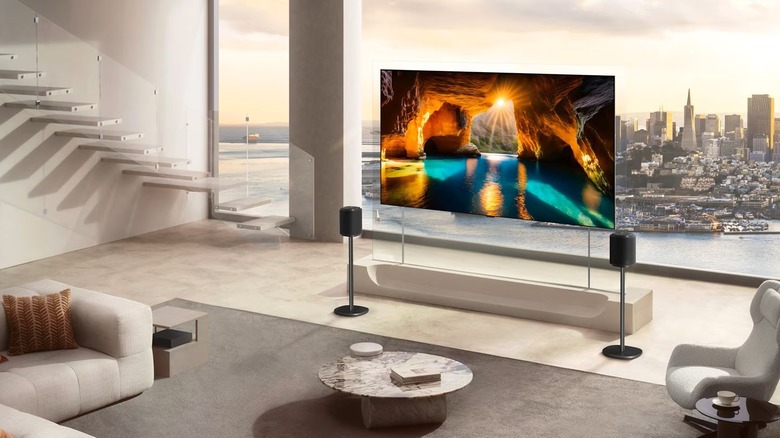
Samsung's The Frame Series has long dominated the TV-as-an-art-form world, with direct access to fine art displays and a host of unique design and tech features. They still exist, and Samsung is still improving upon the original models, but there's also more competition as of late. Amazon has unveiled its Ember Artline series, a similar lifestyle-focused TV with a matte screen that brings with it access to 2,000 pieces of free art.
LG's new Wallpaper series, particularly with the LG OLED evo W6, introduces an "impossibly" thin set that's just 9mm in depth. All necessary internals are relegated to a connected box called the Zero Connect Box, which also includes all the inputs. It can be placed up to 10 meters away from the set, or, perhaps more commonly, right on an entertainment stand or shelf below. It features seamless edges (no bezels) and because it's so thin, you can mount it in new and interesting places. But it also works fantastic as an art frame, like some of the competitors, with vibrant colors and pixel-perfect imagery.
Outdoor and anywhere-use TVs
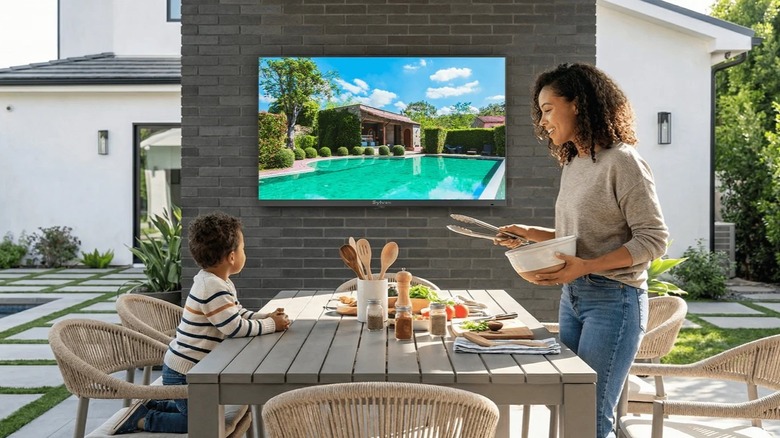
Outdoor TVs have been around for a while, and it's another area where Samsung previously had the most influence — particularly with its Terrace series and sun-friendly sets. But this year at CES, Sylvox unveiled a frameless outdoor TV series, introducing a 90% thinner design than standard options, nearly eliminating the frame altogether. In addition, the brand's 110-inch Cinema Pro Helio QLED is the "world's largest" outdoor TV, utilizing Helio QLED technology for rich color, deep contrast, and excellent brightness even outdoors.
The sets are weatherproof, fine to watch outdoors in bright light and excellent for live sports, movies, and beyond. Imagine sitting outside on your patio, deck, or in a sun room watching your favorite content with nary a concern about major glare. It's a fantastic way to get some fresh air and get outdoors without pulling yourself away completely from your entertainment solutions. Taking that a step further are Samsung's Movingstyle portable TVs, also making an appearance at CES 2026 with some new upgrades. These units allow you to instantly open and use a screen anywhere you want. Alternatives include the Hisense FollowMe, or LG's StanByME.
Micro RGB Technology

Samsung and LG are leading the charge on a new display technology, micro RGB, which brings superior color, contrast, and brightness as compared to other display types. Featuring red, green, and blue LEDs as the name implies, rather than white lights, it delivers precision similar to OLED technology's individual pixel design — but also represents a formidable upgrade over mini LED technology on its own. LG's new sets are also equipped with an AI engine for smart enhancements, essentially working to improve visual fidelity and picture quality.
These TVs are also much larger in size compared to mainstream offerings, with Samsung showing a 130-inch prototype at the event. LG's new announced series comes in at 75 inches, up to 100 inches. Nothing can really prepare you for watching a TV over 100 inches in size (and certainly not 130), and these models are unsurprisingly taking CES 2026 by storm.
AI enhancements galore
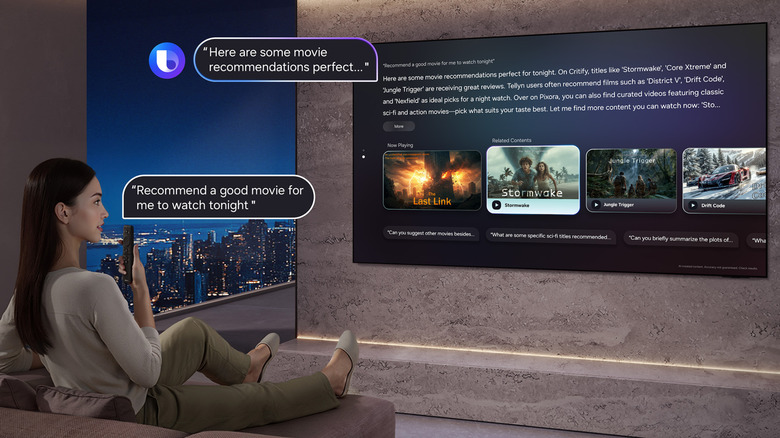
Between Samsung's Vision AI platform, LG's innovative use of AI at CES to improve its demonstrations, and Amazon's generative AI-powered Alexa+ coming to Fire TV devices, artificial intelligence is changing the modern smart TV business in a big way. Upgraded technologies will provide new ways to search for and discover content, and interact with your TV (and other smart home devices) through voice commands. More concretely, AI will be used to enhance visual clarity and quality provided by high-resolution TVs. As an example, many newer TV sets are equipped with a dedicated chip for AI processing, and we can expect the same, or more, moving forward.
Back to Samsung's Vision AI, it will also introduce a smart assistant right into your TV. The brand envisions this platform as being a central hub for additional smart home and AI-powered devices. Imagine your TV making meal suggestions, letting you know your clothes are done washing or drying, or providing any number of additional updates, all connected through your installed smart home gear.
Ultimately, there are some truly exciting smart TVs coming out in 2026 and beyond. Modern entertainment is changing in many ways with the advent of new engineering feats, impossibly thin designs, outdoor-friendly manufacturing, AI-powered solutions, and new display technologies.