

4 Nvidia Graphics Card Trends That Should Worry Every Consumer In 2026
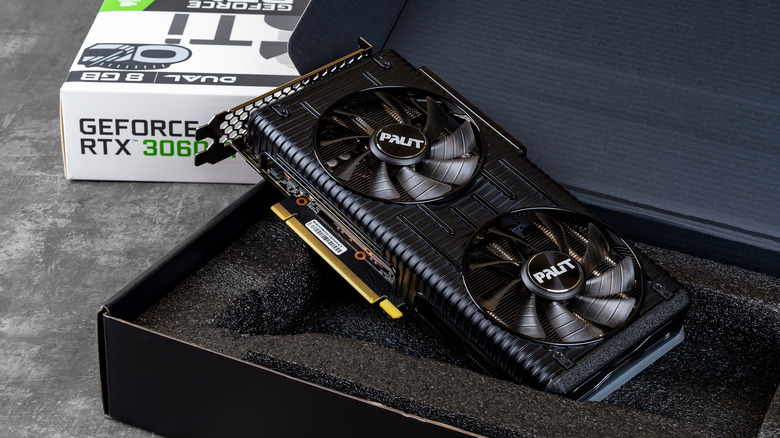
As the reality of 2026 settles in, an analysis of Nvidia graphics card trends gives users, especially PC gaming enthusiasts, plenty of reasons to worry. Building a desktop with a focus on offering the best gaming experience was never easy, as you need to consider multiple components when shopping for hardware. However, these kinds of problems may get worse. Nvidia, one of the big manufacturers of gaming GPUs, changed its strategy to become a supplier to the primary architecture of AI infrastructure, leading to higher graphics card prices for regular consumers.
This means the company is no longer targeting gamers, making GPUs an even harder component to find and plan around when building a desktop. With AI attracting more attention from investors, it's easy to focus on data centers and enterprise buyers, since they can absorb costs that gaming clients can't and buy products in bulk quantities with high margins to sustain their large-scale AI operations.
That's why this year feels like a turning point in the wrong direction for everyday buyers. Even as technology improves, it's become harder to access these kinds of products. With fewer Nvidia GPUs offering good value for their price, building a PC that offers stable gaming frame rates has become even harder.
AI data centers will inflate flagship GPU prices
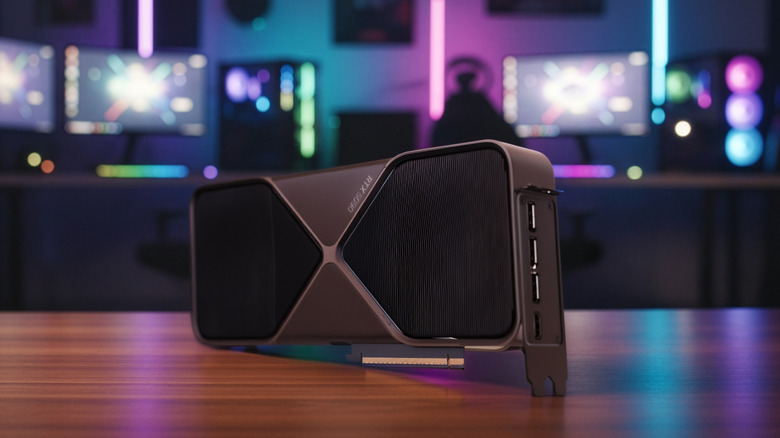
The graphics card is always one of the most expensive and important parts of building a PC, since, combined with a CPU, it is what defines how well a game can run. This cost can be even higher if you're considering adding a flagship model to your desktop, as these cards come equipped with more memory and higher clock speeds, making GPUs like RTX 5090 also a good choice for AI development.
For small AI teams, buying gaming GPUs instead of accelerators designed specifically for AI, such as the H100 or H200 series, is a more affordable alternative. Considering these teams can purchase several units at once, and the market lacks supply, the average gamer who wants to buy a single GPU can't compete for the stock. Then, GPU prices increase because demand remains stable as the supply decreases.
However, this kind of price increase doesn't only affect the flagship models of Nvidia graphics cards like the RTX 5090, as older versions also see a spike in value as demand rises. Nvidia's manufacturer's suggested retail price rarely reflects what buyers actually pay, pushing the PC gaming segment out of reach for many players.
Manufacturing shortages will force a return to the RTX 3060
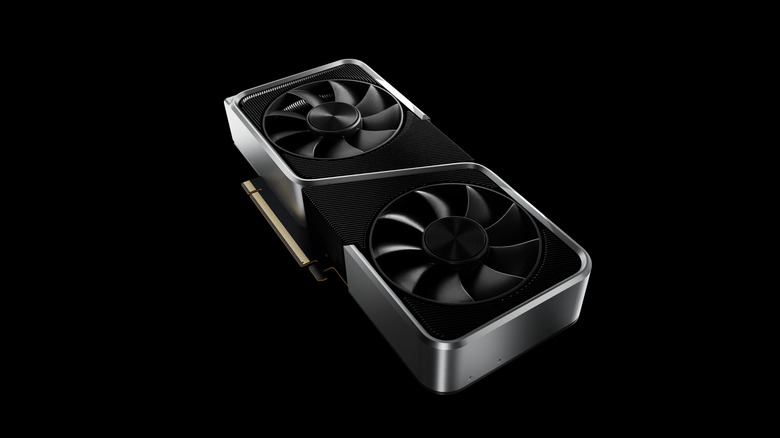
While high-end GPUs are being swept from the market by AI data centers, Nvidia is also exploring the possibility of bringing back old models to fill the gaming demand gap. According to rumors, the return of RTX 3060 is very likely to happen in 2026 (via VideoCardz), since this model is a cost-effective graphics card that runs most modern games at 60 frames per second on High or Ultra settings. However, its performance is 15% lower than the RTX 5050according to benchmarks.
The decision to bring back RTX 3060 is also a direct consequence of the struggle for manufacturing resources. Since Nvidia's Series 50 uses the Blackwell architecture, which relies heavily on the GDDR7 memory standard, Nvidia also faces significant hurdles in mass-producing enough low-end RTX 50 cards to meet global demand without impacting its AI business. This means that reverting to the RTX 3060, which utilizes GDDR6, makes it possible to keep stock available without losing out on the other demand.
Beyond the memory shortage that many manufacturers are facing, some market data also helps explain why Nvidia is considering bringing this GPU back. Despite being more than five years old, RTX 3060 remains the most popular graphics card in desktops according to Steam data. Even if buying an old GPU in 2026 feels counterintuitive, its performance is still good enough when gamers have fewer GPU options for their desktop.
RTX 50 Series Super will be delayed
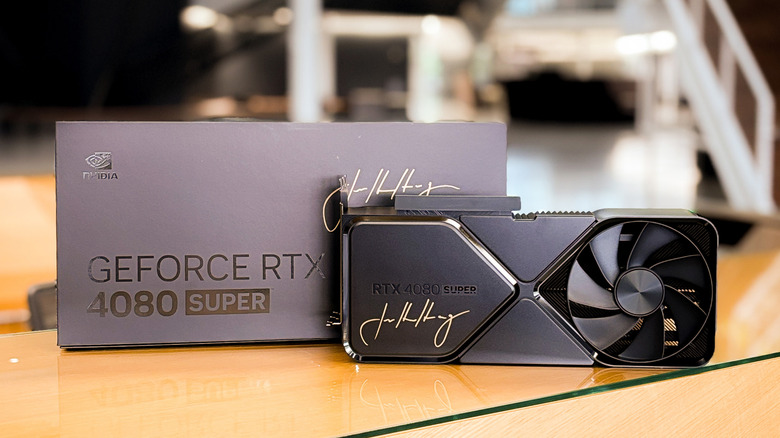
The Super series was another popular Nvidia graphics card trend on older models, but it may not happen with the RTX 50 Series. Originally, it served as a mid-generation refresh between major GPU launches. With this kind of update, it was possible to purchase a new version of a GPU with new features, such as more cores, higher clock speeds, or even additional VRAM, often at a better price than the launch model.
One of the main reasons for discontinuing Super models is the current state of competition. AMD, Nvidia's biggest rival, is no longer focusing on high-end graphics cards and has instead shifted its strategy toward more budget-friendly options for players. This lack of competition at the top end reduces the need for Nvidia to refresh the RTX 50 Series with upgraded Super variants, since these updates existed mainly to keep the lineup competitive.
The shortage of GDDR7 also plays a major role in Nvidia delaying its plans to release the RTX 50-series Super edition, since the launch of these enhanced variations typically demands a higher supply of memory chips. With GDDR7 production still under pressure and heavily prioritized for AI accelerators and enterprise-grade hardware, allocating additional memory to refreshed gaming GPUs becomes increasingly difficult, making it a risk that Nvidia won't take. Since Nvidia didn't announce RTX 50 Series Super GPUs at CES 2026, such a delay is more likely than ever.
New DLSS updates will create bottlenecks on older hardware
While the return of the RTX 3060 is likely being planned by Nvidia, it also highlights a different issue that can worry gamers following the most recent trends among Nvidia graphics cards: how DLSS technology works. With the arrival of the 4.5 update, benchmarks in games like "Cyberpunk 2077" show that some presets can deliver lower FPS than DLSS 4.
This happens because, as Nvidia says, DLSS 4.5 needs five times more compute power to run well and is also dependent on FP8 acceleration to reduce the performance impact in-game, a feature found only in the RTX 40 Series and RTX 50 Series. Tensor cores in the RTX 20 Series and 30 Series are built on a different architecture, which can lead to worse performance with newer DLSS versions and create a hardware bottleneck.
That way, while Nvidia launches new DLSS technology for its graphics cards, stable performance may be restricted to the latest hardware, so older cards like the RTX 3060 won't support it. This means that buying a mid-range card now can mean being locked out of most updates that the manufacturer will release only for the latest GPUs.