

9 Pros And Cons Of Buying A Used Tesla
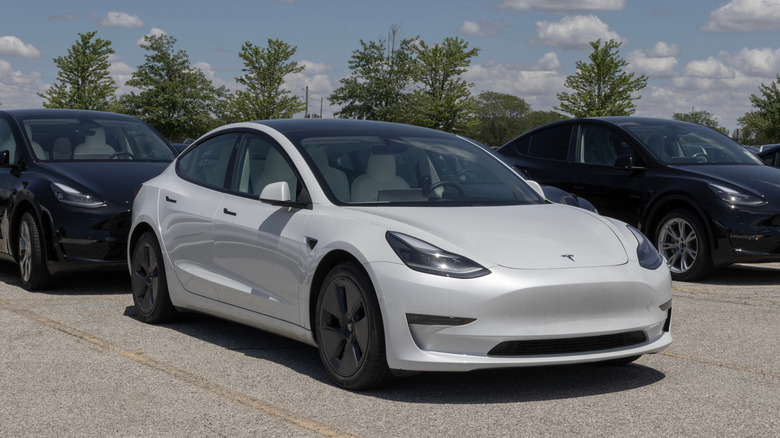
The first Tesla customers took delivery of their cars in 2008, which means there's been plenty of time to buy, enjoy, and sell a Tesla. Some people sell their Teslas because they don't like them, others because they want to buy a newer model, and more recently, a minority have sold their Teslas because they dislike the person heading the company.
Regardless of why there are now used Teslas near you, it means you have a new option when looking for a pre-owned car. The real question is whether buying a used Tesla will result in a fabulous bargain or a particularly sour lemon. Much depends on the specifics of the individual Tesla you're looking at, but there are a few major pros and cons everyone considering a used Tesla should consider.
Pro: Used Teslas are shockingly cheap compared to one fresh from the factory
Despite efforts to make Teslas cheaper at the factory door, even entry-level EVs from Elon Musk's car company command a stiff price. At best, you can describe the pricing of an entry-level Tesla with the minimum bells and whistles as upper mid-range or lower high-end. Either way, the dream of a sub-$30K Tesla is still elusive at this point.
As widely reported, the used Tesla market took a massive beating in 2025. Basic economics tells us that this is at least partly due to increased supply in the used Tesla market, but factors like weak demand also play a role. Tesla itself influences the value of its cars on the used market when it slashes the prices of new vehicles, too.
Damage to the Tesla brand thanks to Elon Musk's dabbling in politics is likely an incentive to sell Teslas and a disincentive to buy them. After all, if no one wants to be seen driving a Tesla in some parts of the country, that means finding a price where the cars will sell is tough. It's not all about Tesla or Elon Musk either. There are simply more options in the EV market now, and with more competition (and other used EV options), prices are going to trend downward.
Pro: A Used Tesla is cheaper to run and maintain then a used ICE vehicle
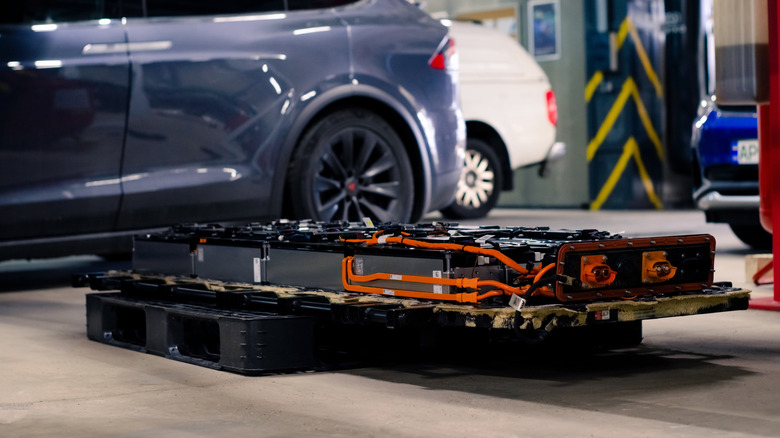
It's not some great revelation to say that when you buy a used EV, you get all the same benefits that EV offered when it was new. Specifically, EVs are mechanically much simpler than ICE (Internal Combustion Engine) vehicles. There are few moving parts, electric motors don't wear down the same way an engine does, and there aren't fluids and belts everywhere that need constant attention. So, buying a used Tesla could also mean savings down the road for future maintenance, but in some cases, an EV may not be cheaper to repair.
If you have the option to charge at home or at work, you're probably also paying less per mile in electricity costs compared to gas, but the exact savings depend on where you live and how you charge. Being "low" maintenance is not the same as no maintenance, but in a used vehicle context, this means that the previous owner didn't have much maintenance to do or get wrong, and likewise, you'll have the same privilege.
Pro: The drivetrain and battery warranty could still be valid and transferable
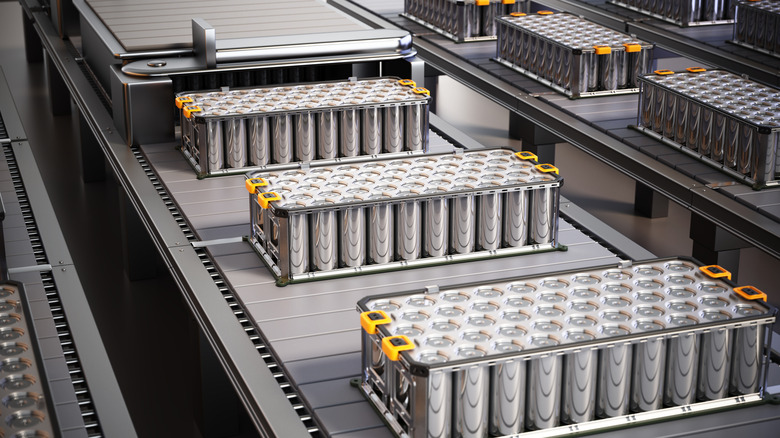
The two main failure points for a Tesla (or any EV) are the drivetrain and battery. Teslas generally come with quite lengthy warranties in terms of both mileage and years. Most importantly, the warranty is transferable if you perform a vehicle ownership transfer through Tesla.
Experts have argued that this is right at the top of the checklist when looking at a used Tesla. If it hasn't done too many miles and is still within the time limit, you'll still be covered. It's important to understand that the battery and drivetrain have their own warranty terms.
According to the Tesla Warranty page, a Model S, Model X, and Cybertruck come with an eight-year or 150,000-mile drivetrain and battery warranty. So, if you bought a model that was four years old, then you'd have four more years to enjoy the balance of the mileage. As of this writing, all Teslas listed on the official page have an eight-year warranty for the battery and drivetrain, but the mileage ranges from 100,000 to 150,000, so be sure to check based on the car you're looking at.
Pro: Access to the supercharger network
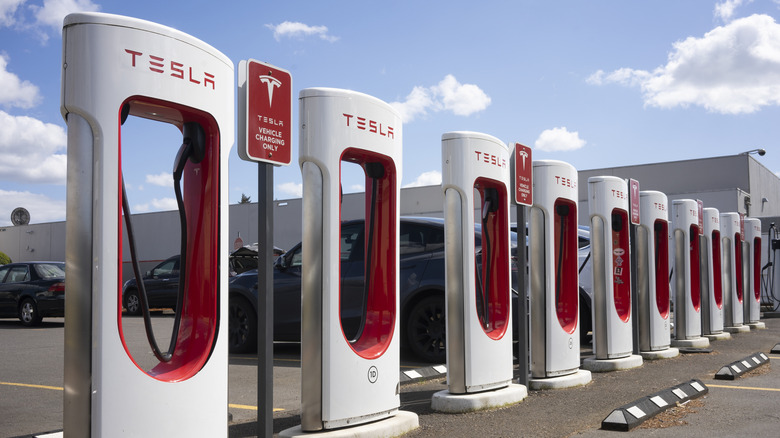
Tesla operates the largest and most robust charging network in the USA and worldwide. It owns over half of the DC fast-charging stations in the USA. While other brands of EV – like the Ford F-150 Lightning – can also make use of these chargers, they work best with a Tesla.
Tesla owners get a more seamless experience, usually pay less for the charge, and get access to trip-planning with the supercharger network. In contrast, other EVs usually need separate payment processing, a phone app, physical adapters, and the supercharger network isn't integrated into their software for trip planning or battery conditioning.
Speaking of charging, if you buy a used Tesla, check if it comes with a mobile connector. Tesla stopped including the Mobile Connector early in 2022 with new Teslas. If the used model you're considering predates this, the original owner should have received one. This allows you to trickle-charge your Tesla from a wall outlet and is intended for emergency charging when you don't have access to a supercharger. However, many people use these to top up their Teslas overnight for the daily commute without having to fork out $450-$600 for a Tesla Wall Charger. This is a potential hidden cost in your used purchase.
Pro: Tesla tech is still very cutting-edge
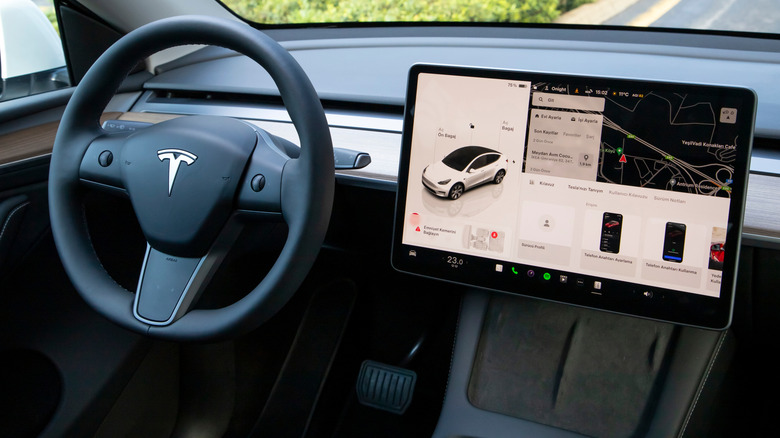
Even a Tesla that's half a decade old is still packed with cutting-edge technology compared to many contemporary cars. In fact, since Tesla updates its software over the long term, a used Tesla today is more advanced than when it was new.
This means that a used Tesla of a moderate vintage will have the performance tweaks the company has developed in the intervening years. Modern Teslas also have interiors and large touch displays that haven't aged one bit. So it will still feel like you're stepping into the future.
This is worth keeping in mind when comparing them with EVs from other brands of a similar age. Other EV makers are only just catching up to Tesla's futurism, so if you want high-tech performance and aesthetics from a used EV, Tesla is one of the strongest options.
Con: Your used Tesla probably has zero resale value
Unfortunately, the same market forces that allow you to buy a used Tesla for far less than the original owner paid also mean that you're not getting much money back when you try to sell the car on to the next owner. There's no reason to think that the immense depreciation will slow down, or that your used Tesla will retain the value you paid for it.
This means you have to go into this deal with the mindset that you're going to drive this car until its usefulness has been depleted or it's not worth the upkeep anymore. It might be a car that you pass on to someone else, or repurpose when your needs change. There are many other ways to get more usefulness from a car you can't sell.
If the battery reaches the replacement threshold after the warranty has run out, that's likely an unjustifiable cost. If battery technology gets a lot cheaper, Teslas with depleted powertrains could become great restoration projects. However, we can't predict the future, so it's best to be realistic about your purchase.
Con: Some Teslas are just too old
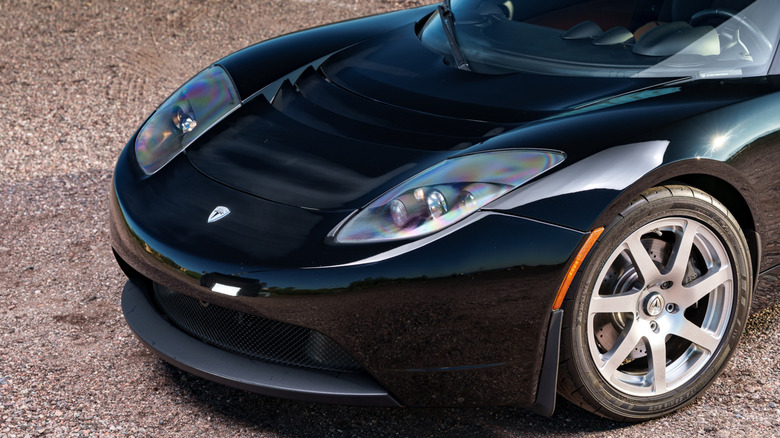
The world of EVs moves fast, and that's even truer of Tesla, which has come an enormous way in a little over a decade. Certainly, if you ran across a used Tesla from the first five years of the company's existence, it would lack most of what makes a modern Tesla special. That's assuming the battery and drive train are still in good condition or have been replaced.
Even if an older model Tesla was still mechanically sound, features like FSD (Full Self Driving) are only available on more recent models with the right hardware. Teslas built from April 2019 have the hardware necessary for FSD, and some older models can be upgraded for a price. You can check whether a given Tesla supports FSD in the car's menus, in case the current owner has never used FSD or is unsure. Older Teslas from the 2010s may only support Tesla Autopilot.
Because FSD capability varies by individual car before April 2019, this is a key thing to check. Apart from this landmark feature, older Teslas may not have all the latest software bells and whistles. Also, again, if a Tesla is so old that it's outside the eight-year battery and drivetrain warranty window, caveat emptor absolutely applies.
Con: Used batteries can be a gamble
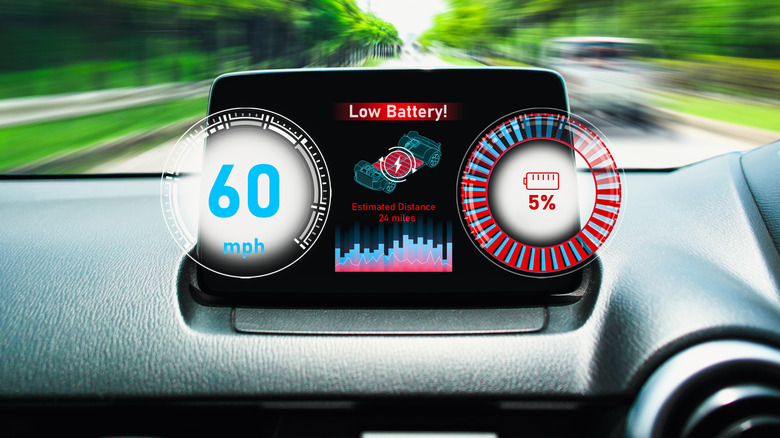
We've touched on this a few times so far, but batteries are so central to an EV that they deserve to be scrutinised in isolation. Sodium-ion batteries and other exciting developments are already making their way into new cars, and upcoming solid-state EV batteries that will last much longer and charge in minutes.
This is fantastic news for EVs in general, but sadly doesn't help the traditional lithium-ion batteries in used Teslas. Even if a Tesla's battery hasn't had the rated number of charge cycles or hasn't done the mileage it was designed for, it can still fail suddenly. This is why the battery and drivetrain warranty is such a key issue when buying a used Tesla, because the out-of-warranty replacement cost of the battery system is astronomical.
The good news is that you can run a battery health test on a Tesla, which is something the current owner should absolutely do, and the results of this health test should be part of the information included with the vehicle. The test will show the actual charging characteristics of the battery, which are then used to calculate its remaining capacity and level of degradation. If the battery is still under warranty and it has less than 70% capacity left, it should be replaced under warranty before you take ownership.
Con: Tesla's notorious build quality
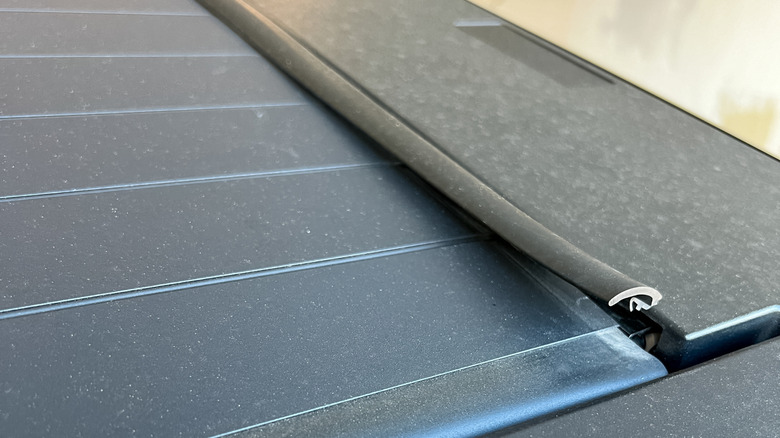
It's easy to forget that Tesla is still a young car company, and there's far more to making cars than good motors and batteries. Early Teslas are notorious for build-quality issues, poor panel gaps, and various other issues related to assembly and design. This has become progressively better as the company has learned the lessons established carmakers, such as Ford, did decades ago, but even the latest flagship models like the Cybertruck still have reliability problems.
On top of the special attention you should give to the drivetrain and battery, it's a good idea to have a professional assessment of the rest of the car. Are all the welds still good? Does it keep water out? Is the frame as rigid as it should be? A standard roadworthiness inspection should spot any egregious issues before you sign on the dotted line.
It's worth doing some research to check what the most common build quality problems are for the specific Tesla model you're considering before going out to see it.
Should you buy a used Tesla?
There's no simple answer to the question of used Teslas. As with any used car purchase, the specifics of the individual car matter more than broad issues around the brand or the entire model family. It's a matter of which specific EVs you should avoid. Has the previous owner been enjoying "ludicrous speed" daily for years? Have they been doing the limited maintenance? Are there any faults in the car that you'll have to deal with? That's what really matters.
More broadly, the entire used EV market is a bit of a minefield because EVs are such a new vehicle type in the grand scheme of things. Early EVs weren't great regardless of brand or model, and the expiration date on lithium batteries remains an expensive obstacle to buying a used EV with confidence.
To us, that all-important warranty and battery assessment are the key deciding factors, but we'd also suggest anyone looking for a used EV should consider all brands and models, not just Teslas, despite their brand recognition. Plug-in hybrids should also be part of your consideration, as these can run as a pure EV for most commuters, with at-home charging, but also offer the option of using regular fuel for long-range travel. If the majority of your mileage fits in a hybrid's electric range, you might not need a Tesla at all.