

The 4 Coolest Tech Innovations From CES 2026 You Need To Check Out
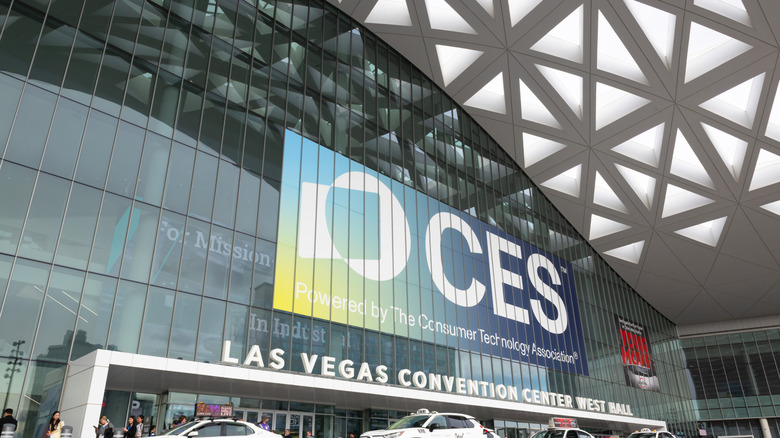
The annual CES trade fair in Las Vegas serves us a glimpse of what's to come in consumer technology in 2026 and beyond. BGR saw plenty of cool and exciting gadgets at the show. Many are available to buy right now, whereas others are still in the concept phase, being developed into actual products that may grace store shelves soon.
We've already covered the most exciting tech at CES 2026 and the best gadgets unveiled at the show, but that's just scratching the surface of this massive international exhibition. There were countless other devices and technologies being demoed around the show floor and behind closed doors at exclusive events, so here are four more of the coolest tech innovations that BGR spotted at CES that undoubtedly deserve your attention. These innovations range from exciting new gadgets that you'll be able to buy soon to interesting new technologies that will level-up your esports gaming.
TCL X11L SQD-Mini LED TV
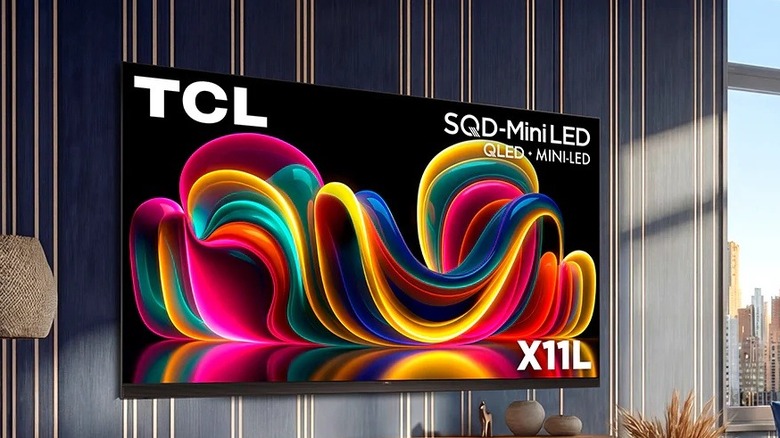
Although the RGB Mini-LED or RGB LED technology was expected to be the big thing at this year's CES, TCL truly wowed with its X11L SQD-Mini LED TV. It's a massive improvement over the current crop of Mini-LED TVs. Instead of using red, green, and blue LEDs like standard RGB Mini-LED TVs, it keeps the same blue LEDs, which are found in many traditional Mini-LED TVs, but employs better quantum dots for more accurate colors and a new color filter. These improvements help the TV provide full coverage of the BT.2020 color space, meaning it can provide exceptional color fidelity. Because it uses single-color blue LEDs, it also avoids color crosstalk — when colors from one color LED bleed into another LED's colors — a problem that can plague RGB Mini-LED TVs.
Another advantage of the newly showcased TCL TV is its 10,000 nits peak brightness, which is among the highest you can get on any TV. This high peak brightness enables the TV to provide better HDR performance and counter glare and reflections more effectively. It's also the first TV to claim support for Dolby Vision 2, a new HDR format, which will arrive via a software update. The 85-inch and 98-inch models of the TV are already on preorder, with a 75-inch coming down the line. However, it's not a cheap TV by any stretch, with the 98-inch costing $10,000.
Lenovo Legion Pro Rollable
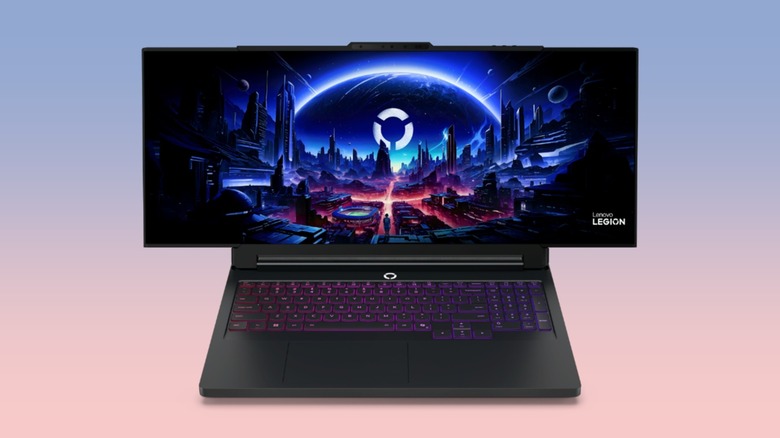
Lenovo's Legion Pro Rollable was one of the most exciting laptops to be shown at this year's CES. Although it's still very much a concept, it offers a glimpse into what's possible in such a form factor. As the name suggests, it's a laptop that uses motors to offer a horizontally expandable screen. Lenovo has shown off laptops with similar rollable displays in the past; however, this is the first one that's not featuring a vertically expanding display. The company is targeting esports athletes who often need a wide screen to practice, which is hard to get in a portable form factor when traveling.
The laptop uses an OLED screen and has a 16-inch display by default, which can expand to 21.5-inch or 24-inch wide. It has a dual-motor design to expand and contract the screen. Right now, it has the same internals as Legion Pro 7i, which means you get a top-spec Intel Core Ultra CPU and an Nvidia GeForce RTX 5090 GPU. That said, the consumer version, if there is ever one, will likely feature different specifications.
Jackery Solar Mars Bot
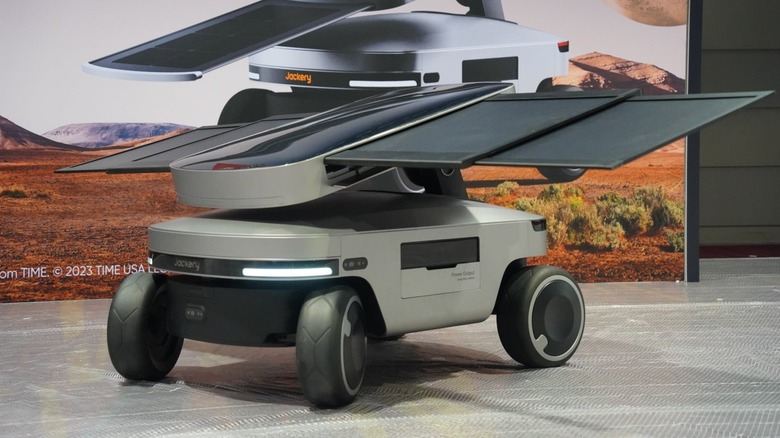
Jackery showed off a pretty cool power station, solar panel, and robot combo called the Solar Mars Bot that can move around to get the most efficient solar charging. Its built-in wheels allow it to adjust its position outside your home or campsite to track the sun and pursue the best sunlight irradiation angle. The company mentioned this design during CES 2024 as a concept, but it has since come much closer to becoming a reality. However, there is still no word on its release date or pricing.
There are retractable solar panels on the top of the device, which can fold and unfold as necessary, and are capable of producing up to 600W of power. More importantly, the platform on which solar panels are fixed can change its angle up to 60 degrees to get the most sun and increase its efficiency. The rest of the Solar Mars Bot is similar to other Jackery power stations and includes multiple ports and sockets to power your devices, including multiple USB ports and AC outlets. The company has also included 5G connectivity in the Solar Mars Bot, allowing you to check the battery and robot status even when it's out of Bluetooth range.
Nvidia DLSS 4.5
DLSS on Nvidia graphics cards (which means Deep Learning Super Sampling) has quickly emerged as an excellent tool to get more out of your GPU. It uses machine learning to render graphics at a lower resolution and then upscales them with the help of AI to fill in any missing details. This allows mid-range graphics cards to push out significantly higher frame rates than they would be able to achieve with native rendering. DLSS 4, which was introduced at CES 2025, was already pretty powerful. However, Nvidia is taking things to the next level with DLSS 4.5. The company showed off the upgrade at CES 2026, and it's already available for all RTX graphics cards. One of its highlights is the updated upscaling technology, which enables significantly improved visual clarity with fine detail.
More importantly, the visual quality of the "Performance mode" in DLSS 4.5 is as good or better than the "Quality mode" in DLSS 4, which helps you get a higher number of frames from your hardware without any artifacts. For RTX 50-series GPUs, there is also the new Dynamic Multi-Frame Generation feature, which can generate up to 5 synthetic frames for each real frame and can dynamically adjust the artificial frames depending on the base frame rate to ensure smoothness at all times. Bottom line, DLSS 4.5 delivers dramatically improved visual performance with enhanced sharpness, HDR lighting, and lighting effects.