

4 Cheap Alternatives To Soundbars That Audiophiles Swear By
We may receive a commission on purchases made from links.
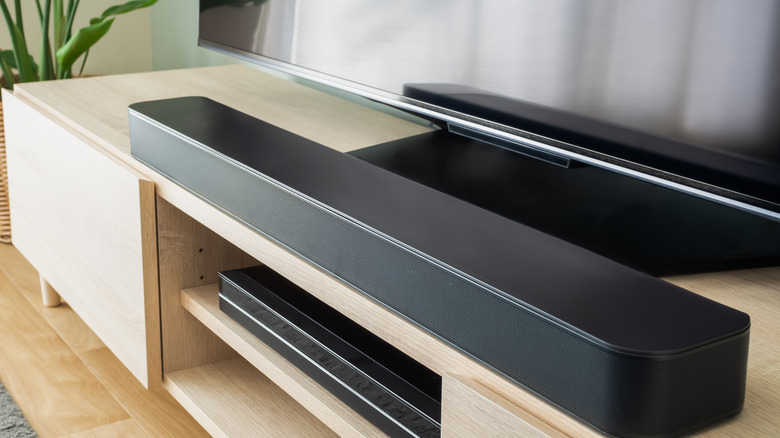
Soundbars are a convenient way to build some extra "room-filling" sound beyond what your TV offers. They're relatively turnkey as there isn't much to configure or calibrate; you simply connect the soundbar, usually via Bluetooth, and you're good to go. Inside most soundbars are a couple of speakers, possibly a small subwoofer, and everything to power those, like an amplifier. But the downside is they're not always ideal if you want clear, theatrical audio, especially surround sound, because the sound is effectively coming from one location. If you're listening to live music, want true Dolby Atmos or multi-channel support, or want loud, fulfilling audio, you're better off going with a more capable alternative.
If you're currently asking yourself, what else exists? This guide is an excellent starting point for you. Here are some cheap or accessible alternatives to soundbars that audiophiles swear by and likely enjoy in their own home audio setups.
Active stereo speakers
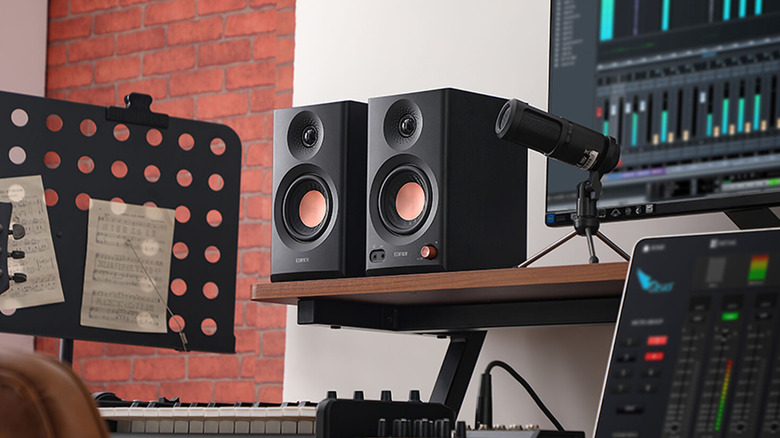
Also called powered speakers, active speakers include a built-in amplifier, so you don't need to connect them to any other systems, like an audio receiver or hub. Passive speakers, by comparison, need a separate amp for power. The bonus of active speakers is that they come in a variety of sizes, from compact desktop to larger, more dominating types, but also, they're not usually expensive. You can very well find budget-friendly options like the Edifier MR3 Powered Studio Monitor Speakers ($150), Adam Audio D3V Monitors ($350), or some bookshelf speakers as a high-quality alternative altogether. As a brand, Edifier features heavily in a full list of wireless speakers that audiophiles love. You can't go wrong with most of its offerings.
Active speakers can be used as a standalone pair, or you can sync them with an existing setup, provided you have the right cabling and connections. If you have a receiver that doesn't support Bluetooth and the active speakers only have Bluetooth, well, that's going to cause some issues. Pay attention to the available ports and connections for the speakers before buying if you already have an audio system in place. On the flipside, there are some wireless speakers you should avoid at all costs, for various reasons.
A quality Bluetooth speaker
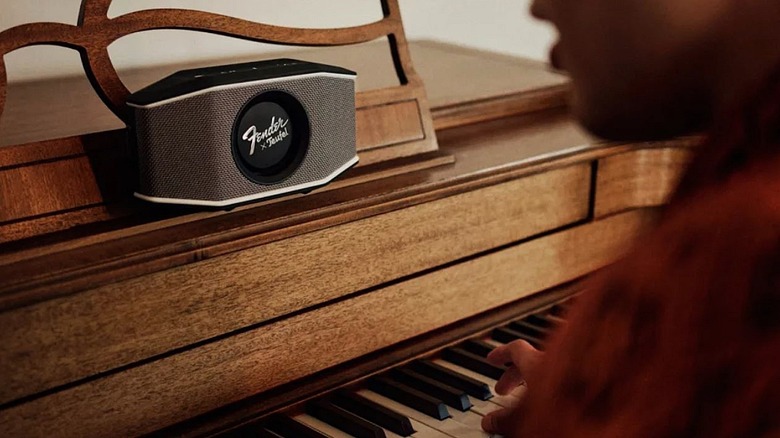
Some might question the quality and power of your average Bluetooth speaker, and if you're buying super, super cheap, okay, that might be an issue, but some of the smaller speakers really pack a punch still. However, in cases where you might not want a full audio system or extra speakers, for example, if you're watching TV outside on a patio or in a sun room, or you simply don't care about pristine streams, a Bluetooth speaker can be a real hit. Place the speaker on a central table or shelf and let the sound flow.
The Fender x Teufel series is an excellent example. Offering loud, punchy, and acoustic audio, they come in three variants: Rockster Air 2 ($600), Rockster Cross ($250), and Rockster Go 2 ($130). You can pick your preferred size — or price point — and bang, you're done. Alternatives include the ViSound Pulse with its 360-degree sound delivery ($59), the Sonos Move 2 ($420), the Bose SoundLink Revolve+ Series II ($300), or any of the top Bluetooth speakers chosen by audio experts. You'll be impressed with how great they sound and, believe it or not, Bluetooth speakers are fantastic for listening to music, TV, and movie streams, live content, and much more. Some Bluetooth speakers even sync and work together, offering a pseudo surround setup if you have more than one connected.
A full AV receiver system
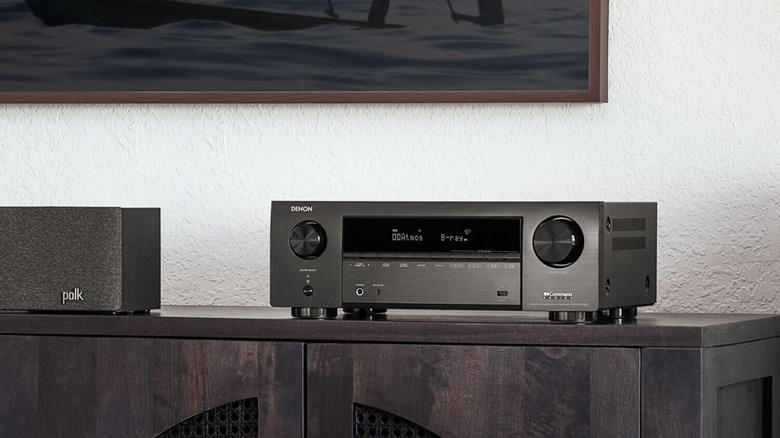
A full AV receiver or home theater receiver acts as the hub for multiple speakers and audio devices. It works with passive speakers, active speakers, Bluetooth speakers, you name it. But what's so great about it from a cost standpoint is that you can buy the receiver and a couple of speakers, sticking to a tight budget, and then add more later when you're ready. Or, you simply stick with the initial setup you chose.
You can find some affordable AV receivers from brands like Denon, Yamaha, Onkyo, Sony, and more. They're also available across a wide range of price points, starting around $300 and up. Cost depends on the brand, capabilities, and the channel support, from 2.1 channels up to seven. A high-end and high-quality example is the Denon AVR-X17000H 7.2-channel AV receiver for about $600. A more accessible option would be the Sony STRGH190 2-channel receiver for about $250.
Wireless chair or personal speakers

Ideally meant for the hearing impaired, wireless chairs and personal speakers are small, localized options that you'd place on or near your person while watching media. Hence the name "chair" speaker. Look them up on Amazon, and you'll find an eclectic mix of options from some that sit directly on a chair or recliner, others that rest around your neck, and small wireless options you place somewhere nearby. The Chairspeaker CS3 by Kare, which you see pictured above, has a 3.8 out of 5-star rating on Amazon with nearly 500 global reviews. People love how easy they are to set up and how great they sound, which merely shows they're a viable alternative.
General wireless personal speakers work nearly identically to Bluetooth speakers. Neckbands are a solid option for drowning out loud families when you've sat down, and you're trying to catch the dialogue in a flick. There are even pillow speakers, though those are meant to provide white noise and audio for deeper sleep. The point is, there are a lot of designs and at varying price points, too.